Overall the Boldt has been a good vehicle after a few fixes! At first, we thought the BL may stand for bad logic but it has grown on us to become better life! You know what they say about don’t buy the first model year of a car? Oh well, when life gives you lemons… make lemonade! For starters, this review is going to skip items that you can find from other reviewers that cover other items. I recommend reviews from Ultramobility and the FitRV about the Boldt (we hyperlinked the videos for you to review if interested). Keep in mind we are not receiving any consideration from Winnebago for this review, which should be self-evident once you see it.
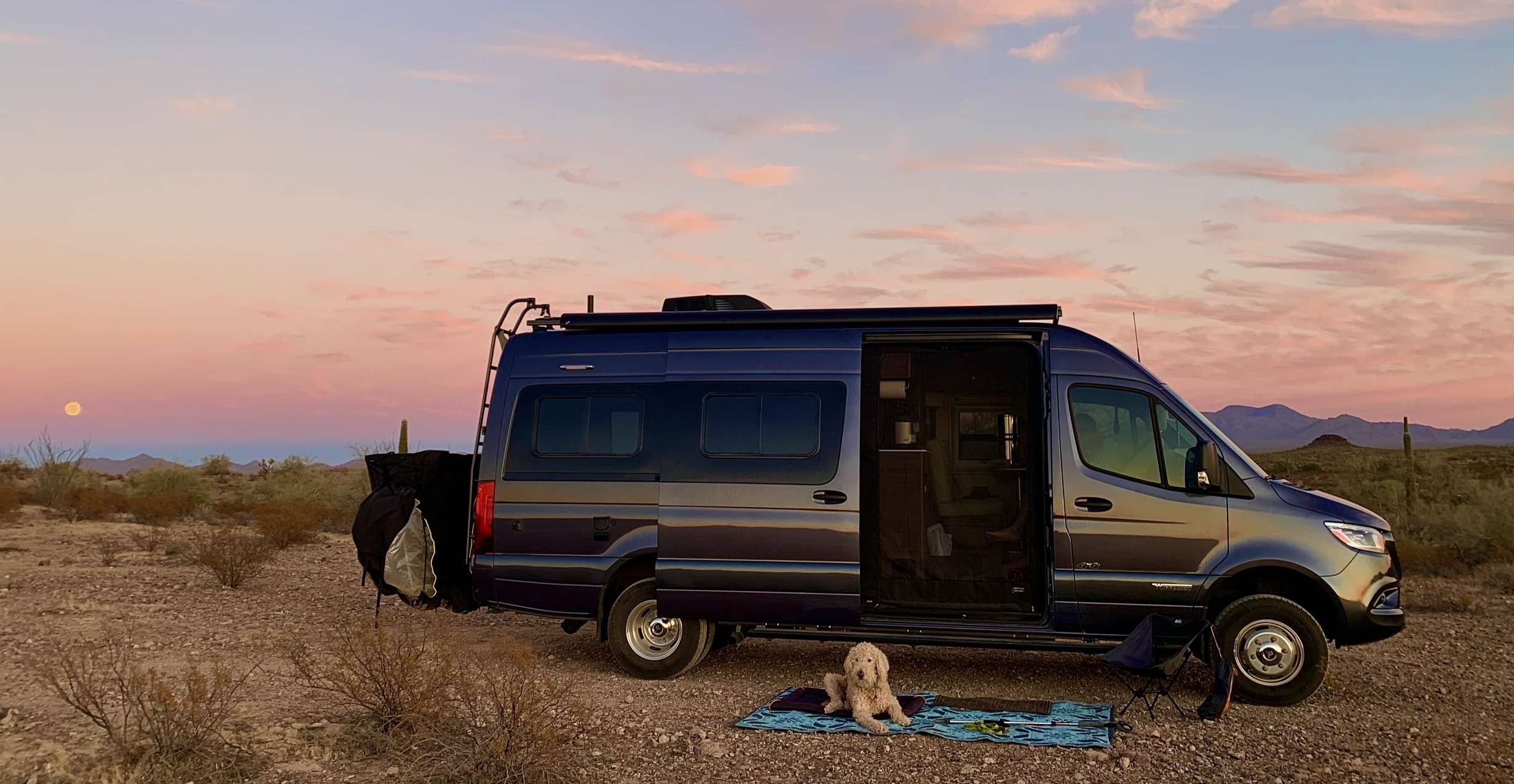
First off, the Mercedes chassis. Looks good, we like the styling, get lots of compliments on the Cobalt Blue stealthy color, so far the auto dim headlights work awesome. I love the cruise control that adjusts based on traffic speed. Although, it will become disabled if it gets dirty or covered with ice. It’s fairly easy to park and change lanes with the vehicle’s sensors. I love that you don’t have to break and turn off cruise control when someone cuts you off or slows down in front of you, it automatically does that for you.

Cons, the Hey Mercedes ‘hands free’ navigation system must be either deaf or based on tech from 20 years ago. It seems to never ‘hear’ or understand your voice commands. My hunch is that the cabin is too noisy when driving??? We still haven’t figured out how to input geo coordinates even after reading the manual and searching Google. We asked a Mercedes Dealer in Reno, NV about it and got no help so far. We found out after our fourth visit to Mercedes we needed a system software update and the GPS works. You do need to be exact with your coordinate input what is West, what is East you can’t just put the negative digital coordinates.

The mileage on our 4×4 diesel version is about 14 mpg after 6,000 miles of driving. By comparison, I hear that the 2-wheel version is averaging around 17 mpg. The automatic sliding door works great until it doesn’t. Our 2-month-old van door stopped working as I was trying to exit the van with my dog Bode (he can only easily exit that way) at 5 am when it was 19 degrees. It opened about 6 inches then gave up. Some people in the users groups have said that this may be a low battery issue, the Mercedes rep I spoke to said it’s a known issue with no work around and that we are only supposed to open the door when the engine is running. So, there’s got to be some fix for this or customer education on proper uses. We have had times parked on an angle when with the engine on it still won’t shut you either need to shut it manually or have someone on the outside help push it shut as it is closing.
One of my other pet peeves is that in order to disengage the instrument panel after turning off the engine you must open and close the driver door otherwise everything on the chassis will stay on- draining the battery until the system reaches low battery mode and automatically shuts itself down. We have also learned from the Boldt forum that you can also turn the engine off if you remove the key from the holder and push the lock button on the key fob. Also, because of emission controls you are not supposed to idle the diesel engine, which defeats the effectiveness of using the alternator to charge the Volta system.
The house part of the Boldt designed by Winnebago also has some good stuff and some poorly thought through stuff. We would think after years of building the Travato they would have fixed items on their high-end Boldt, but these beasts are very complicated and so far Winnebago has fixed all our issues via the warranty at no cost to us but time and days off the road. So I guess we can’t complain.
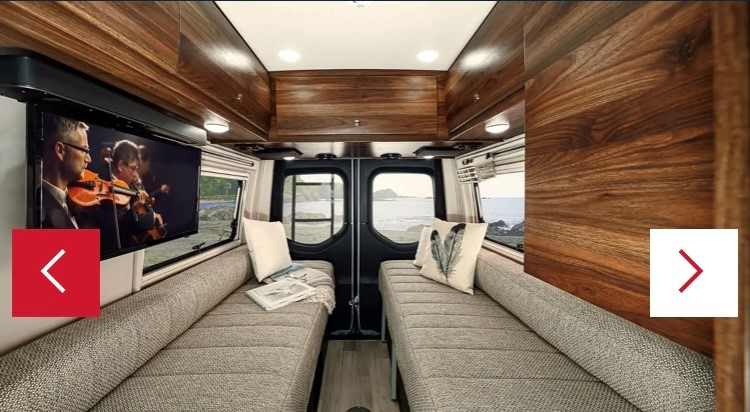
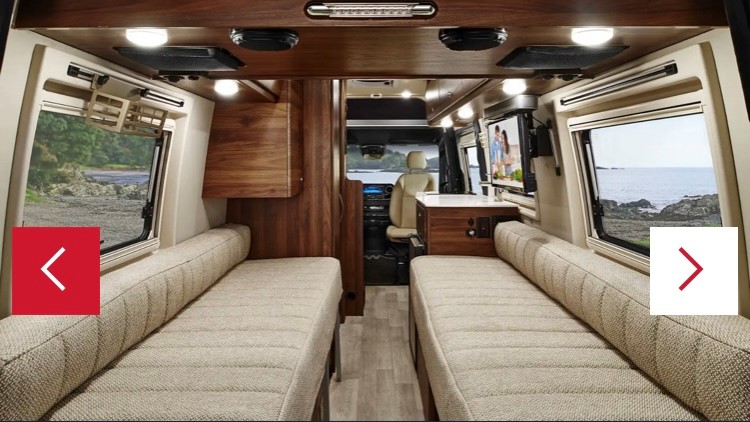
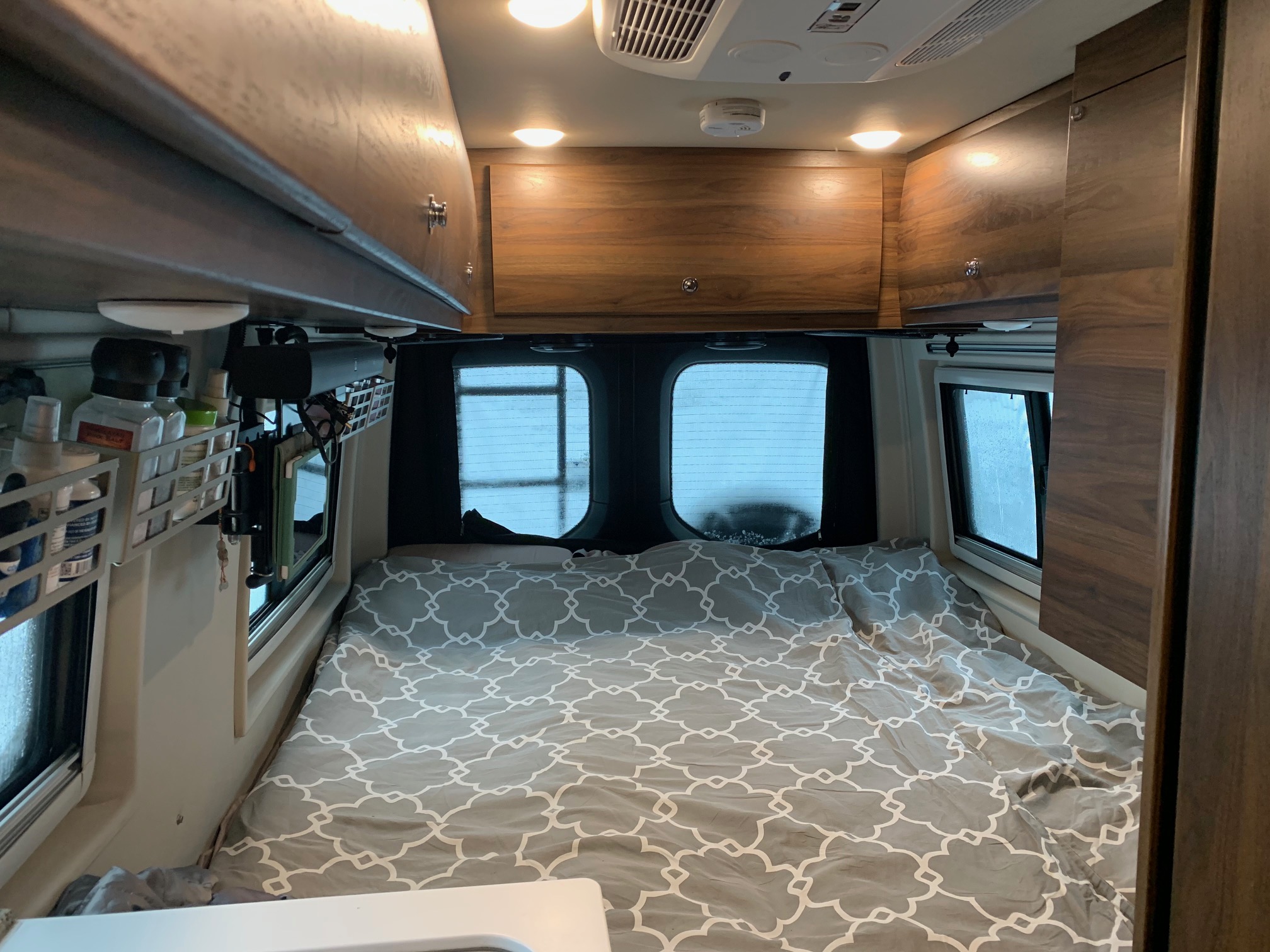
Let’s look at the good: We’re cooking and eating nearly every meal in the RV so the dinette comes in handy and is useful. I’m going to revisit the fold out single bed that’s under the dinette in the bad section, but could be good if you have a younger more agile dog that can jump to use as a bed or a smaller child. The toilet/shower combo is good if you are skinny and not too large. Keep in mind I’m just under 6 feet tall and 160 pounds and Rane is 5 feet 4 inches and 112 pounds, it would be comedy genius (or horror show) to see the average (large) size American in the bathroom, but it’s working ok for us, it sure reminds you the importance of staying flexible and fit. The beds are okay and can be made from side by side full to a little bigger than Queen size. We have slept both ways and find it very comfortable to do twins in the Summer and the queen in Winter! We have added twin bed covers with additional padding which has made the beds more comfortable. I like the smart design of the pull-down racks above the sleeping quarters. We like the cassette style blinds-especially now that we had the Winnebago factory service center remove them and put a foam gasket around the edges to prevent light bleeding through, added insulation and reduce rattling.
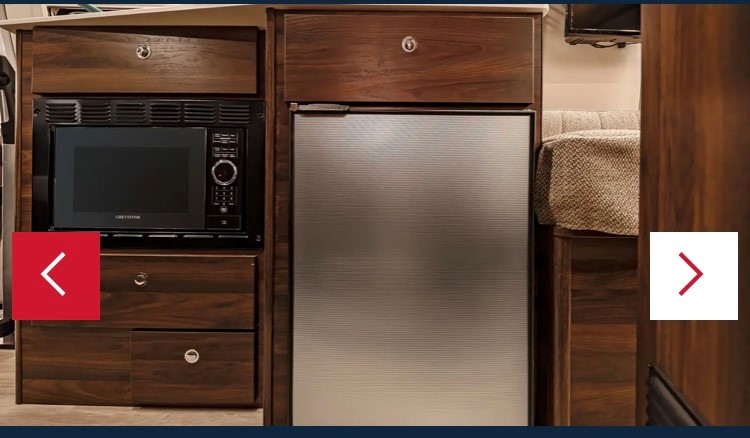
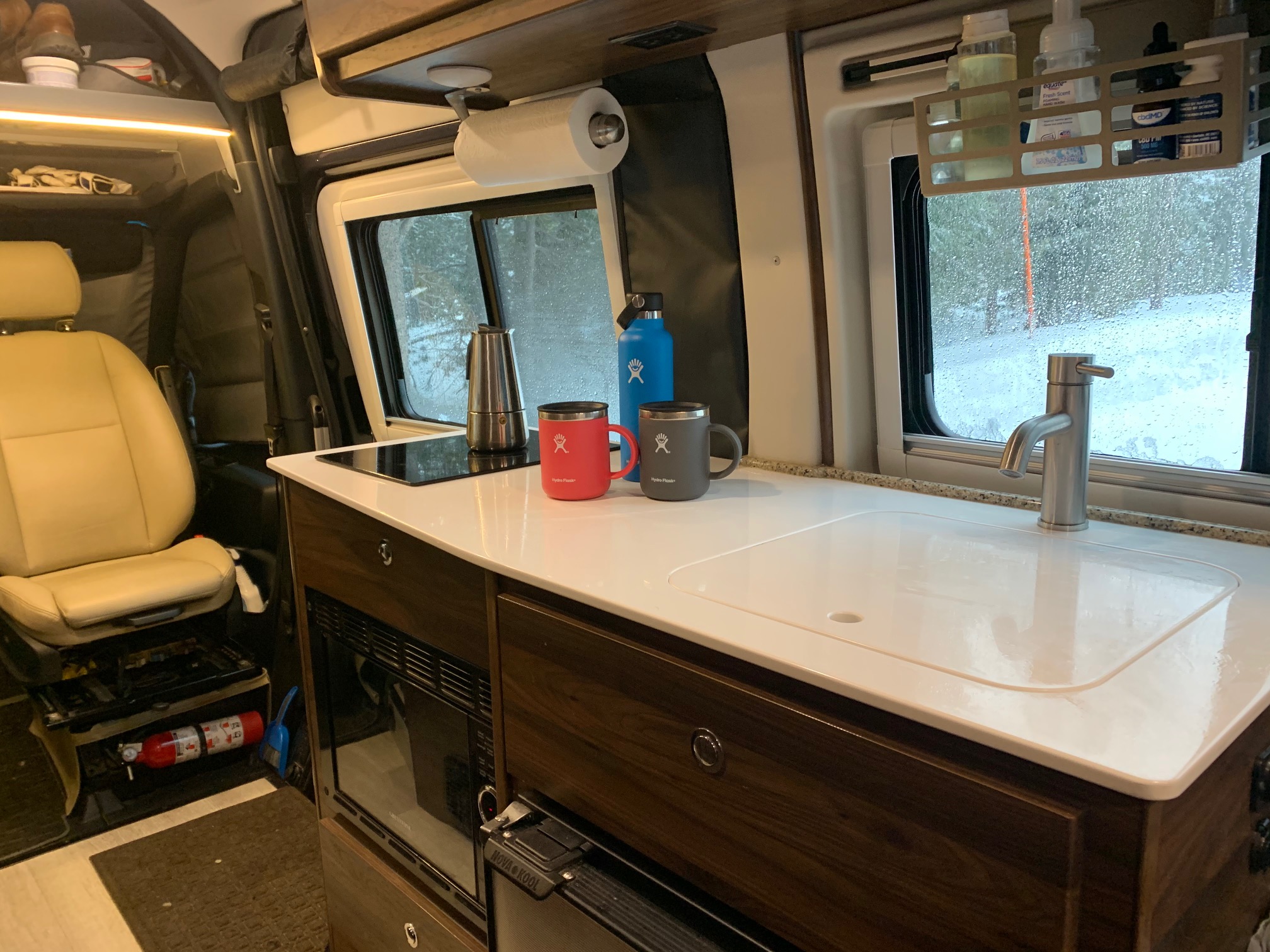
The kitchenette is serviceable, would have been nice to have a convection microwave like on the KL. I would have preferred a kitchen faucet with a removable spray wand and more of a U shape for easier hand and dish washing. But its great to be able to have your refrigerator always running, be able to grind coffee with the grinder, run the espresso machine on the induction cooktop and microwave all at the same time while your boondocking!


Battery life, we arrived at Eagle Lake at about 2pm with full Volta lithium battery capacity. We dry camped 2 nights with warm sunny days (63 degrees) and cool nights (25 degrees) and cooked all our meals in the van. We ran the Truma heating system on gas only mode at about 60 (and 68 or so when we woke up) degrees setting during the night. We ran the tank heaters both nights. Using all these amenities with 2 people and a dog we were left with about 10% percent Volta state of charge by the second morning. No alternator was used and my guess is that the solar adds about 5 to 10 percent capacity per day. Oh, I also tested the Truma water heater on the EL2 Hot setting to test out the outside shower after a bike ride. That alone burned 5-10 of the battery and my shower was luke warm after waiting 10 minutes for it to heat up. I should have waited 20 minutes but lost patience. After boondocking a bunch we have learned to use the propane mode to heat the water if we aren’t going to do a big drive, keep the inverter off and only turn it on when you need to cook. The JBL sound bar is awesome and sounds great! We like to boondock and stay off the grid and find having to turn on the inverter and use power for the sound bar and TV is a waste of electricity. We have decided to take the TV down and leave it at home to not waste battery and just use a Fire Tablet since most of our viewing is Amazon Prime Video, Netflix, Hulu, and YouTube and we have a USB chargeable outdoor speaker we use for our music and video viewing pleasure that works great and takes significantly less power. This way we can charge on the USB and our 90 pound doodle has a lot more room to lay down and not hit his head on the TV.
Tank capacities:
- Fresh water 21
- Gray sink 10
- Gray Shower 26
- Black: 24 gallons
- Propane: 16 gallons
So far, we are on day four after dumping and filling up our fresh water tanks on Sunday. The black tank is at 1/3 full, the sink tank is over 2/3 full and + shower tank is still empty. We still have about half a tank of fresh water but we opportunity filled with the gravity method about 6 gallons at the Lava Beds National Monument campsite. We do appreciate that the GVRW is 1973lbs allowing you to add a lot of cargo. The side and rear Rolef screens are a great addition and we’ve already used them this winter.
So, the limiting factor for us seems to be the kitchen sink tank and then fresh water. Winnebago are you listening… We need a bigger fresh and sink tank, sacrifice some of the shower tank if needed or possible just switch the tanks.
Oh, I forgot, the other trouble that we have had with the van started on about day 3 after picking up the van in Forest City, Iowa. Our sink gray tank macerator pump stopped working, which means you can no longer use your sink?! Lame! So for 2 weeks we washed our hands and dishes inside of our Instapot. Back then we were still asking Lichtsinn for service advice and their only idea was to stop at the nearest authorized service center.
They didn’t mention the trouble shooting tips I later found deep within the owner’s manual. Anyway, La Mesa RV Tuscon was sort of on our way, so we made an appointment and spent half a day waiting around for them to decide that the pump was bad(which ended up being an incorrect diagnosis). They didn’t have one in stock, so we soldiered on towards our house in Oregon to try and resolve it there. Then we went to our local shop in Bend, All Seasons RV spent the whole day on the pump issue that turned out to be a bad fuse. Well, long story long, turns out Winnebago poorly designed the fuse panel and the tank heaters and pump to the gray tank were on the same 12-volt fuse. This apparently was a design flaw and the fuse was overloaded. So apparently, it’s thanks to our product testing that the Boldt will now have a service campaign to correct that issue, but it was quite a headache for us and ended with a week’s worth of fixes at the factory service center. In the end, we also got them to add a bypass value so if the pump goes out we can still manually empty the sink tank.
We find the black tank size is fine we have gone five days without needing to dump. We find ourselves needing to dump because of the sink grey tank being full and the black tank is still at ½. One thing is Winnebago puts in a very simple sewer house that you must hold that doesn’t lock or have an elbow. We found a more durable one on Amazon that has a clear elbow, which really helps in knowing when you are done and not having to hold it in place and step in the sewer dump area.
Truma is great, but control knob not wasn’t installed correctly. It is a tiny screw and if the installer drops it, Truma says many times they just take another screw and use it. If it isn’t the flat head screw then it won’t work properly, which is what happened to us. Truma sent us a new screw and we are back in business. So if yours isn’t working this is your issue.
Locking cabinets perform well and a good amount of storage for the items you need to live in the van for the size of the van. Con, cabinets veneer is paper thin and not durable be careful ladies that your nails don’t scratch them . Expect more for the money. Also, the sharp end of the cabinet above the driver side bed, get ready to have your shin banged and scratched several times. We have suggested to Winnebago in the next edition to make it a more curved corner.
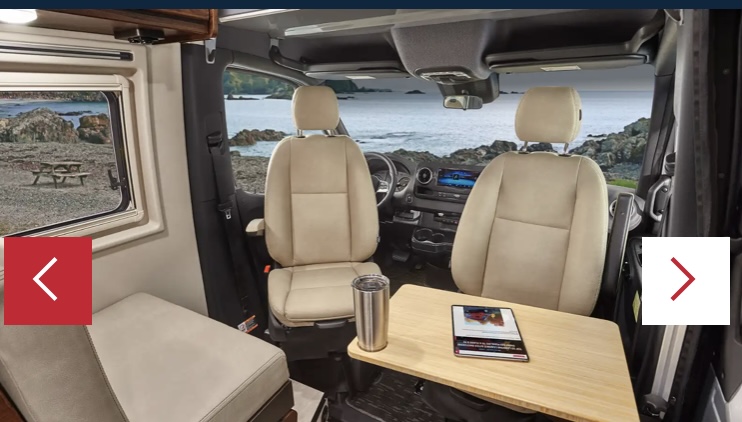
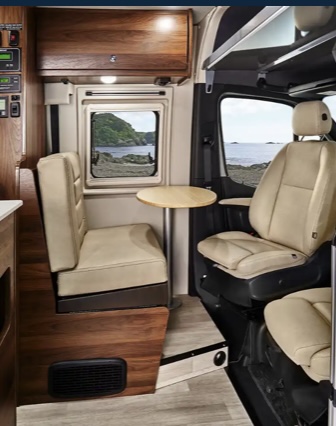
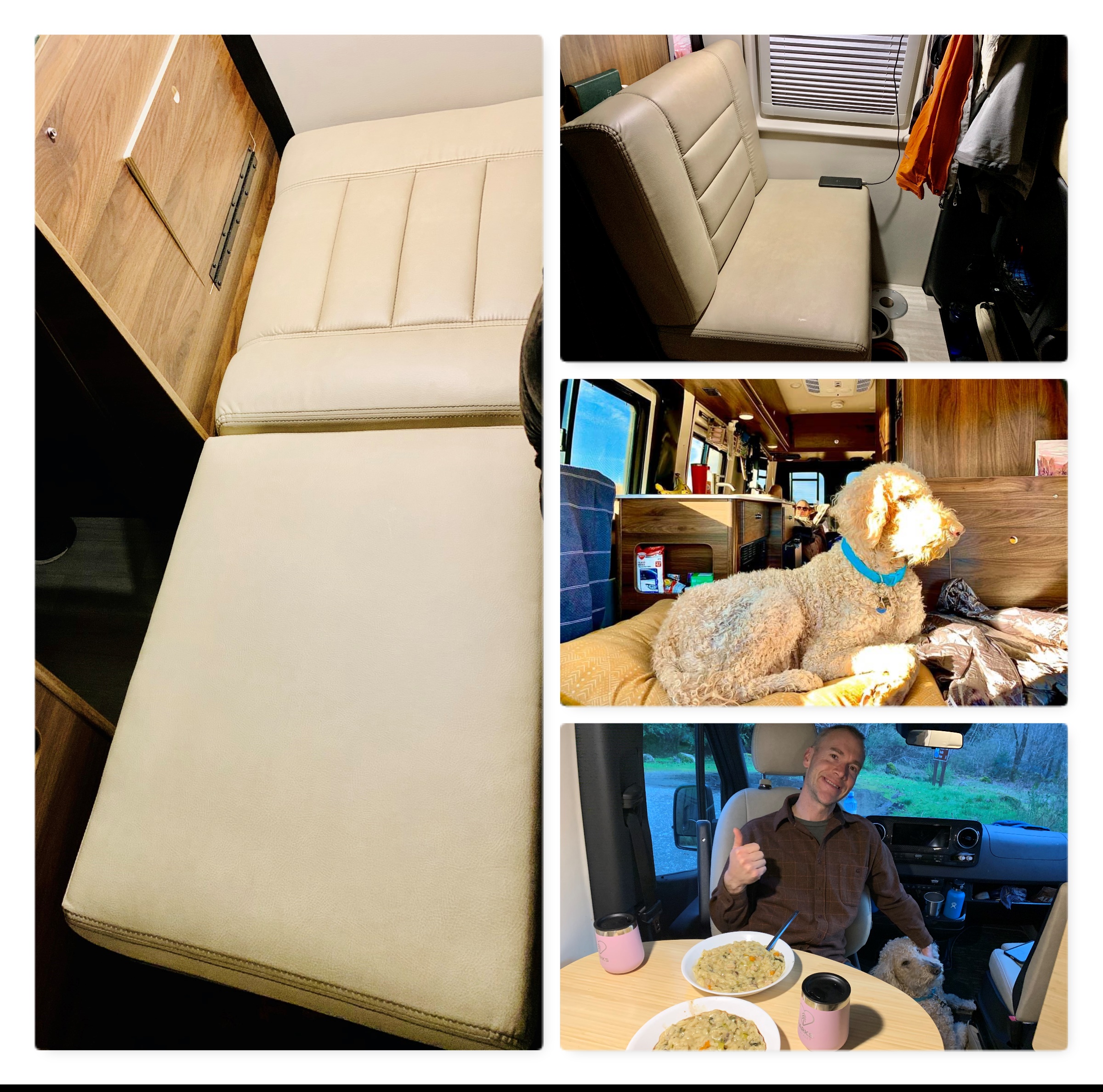
The fold out bed under dinette is a waste of space. We’re considering removing it and opting for more storage-if possible. It could fit a child that is under 5 foot well or a younger dog but no one else. It also slips and slides and needs Velcro to keep the cushions it in place. We added Velcro and now it works well, Bode has slept on it once but its too high for him to jump now that he is 12 years old, he likes to sleep onto of Rane instead.
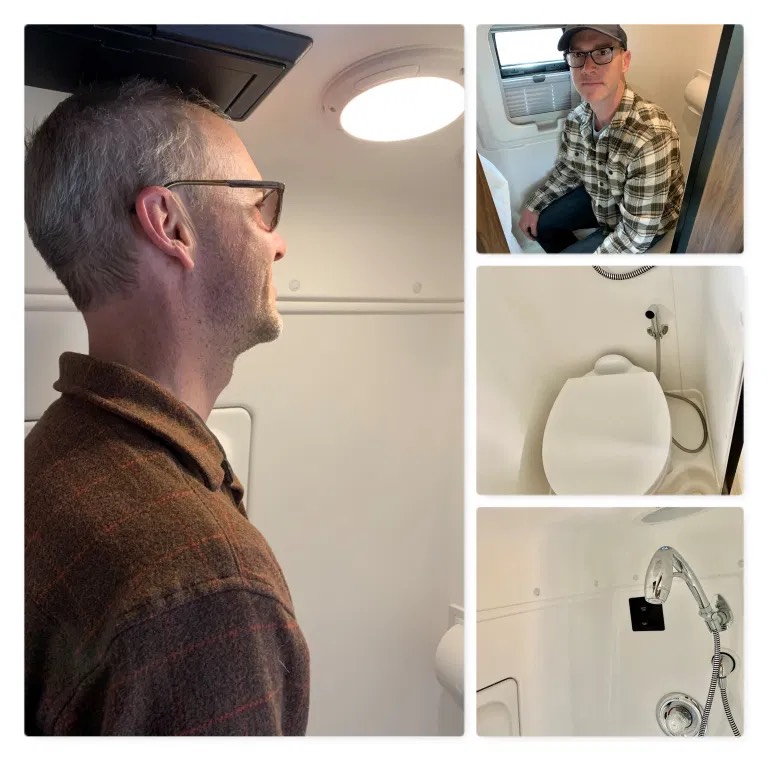
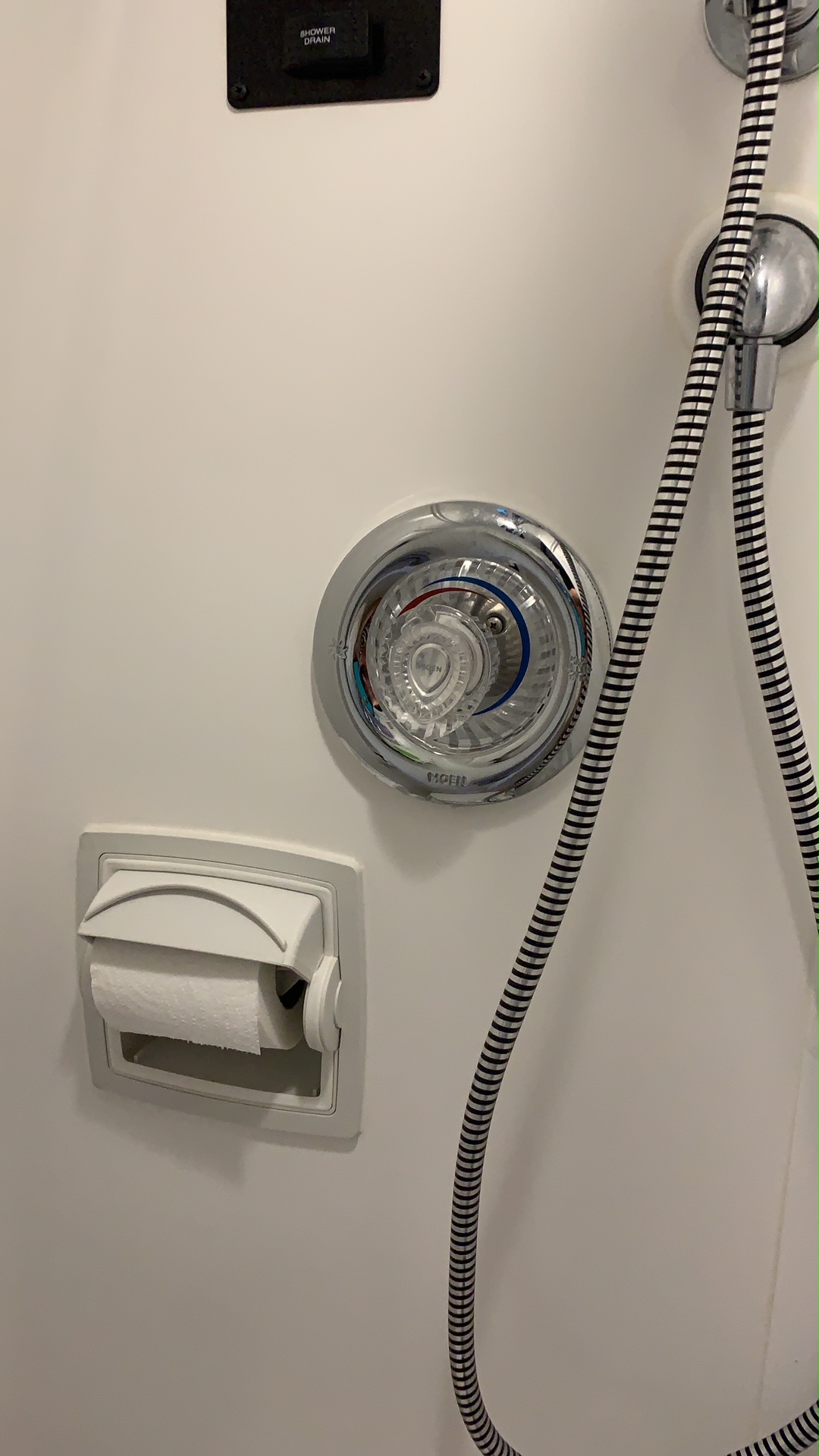
We don’t like the fact that you have to turn on a pump to suck out the water from the shower drain and it’s got to be cleaned after every shower. Only tiny fingers can do this- poor Rane is designated to this ‘fun’ job. We have found after 10 showers you then have to open up the cabinet under the driver bed and clean out the screen in the pump. Another fun job for poor Rane. We have done a video on this and you can find it on our YouTube Channel, be careful not to wrench on the pump to hard in taking off the screen. Another reason to opt for the KL shower which simply uses a gravity drain. Also, the BL had no toilet paper holder, we had one (Dometic) installed at the factory service center. Check the height of the shower wand-the installed height for ours was installed below factory specifications and had to be relocated higher. Once done it is a good height for those 6 feet tall.

Bed storage access is poorly thought out. If my 5-foot-tall 112-pound wife can accidentally rip off the aluminum leg that props up the bed, Winnebago needs to revisit their durability testing. The Service Center put a new one on and added a new Velcro to hold it in place. I still think there could be a better design like a notch in the wood but it works now.
Nova Kool Fridge- works decent except for the door fell off day three after we picked up the van. We called the manufacturer and they sent us new door hinges. It’s been 2 months and it seems that the hinges are going to be a constant source of failure and poor design. The bolt that holds the door on only is designed with a 1/16 of an inch of thread. I’ve had to fix it already on our current trip and we are only on day four. We finally had them add locktight and now we haven’t had any issues. We do like the refrigerator size and we go grocery shopping about once every 7-10 days. We have a full level for sparkling water and beer, one level for all the veggies and one level for cheese, meats, eggs, tofu, etc. Condiments, yogurt, butter, half and half fit well in the door.
It would have been nice to have one Master control panel instead of 6 different gauges and systems. Multiplex wiring and touchpad controls would eliminate the need for so many controllers and are commonly found on vans at much lower price points like the Coachmen Beyond, Pleasureway Ascent, etc.
As you have probably read on your research, Winnebago isn’t known for their quality control or warranty protection. Unfortunately, our rig was finished on Friday the 13th, so the team must have been anxious to leave the factory. Not only did we have the issues above, our counter wasn’t installed properly and there was a large gap against the wall and trim where a lot of food and debris could fall down and looked very cheaply done. Also, there was no backsplash so it allowed food to fall behind the counter.
We were happy that at the factory service center they added one for us. It looks really nice and no food debris behind our kitchen to attract rodents. The Rolef screen was installed improperly and had a significant hole in the corner where mosquitoes and flies could easily fly in. The bathroom shower had the hot and cold flipped, resulting in 5 super cold showers for us, until we figured it out not to mention the fact that the shower drain screen was installed backwards. The shower was installed 1.5 inches below specification, making it difficult to use for a 6 foot man. The outlet next to the sink was poorly aligned and didn’t sit flush. A couple of our drawers weren’t installed properly and had to be reinstalled.
In the end, the VP of Winnebago called us and made it right and had all our issues fixed (at that time, we now have a few more), taking a full week at the factory service center in Junction City, Oregon. We are going back to have the next set of items fixed. We highly recommend if you have issues with your Boldt take it there- the team is professional, knowledgeable and detailed oriented. He also sent a product engineer from Winnebago, Chris Bienert, out to meet with us(you may recognize Chris from several FitRV videos) and for us to share the items that need to be fixed for the next models that get built. We enjoy our BL now, but it should have been this way when we purchased it and hope people who purchase it no longer have all of these production issues. If we had to do it over again, we probably would have purchased the KL. Live and learn. 😊 We are really enjoying full-time living and surprisingly comfortable for two people and a large doodle.








 Encouraging the Minimalist Life