The Joy of Art, Music, Crafting and Gifting to Heal the Type A Brain

After my seventh concussion and being diagnosed with Traumatic Brain Injury, as stated in my last two blogs, I began to take my injury more seriously and knew I needed to make a change in my life.  My emotions were on a roller coaster ride.  One minute I would be happy, then next my husband would say something and I was ready to pummel him in rage and then the next I would be crying hysterically like a toddler having a temper tantrum. Not only were my emotions wreaking havoc in my life but my memory, word searching, attention span, reasoning and problem-solving skills were like a child.

Since I had been told by my neurologist to not read, go online or watch TV, I needed to do something to occupy my time and get healthy.  To go from having 15 hours scheduled by the minute to no schedule was utter maddening.  You can only spend so much of your day meditating, doing yoga, going for hikes/walks and cooking. I was still struggling to occupy my days and I wasn’t ready to see very many people other than my closest of friends.  My godfather and mother came over for a visit and she taught me to knit. I became a knitting fool.  Making scarves, hats, shawls for everyone I knew.

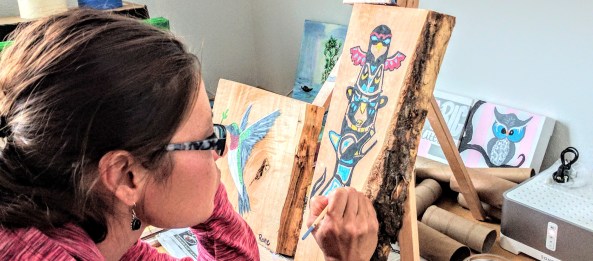
My sister-in-law gave me a nail art kit for my birthday and soon I was making everyone wood nail art deer, owls, ravens and landscape pieces.  I also thought it was time to do something with the bags and bags of wine corks I had collected and made these wooden and cork hot pot holders for dining room tables and cork boards. That Christmas everyone got a Rane original creation!  I was becoming a crafting aficionado and enjoying the smiles on people’s faces as they got something made by me.  I was getting a little over zealous with my knitting and I think I made everyone I knew something, that my husband suggested isn’t there other art therapies or maybe even music therapies I could try?
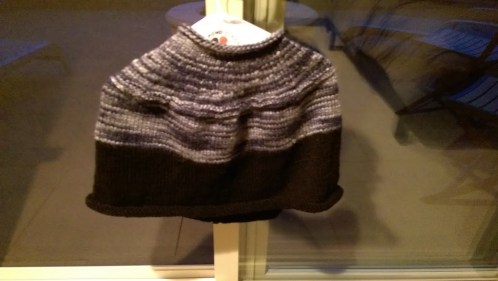
shawl

One of the many shawls I created for friends.

I then remembered with the work I was doing before I went on medical leave from Microsoft regarding helping military veterans reskill and get jobs in technology. There was research on art and music therapy helping military veterans with traumatic brain injury.  I thought if it could work for them, it may possibly work for me.  I couldn’t read the research reports to understand the details and unfortunately scholarly reviewed publications are not on digital audio yet, (perhaps, someone should really look into that.)  So, I went to my psychologist and asked what types of art and music therapy I should try. This would occupy more of my day, give my monkey mind a part-time job and hopefully start helping my cognitive impairments. He suggested I start first with the adult coloring books and listening to classical music.

Once, I was able to read again I began to learn what art and music therapy can really do for you.  In the last ten years, there has been significant progress in the study of TBI and art/music therapies.” Biomedical researchers have found that music is a highly structured auditory language involving complex perception, cognition, and motor control in the brain, and thus it can effectively be used to retrain and reeducate the injured brain.”

I also learned that listening to “polyphonic music has shown to engage neural circuits underlying multiple forms of working memory, attention, semantic processing, target detection, and motor imagery, in turn indicating that music listening engages brain areas that are involved in general functions rather than music-specific areas.”  A good example of polyphonic music is this old Sting classic, I love this YouTube rendition.

In addition to listening to music, I took it a step further and have been teaching myself to play the acoustic guitar. Through other books, I learned the importance of dancing and singing every day to my favorite song and how that help grow the strength in my vagus nerve (As my earlier blog stated, I learned my vagus nerve was having issues and was the reason for my blacking out and causing all my concussions and traumatic brain injury).

My poor husband would have to listen to me belt out at the top of my lungs ‘Dancing Queen’ by ABBA or ‘It’s a Beautiful Day’ by U2 or ‘Brown Eyed Girl by Van Morrison and the list goes on and on.  I started rubbing off on my friends and they would text me their dance out song of the day.  You should try it; your whole body get a rush of endorphins and total jubilation once your done with a grin a mile long and your spouse laughing hysterically at you.
IMG_20170504_142904 (2)

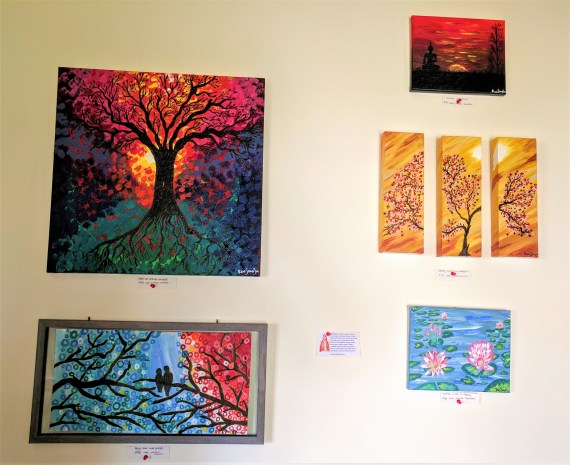
My first set of paintings on display at Chow Restaurant in Bend, Oregon.

I was starting to get bored with my adult coloring books from Costco.  When I was at the Newport Visual Arts Center, looking at the latest show there was a bunch of people painting with watercolors on the second floor.  As I walked in, I found out they had received a grant that allowed them to give free art classes every day for the community and I was invited in to try.  So for the rest of the Summer, every week I attended the water color class, pottery class, pastel class, coloring pencil class, and acrylic painting class. Soon, I was able to read again, I learned through Psychology Today that art therapists, “McGuinness and Schnur worked with TBI patients and they explain the salient roles of art therapy in addressing various parts of the brain with clients in a user-friendly way.”

They also state that, “art therapy can help with organization, problem solving, and memory when the frontal lobes have been affected by TBI.”  I then started concentrating on acrylic painting as my favorite form of painting.  And thanks to my friends Lisa and Amy, who one day said, “Hey Rane, you are actually getting good- you should sell your art!”  To my utter amazement, a local restaurant wanted me to show my art and by January 2018 I had sold 12 pieces.

Filling my days with painting, listening and playing music my energy, emotions and memory were improving. The hardest part of my TBI has been moving from a super positive always happy demeanor that rarely ever got mad to this uncontrollable rage that pops up from just a little comment could set me off.  If anything can calm this new emotion, I am happy to do it.  I am lucky my husband is understanding and can deal with these moments that happen several times a month.  My days are now packed with art, music, yoga, mediation and the outdoors. I highly encourage everyone, even those who may not have traumatic brain injury the power of adding more art, music or crafting in your life.  A lot of the research highlights how it can help slow and possibly stop Alzheimer.  Here are a few of my favorite beginner Youtube videos to get you started with music, art and knitting, I hope you try-  I promise you will have fun!


Innovating for the future: second annual International Women’s Hackathon

Well, here it is: I am pleased to announce that our second annual International Women’s Hackathon will take place on university campuses around the globe from April 24 to 27, 2014. Last year’s event spanned 14 campuses in seven countries, with more than 600 university women participating. We’re anticipating even bigger numbers this year!

Women in computing matters—International Women's Hackathon

We launched the International Women’s Hackathon to encourage, support, and retain women pursuing the computer sciences at the university level. This event, largely promoted by word-of-mouth, empowers young women to become leaders in computer science, informatics, and electrical engineering. By providing a fun and safe environment in which to explore computing, the hackathon encourages and supports young university women around the world, preparing them to create technology innovations that will help meet worldwide challenges in such areas as improving healthcare, protecting the environment, and upgrading manufacturing.
The presence of women in technology is essential to innovation. When confronted with a problem, we each encode our perspectives and then apply our particular heuristics to explore new and better resolutions. Diverse teams often outperform homogeneous teams (even those composed of high-achieving individuals), because diversity of perspective and problem-solving approach trumps individual ability. Research has identified the diversity of work teams as one of the key influences in the innovation process—and without question, a diverse team needs women.
As I travel around campuses, I hear the same concerns repeatedly from women in computer science courses:

  • Male classmates underestimate their technical abilities and relegate them to project management roles in group projects.
  • There is a lack of women on the computer science faculty, which leaves them feeling that they have no good role models.
  • They question whether they can fulfill their desire to solve big challenges by working in a field that seems to discount their talents.

This is why the International Women’s Hackathon is so important. It provides an opportunity for female students to demonstrate their technical chops and unique problem-solving approaches. To ensure that this year’s hackathon meets the needs of university women, we have enlisted the help of recent winners of the NCWIT Award for Aspirations in Computing. These gifted young women have helped us organize the challenges, reassess the rules and regulations, and upgrade the toolkit. So here’s a big thank you to the leads and planning committee members:
Leads:

  • Halie Murray-Davis, Franklin W. Olin College of Engineering
  • Jinisha Patel, New Jersey Institute of Technology
  • Safia Abdalla, Northside College Preparatory High School

Committee members:

  • Ashika Ganesh, West Windsor Plainsboro High School North
  • Aishwarya Borkar, San Jose State University
  • Diem-Nhi Tran, University of Texas at Dallas
  • Heather Huynh, University of Georgia
  • Kylie Moden, Trinity University
  • Nishtha Oberai, University of Colorado at Boulder
  • Veronica Wharton, Rochester Institute of Technology

The hackathon provides an opportunity for female students to demonstrate their technical chops and unique problem-solving approaches. The hackathon provides an opportunity for female students to demonstrate their technical chops and unique problem-solving approaches.

We are excited to have this year’s challenges sponsored by the following nonprofits: UN Women, Hindsight Group, Boys and Girls Clubs of Calgary, and Teens Against Distracted Driving. Hackathon participants will design a software application that meets one of two challenges: (1) increase women’s participation in STEM (science, technology, engineering, and math) majors, or (2) put a halt to texting while driving.
I am also pleased to announce our partnership with the USA Science and Engineering Festival in Washington, DC. We will be front and center during the festival, with women students from local universities hacking live on stage while we connect via Skype to the hackathon events taking place on university campuses all over the world.
I will announce more information about the hackathon in January, including details on special speakers and unique events, so stay tuned. In the meantime, I hope that many of you will take advantage of this opportunity: you can organize teams and register for the event now.
Rane Johnson-Stempson, Director, Education and Scholarly Communication, Microsoft Research Connections
Learn more

World Kindness Day- Practice Random Acts of Kindness This Week

“I’ve learned that people will forget what you said, people will forget what you did, but people will never forget how you made them feel.” – Maya Angelo

Today is World Kindness Day.   It was introduced in 1998 by the World Kindness Movement, a group of nation kindness NGOs.   Many countries like Canada, Japan, Australia, Nigeria, UK, India, Italy, United Arab Emirates and Singapore officially observe the day.   On this day, there are many events celebrated like: THE BIG HUG, handing out Kindness Cards, Global Flashmob, which was coordinated by Orly Wahba from USA which was held in 15 countries and 33 cities with its images of the event making the big screens in New York City.  Even though we don’t officially observe the day in the United States, I wanted to take the time for us to pause and think about kindness.

Maya Angelo has my favorite quote that I usually kick off every presentation I do  and daily I try to make sure every person I come in to contact with feels valued, important, cared about and their opinion matters.   Sometimes the grind of everyday life we forget the importance so slowing down and saying hello to our neighbor, our cubical mate next door or how the last conversation made the person you were interacting with feel. With all you hear on the news is the world today is full of dysfunction, conflict, and disasters its hard to stay positive or think there is any kindness left.  But what we can count on is inherently we are kind people and there is a lot of kindness in the world.  The Giving USA 2013 report was released in July. The good news is that the total contributions in 2012 increased to $316.23 billion. According to the report, the specific increases are:

  • 3.5% increase in total estimated U.S. charitable giving
  • 3.9% increase in giving by individuals
  • 4.4% increase in giving by foundations
  • 12.2% increase in giving by corporations

As a country we are one of the most giving people when it comes to people’s time, talent and money.  I was honored to participate in our Microsoft Annual Giving Campaign where employees supported over 18,000 organizations and raised over $94 million and by the end of the calendar year should reach $108 million.  Kindness is not just about giving money and time to organizations but its also about how we make each other feel.  Research has shown that if you feel appreciated, valued, kindness from your boss and fellow peers you will be more productive and happy.  Check out this great Ted Talk by Shawn Achor- http://www.ted.com/talks/shawn_achor_the_happy_secret_to_better_work.html to get you in the mood to be more kind today.

FN5A1506

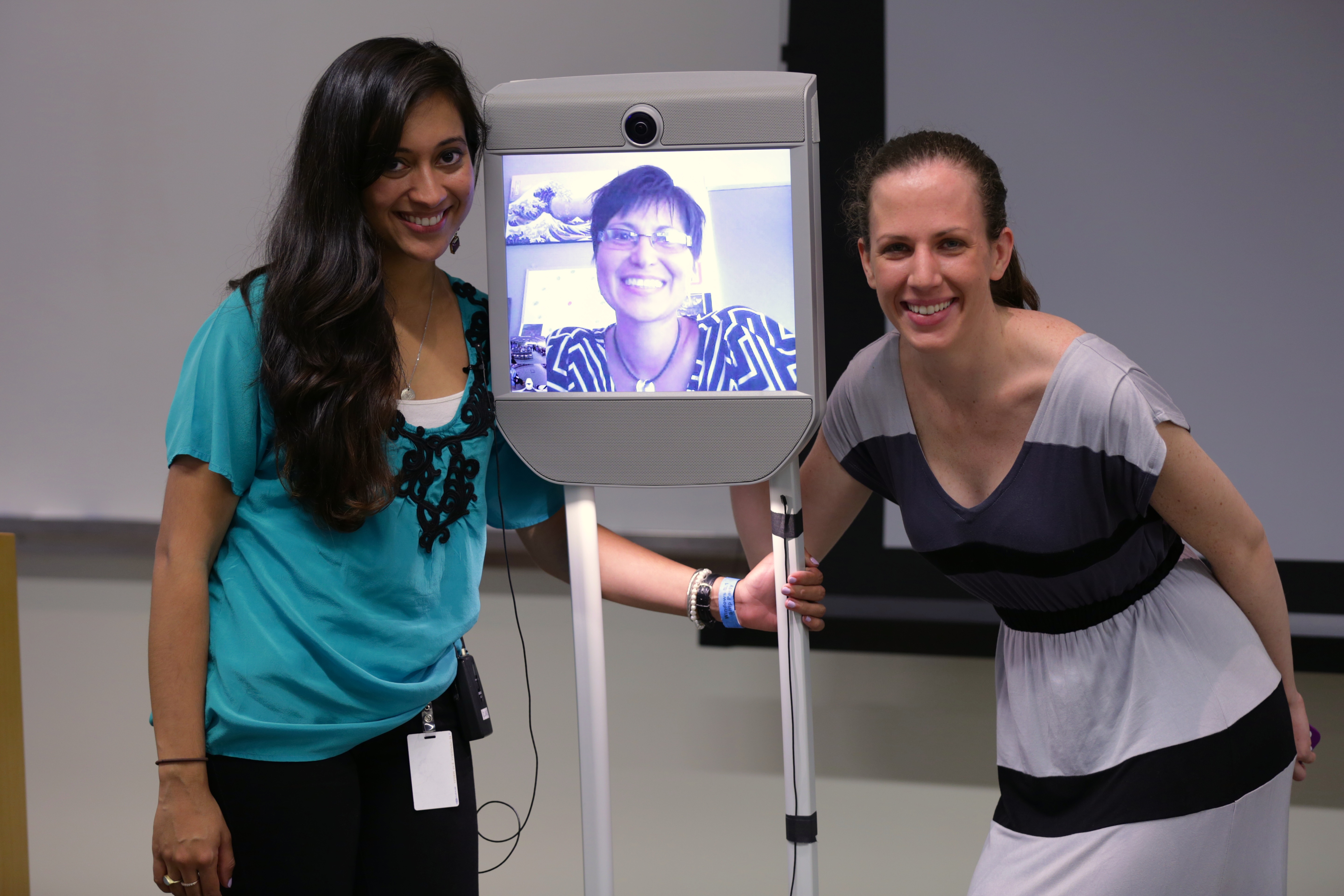
You can still have a virtual hug!  Continue to be kind.

Working for a technology company,  having the ability to work remotely and taking advantage of the latest gadgets is fantastic.  But it also requires us to think about our personal in-person interactions even more, since they are so few.  Today, we are constantly online and engaged in virtual conversations. We tend to feel more comfortable sending an email than walking down the corridor to talk to a colleague or pick up the phone. I don’t know how many times I have been in a restaurant and seeing couples and children with their parents texting each other than talking.  As wonderful as Facebook, Skype and Twitter keep us in touch and up to date on the latest happenings in life, they also take away from that personal engagement and that feeling of appreciation and love we have for each other.  Nothing beats a conversation with an old friend that you haven’t talked to in a longtime or when you meet a person for the first time in a coffee shop and strike up a great conversation and feel that instant connection.

One of the things I love to do each week is just one random act of kindness like buying a cup of coffee for the next person in line, getting a meal for a homeless person, or volunteering to help grade papers for a teacher at the local school.  Too many times we over think and make doing something nice too much work to include in our busy lives.  One of the website I love that can give you great ideas: http://www.randomactsofkindness.org/. Check it out and try something.  Also, another  great Ted Talk to get you in the mood today and this week: http://www.ted.com/talks/jonathan_zittrain_the_web_is_a_random_act_of_kindness.html.

Lastly, I want to leave you with 10 things you can do today to participate in World Kindness Day:

  • Show someone you know gratitude- send him/her a quick email to thank him/her or pick up the phone and call him/her or better yet get him/her a coffee and tell him/her why you are grateful to know him/her
  • Replace judgment, no one likes to be judged
  • Walk in someone else’s shoes and try to understand where they are coming from
  • Hold back criticism and try encouragement
  • Recall how someone made you feel really good and what can you do in return
  • Surprise someone you know with a kind note
  • Turn off your devices tonight and have a conversation with your significant other or children
  • Write down 10 things you are thankful about and if you listed any person, let him/her know
  • Do one random act of kindness for someone you don’t know today
  • Give yourself a break and be kinder to yourself, we are our worse critic.  Appreciate the great work you do.

Have a wonderful World Kindness Day and Pay it Forward!