Traumatic Brain Injury Repost

As we have been traveling the country many people have asked I repost my story on Traumatic Brain Injury. There are so many workaholics who just ignore their body communications like I did, that they requested I share my story and push people to listen to their bodies and take more breaks. Maybe you even want to consider what Greg forced me to do, sell our home and hit the road and leave the working and volunteering world for an extended break. So the next 3 blogs will be about my TBI and how we got to become full-time Nomads. I will do a few revisions to make it more relevant to those on the road and how my life has changed since these posts were a few years ago. Then we will return to our road trip stories and pictures. We will post about how to pack most efficiently, great campgrounds in Montana and the amazing Beartooth Highway! Below, is from Greg and what it is like for a spouse living with a loved one with TBI who won’t accept their disability.
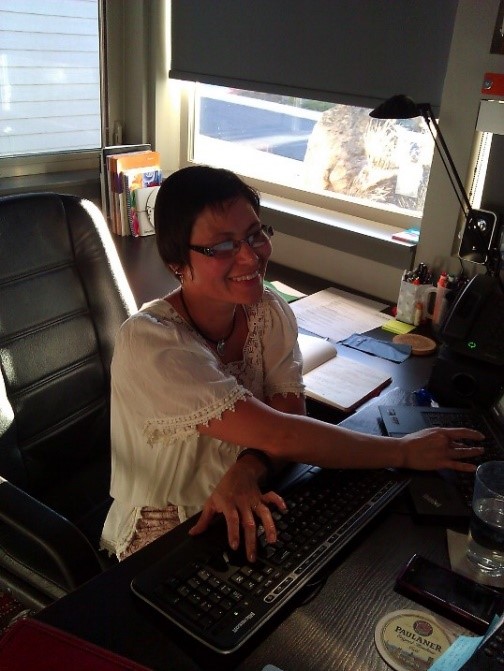
Hi folks, you may have been wondering where I’ve been the last few years since I’ve fallen off the map and social media world.  Unfortunately, at the NCWIT Conference in May 2015, I had a Vasovagal Syncope episode (My husband will describe this later) which resulted in a concussion and an ambulance ride to the ER in Hilton Head, North Carolina.  I’d like to thank all the thoughtful researchers, professors and NCWIT staff who helped me at the Emergency Room and back at the hotel.  This was my 7th concussion since February 2013 and my body was telling me to slow down in a not so gentle way.  The slow down required me to go on medical leave to the present and my future blogs will describe the 13 concussions and resulting Traumatic Brain Injury (TBI) and the fight to move from a ‘Type A’, left brained person trying to change the world to someone who needs to slow down, become more right-brained and focus on selfcare.  The blogs I hope will illustrate our frustration with the lack of understanding regarding concussions and TBI by medical professionals and insurance companies.  How the recovery process works for workaholic, outgoing, overachievers.  As well as the hardship for spouses who have to try and take care of a TBI loved one.  I’ll also try to include some words of advice so this doesn’t happen to others, but let’s start at the beginning… 

My husband Greg helps in describing the events from February 2013 that led to my current health conditions that I have been struggling with for the last four years.  Greg describes what he encountered: 

I woke up at about 2am to the sound of a large thud/crash.  I was startled and immediately thought that an intruder had kicked in our sliding door downstairs.  I leaned over to tell Rane that someone was breaking in and that I was going to check on it.  I was shocked she wasn’t there and my heart sank.  I knew something was wrong.  I hurried downstairs and found a large pool of blood next to the refrigerator and no Rane.  I freaked out and started to look for her, I found her in a daze trying to clean herself up in the bathroom.  She had hit her head and had a laceration on her chin where she had fallen on the floor.  We cleaned up the blood and tried to get Rane settled down back in bed after she insisted she didn’t need to go to the hospital right away (Even though she had a headache, blurred vision, was feeling nauseous and vomited, which we later learned are all signs of a concussion.)  In hindsight, I still feel regret for listening to her and not taking her immediately to the hospital.   

All I could think of was that she should not go back to sleep because a concussion could lead to complications, like going to sleep and not waking up-ever.  I had little to no experience in my life with concussions and did not know what to do next.  I seemed to recall that if someone hit their head and is that they should not go to sleep, I helped Rane into the shower.  I had her shower, sit up in bed and not go to sleep for a few hours until she seemed somewhat stable before I let her finally go to sleep.  This was the start of our experience with concussions and the complications from this little understood medical condition. 

It was a Sunday morning, a few hours after her fall, when I took Rane to the Bend Memorial Clinic Emergency Room in Bend, Oregon.  For some background, we had just moved from Seattle about 2 weeks prior to the incident.  We were just getting used to our new home.  The doctor we saw gave Rane some stitches and asked her some medical questions.  He said she probably had a concussion and she should be wary of the onset of concussion symptoms.  He suggested she go home and rest but Rane asked the doctor if she could fly later that morning for a Hackathon she was leading in Los Angeles, CA for work.   

For those of you who don’t know, Rane was a Principal Researcher for Microsoft who was leading Diversity Outreach and growing the next generation of computer scientists–especially women and underrepresented groups—at the time her concussions began.  It was to be the first International Women’s Hackathon* focused on hacking for good and helping non-profits with applications to uniquely help their causes.  Rane, as the leader, was worried.  She was expected to be there leading around 800 women from the world over who were counting on her.  Additionally, this event was her chance to bring the topic of Women in Tech and Women in Computer Science strongly into the media forefront.  Interviews were set up with the New York Times, LA Times, Huffington Post and NPR.  

The ER doctor gave her ‘permission’ to go on that Microsoft business trip and was rather nonchalant about the incident.  He did however tell her if she had a particular list of symptoms, to go to the emergency room.  Rane being the driven and dependable person she was ignored them all.   In hindsight, this decision for Rane to ‘tough it out’ and push through the concussion symptoms was a mistake. I wish I had forced her to stay home and take care of the concussion.   As it turns out this decision likely worsened her condition and greatly extended the duration and severity of its symptoms.  Her issues had a medical name we were later to find out from her Neurologist.  It is called Post-Concussion Syndrome. 

Some small consolation was the good Rane was able to do while on her work trip in LA.  The Hackathon reached women from seven countries and nearly 800 students from colleges and universities.  If you read her blog from February 2013, you will remember her focus was to help victims of human trafficking and work with the top NGOs in the United States to tackle this complex and horrendous issue. They focused on solving the following questions: given that internet technology is being used for exploitation and trafficking, how might the tools and opportunities of the internet also be used for the protection and defense of victims? How might a victim of trafficking be able to access the Internet to find her freedom?   

The home base for the Hackathon was University of Southern California (USC), with in-person and Skyped-in participants facilitating connection with women from eight countries around the world.  The Hackathon was able to show women they may only be small in number at their university but there are many of them around the world and they can collaborate and support each other.  The young women brought up how this was so different from other hackathons where they were mostly surrounded by men and most of the time ignored, not able to program but were instead relegated to project management or the final presentation.  There was fierce competition but everyone was supportive in giving suggestions, helping debug issues and wanting each other to be successful in helping the NGOs.  Several women discussed the fact that it was so cool to go on Skype and talk to women from countries outside of the United States like Columbia in South America and Australia.  It was exciting to discuss their applications and approaches.  The best quote Rane brought up to me was “It’s like competing locally but collaborating globally, it’s awesome to see I’m not so all alone and there are many women like me around the world!”   

After the hackathon, Rane was headed to Redmond for business meetings and her quarterly business review presentation.  I was surprised to hear from Rane that she was coming home early and needed to go to the hospital and get a MRI and CT Scan.  She had blacked-out and fell again at work, she had migraines and was very dizzy and nauseous.  I picked her up at the airport and I have never seen her so pale and suffering from a lack of energy.  She told me that she had been dizzy, nauseous and vomited several times during the hackathon.  I was so mad to hear she stayed up 38 hours straight and helped the ladies with their applications. Thank goodness, she was staying with a good Microsoft friend Kristin Tolle whose husband is a doctor.  After Rane was feeling weak and fell into Kristin’s arms, her husband told Rane she needed to go home immediately and see a neurologist.    

Rane had made an appointment while at Microsoft, and we went straight to the neurologist.  After a number of tests, we were lucky Rane did not appear to have any major brain issues besides post concussive syndrome and was ordered to take two weeks with no screen time and complete bed rest.  The doctor then let us know she should not have done the hackathon or worked.  Hindsight is 20/20.  As Rane’s supporters and friends you know she did not consider her cellphone as screen time and continued to answer emails and take calls.  This we would later find postponed her recovery.  Her eyesight and focusing abilities diminished to that of an eight-year-old, that after having 20/20 vision all her life prior to the head injuries.  Rane had to get glasses and go to eye therapy with an ophthalmologist to train her eyes to help her brain so she could finally get back to work.   

Rane continued to experience a lot of nausea, migraines, inability to focus, word searching, memory issues and continued to get worse and not better.  After two weeks off, she went back to work and traveled to Michigan to be a keynote speaker at the Women In Computing Conference.  While on the plane she got very sick and had to call the conference organizer to ask them to pick her up from the airport as she could not drive.  The organizer was very nice and picked Rane up and had her stay the weekend at her home.  Of course, she did her keynote and additional talks and meetings at the University.   

When she got home, she was an absolute disaster.  She was then forced to take 6 months off by her doctor and that’s when we first encountered the challenges with insurance companies and concussions.  Instead of granting Rane her short-term disability after four doctors had said she cannot work, the Insurance Company doctors said she was fine and did not have enough cognitive impairment to warrant short term disability.  She was forced to take unpaid medical leave.  It was a very stressful situation and did not help in Rane’s recovery.  We had no idea how bad concussions were and as soon as Rane felt almost 100% she hurried back to work.  She continued her crazy schedule and was off to Universities and Conferences around the world.  Never slowing down.   

If I knew then what I know now, I would have hidden her computers and cellphone and not let her return to work so quickly and especially fly all over the world.  

So, this leads Rane and I to describe what we’ve learned going through this process and hopefully some of the lessons that may help other people in similar situations.  This has been a five-year ordeal.  Here are three actions spouse’s supporting concussion/TBI survivors should consider: 

  1. For many caregivers, the hardest thing is finding some time and space to take care of their own health and needs. You will feel you can never leave your spouse alone and always worried about what if… It is okay to get away!  At first it may only be 30 minutes, then half a day, then you’ll feel okay finding a friend to stay with your spouse so you can get away for a few days and clear your head, you need this for your sanity!  If you are not healthy, you can’t take care of your loved one. 
  2. It is hard to get use to the emotional rollercoaster your spouse will have—one minute they are happy, the next easily hurt and upset, the next angry and ready to explode.  It will be hard, the anger will be overwhelming at times.  You will want to yell back, “What did I do this time?  You are really over reacting!”  Trust me that doesn’t help.  Learn to walk away, let it go and go meditate for 15 minutes.  BREATHE.  Remember, their brain can no longer control their emotions.
  3. Possessiveness and controlling behavior becomes instinct as you are caring for your spouse, it is hard to let go as they are getting better you are worried the worse can happen.  In the beginning this is a must, your spouse will get frustrated and mad at you often but don’t stop.  There will become a time in the healing process when you do need to let go.  Ultimately, you must trust they know their body and allow them to be the adult they are and make decisions on their own.   

This is the first of 3 part series, keep coming back to learn how to manage life with TBI or what not to do so you don’t get TBI. 

*Hackathon definition from Google- an event, typically lasting several days, in which a large number of people meet to engage in collaborative computer programming. 

Winnebago Boldt BL Review

Overall the Boldt has been a good vehicle after a few fixes!  At first, we thought the BL may stand for bad logic but it has grown on us to become better life!  You know what they say about don’t buy the first model year of a car?  Oh well, when life gives you lemons… make lemonade!  For starters, this review is going to skip items that you can find from other reviewers that cover other items.  I recommend reviews from Ultramobility and the FitRV about the Boldt (we hyperlinked the videos for you to review if interested).  Keep in mind we are not receiving any consideration from Winnebago for this review, which should be self-evident once you see it.

First off, the Mercedes chassis.  Looks good, we like the styling, get lots of compliments on the Cobalt Blue stealthy color, so far the auto dim headlights work awesome.  I love the cruise control that adjusts based on traffic speed.  Although, it will become disabled if it gets dirty or covered with ice.  It’s fairly easy to park and change lanes with the vehicle’s sensors.  I love that you don’t have to break and turn off cruise control when someone cuts you off or slows down in front of you, it automatically does that for you.  

Cons, the Hey Mercedes ‘hands free’ navigation system must be either deaf or based on tech from 20 years ago.  It seems to never ‘hear’ or understand your voice commands.  My hunch is that the cabin is too noisy when driving??? We still haven’t figured out how to input geo coordinates even after reading the manual and searching Google.  We asked a Mercedes Dealer in Reno, NV about it and got no help so far.  We found out after our fourth visit to Mercedes we needed  a system software update and the GPS works.  You do need to be exact with your coordinate input what is West, what is East you can’t just put the negative digital coordinates.  

The mileage on our 4×4 diesel version is about 14 mpg after 6,000 miles of driving.  By comparison, I hear that the 2-wheel version is averaging around 17 mpg.  The automatic sliding door works great until it doesn’t.  Our 2-month-old van door stopped working as I was trying to exit the van with my dog Bode (he can only easily exit that way) at 5 am when it was 19 degrees.  It opened about 6 inches then gave up.  Some people in the users groups have said that this may be a low battery issue, the Mercedes rep I spoke to said it’s a known issue with no work around and that we are only supposed to open the door when the engine is running.  So, there’s got to be some fix for this or customer education on proper uses.  We have had times parked on an angle when with the engine on it still won’t shut you either need to shut it manually or have someone on the outside help push it shut as it is closing.  

One of my other pet peeves is that in order to disengage the instrument panel after turning off the engine you must open and close the driver door otherwise everything on the chassis will stay on- draining the battery until the system reaches low battery mode and automatically shuts itself down.  We have also learned from the Boldt forum that you can also turn the engine off if you remove the key from the holder and push the lock button on the key fob.  Also, because of emission controls you are not supposed to idle the diesel engine, which defeats the effectiveness of using the alternator to charge the Volta system.  

The house part of the Boldt designed by Winnebago also has some good stuff and some poorly thought through stuff.  We would think after years of building the Travato they would have fixed items on their high-end Boldt, but these beasts are very complicated and so far Winnebago has fixed all our issues via the warranty at no cost to us but time and days off the road.  So I guess we can’t complain.

Let’s look at the good: We’re cooking and eating nearly every meal in the RV so the dinette comes in handy and is useful.  I’m going to revisit the fold out single bed that’s under the dinette in the bad section, but could be good if you have a younger more agile dog that can jump to use as a bed or a smaller child.  The toilet/shower combo is good if you are skinny and not too large.  Keep in mind I’m just under 6 feet tall and 160 pounds and Rane is 5 feet 4 inches and 112 pounds, it would be comedy genius (or horror show) to see the average (large) size American in the bathroom, but it’s working ok for us, it sure reminds you the importance of staying flexible and fit.  The beds are okay and can be made from side by side full to a little bigger than Queen size.  We have slept both ways and find it very comfortable to do twins in the Summer and the queen in Winter!  We have added twin bed covers with additional padding which has made the beds more comfortable.   I like the smart design of the pull-down racks above the sleeping quarters.  We like the cassette style blinds-especially now that we had the Winnebago factory service center remove them and put a foam gasket around the edges to prevent light bleeding through, added insulation and reduce rattling.

The kitchenette is serviceable, would have been nice to have a convection microwave like on the KL.  I would have preferred a kitchen faucet with a removable spray wand and more of a U shape for easier hand and dish washing.  But its great to be able to have your refrigerator always running,  be able to grind coffee with the grinder, run the espresso machine on the induction cooktop and microwave all at the same time while your boondocking! 

Battery life, we arrived at Eagle Lake at about 2pm with full Volta lithium battery capacity.  We dry camped 2 nights with warm sunny days (63 degrees) and cool nights (25 degrees) and cooked all our meals in the van.  We ran the Truma heating system on gas only mode at about 60 (and 68 or so when we woke up) degrees setting during the night.  We ran the tank heaters both nights.  Using all these amenities with 2 people and a dog we were left with about 10% percent Volta state of charge by the second morning.  No alternator was used and my guess is that the solar adds about 5 to 10 percent capacity per day.  Oh, I also tested the Truma water heater on the EL2 Hot setting to test out the outside shower after a bike ride.  That alone burned 5-10 of the battery and my shower was luke warm after waiting 10 minutes for it to heat up.  I should have waited 20 minutes but lost patience.  After boondocking a bunch we have learned to use the propane mode to heat the water if we aren’t going to do a big drive, keep the inverter off and only turn it on when you need to cook.  The JBL sound bar is awesome and sounds great!  We like to boondock and stay off the grid and find  having to turn on the inverter and use power for the sound bar and TV is a waste of electricity.  We have decided to take the TV down and leave it at home to not waste battery and just use a Fire Tablet since most of our viewing is Amazon Prime Video, Netflix, Hulu, and YouTube and we have a USB chargeable outdoor speaker we use for our music and video viewing pleasure that works great and takes significantly less power.  This way we can charge on the USB and our 90 pound doodle has a lot more room to lay down and not hit his head on the TV.  

Tank capacities:

  • Fresh water 21
  • Gray sink 10
  • Gray Shower 26
  • Black: 24 gallons
  • Propane: 16 gallons

So far, we are on day four after dumping and filling up our fresh water tanks on Sunday.  The black tank is at 1/3 full, the sink tank is over 2/3 full and + shower tank is still empty.  We still have about half a tank of fresh water but we opportunity filled with the gravity method about 6 gallons at the Lava Beds National Monument campsite.  We do appreciate that the GVRW is 1973lbs allowing you to add a lot of cargo. The side and rear Rolef screens are a great addition and we’ve already used them this winter.

So, the limiting factor for us seems to be the kitchen sink tank and then fresh water.  Winnebago are you listening… We need a bigger fresh and sink tank, sacrifice some of the shower tank if needed or possible just switch the tanks.

Oh, I forgot, the other trouble that we have had with the van started on about day 3 after picking up the van in Forest City, Iowa.  Our sink gray tank macerator pump stopped working, which means you can no longer use your sink?!  Lame!  So for 2 weeks we washed our hands and dishes inside of our Instapot. Back then we were still asking Lichtsinn for service advice and their only idea was to stop at the nearest authorized service center. 

They didn’t mention the trouble shooting tips I later found deep within the owner’s manual.  Anyway, La Mesa RV Tuscon was sort of on our way, so we made an appointment and spent half a day waiting around for them to decide that the pump was bad(which ended up being an incorrect diagnosis).  They didn’t have one in stock, so we soldiered on towards our house in Oregon to try and resolve it there.  Then we went to our local shop in Bend, All Seasons RV spent the whole day on the pump issue that turned out to be a bad fuse.  Well, long story long, turns out Winnebago poorly designed the fuse panel and the tank heaters and pump to the gray tank were on the same 12-volt fuse.  This apparently was a design flaw and the fuse was overloaded.  So apparently, it’s thanks to our product testing that the Boldt will now have a service campaign to correct that issue, but it was quite a headache for us and ended with a week’s worth of fixes at the factory service center.  In the end, we also got them to add a bypass value so if the pump goes out we can still manually empty the sink tank.   

We find the black tank size is fine we have gone five days without needing to dump.  We find ourselves needing to dump because of the sink grey tank being full and the black tank is still at ½.  One thing is Winnebago puts in a very simple sewer house that you must hold that doesn’t lock or have an elbow.  We found a more durable one on Amazon that has  a clear elbow, which really helps in knowing when you are done and not having to hold it in place and step in the sewer dump area.

Truma is great, but control knob not wasn’t installed correctly.  It is a tiny screw and if the installer drops it, Truma says many times they just take another screw and use it.  If it isn’t the flat head screw then it won’t work properly, which is what happened to us.  Truma sent us a new screw and we are back in business.  So if yours isn’t working this is your issue.  

Locking cabinets perform well and a good amount of storage for the items you need to live in the van for the size of the van. Con, cabinets veneer is paper thin and not durable be careful ladies that your nails don’t scratch them .  Expect more for the money.  Also, the sharp end of the cabinet above the driver side bed, get ready to have your shin banged and scratched several times.  We have suggested to Winnebago in the next edition to make it a more curved corner.  

The fold out bed under dinette is a waste of space.  We’re considering removing it and opting for more storage-if possible.  It could fit a child that is under 5 foot well or a younger dog but no one else.  It also slips and slides and needs Velcro to keep the cushions it in place.  We added Velcro and now it works well, Bode has slept on it once but its too high for him to jump now that he is 12 years old, he likes to sleep onto of Rane instead.  

We don’t like the fact that you have to turn on a pump to suck out the water from the shower drain and it’s got to be cleaned after every shower. Only tiny fingers can do this- poor Rane is designated to this ‘fun’ job.  We have found after 10 showers you then have to open up the cabinet under the driver bed and clean out the screen in the pump.  Another fun job for poor Rane.  We have done a video on this and you can find it on our YouTube Channel, be careful not to wrench on the pump to hard in taking off the screen. Another reason to opt for the KL shower which simply uses a gravity drain.  Also, the BL had no toilet paper holder, we had one (Dometic) installed at the factory service center.  Check the height of the shower wand-the installed height for ours was installed below factory specifications and had to be relocated higher.  Once done it is a good height for those 6 feet tall.

Bed storage access is poorly thought out.  If my 5-foot-tall 112-pound wife can accidentally rip off the aluminum leg that props up the bed, Winnebago needs to revisit their durability testing.  The Service Center put a new one on and added a new Velcro to hold it in place.  I still think there could be a better design like a notch in the wood but it works now.

Nova Kool Fridge- works decent except for the door fell off day three after we picked up the van.  We called the manufacturer and they sent us new door hinges.  It’s been 2 months and it seems that the hinges are going to be a constant source of failure and poor design.  The bolt that holds the door on only is designed with a 1/16 of an inch of thread. I’ve had to fix it already on our current trip and we are only on day four. We finally had them add locktight and now we haven’t had any issues.  We do like the refrigerator size and we go grocery shopping about once every 7-10 days.  We have a full level for sparkling water and beer, one level for all the veggies and one level for cheese, meats, eggs, tofu, etc.  Condiments, yogurt, butter, half and half fit well in the door.

It would have been nice to have one Master control panel instead of 6 different gauges and systems.  Multiplex wiring and touchpad controls would eliminate the need for so many controllers and are commonly found on vans at much lower price points like the Coachmen Beyond, Pleasureway Ascent, etc.

As you have probably read on your research, Winnebago isn’t known for their quality control or warranty protection.  Unfortunately, our rig was finished on Friday the 13th, so the team must have been anxious to leave the factory.  Not only did we have the issues above, our counter wasn’t installed properly and there was a large gap against the wall and trim where a lot of food and debris could fall down and looked very cheaply done.  Also, there was no backsplash so it allowed food to fall behind the counter.

We were happy that at the factory service center they added one for us.  It looks really nice and no food debris behind our kitchen to attract rodents.  The Rolef screen was installed improperly and had a significant hole in the corner where mosquitoes and flies could easily fly in.  The bathroom shower had the hot and cold flipped, resulting in 5 super cold showers for us, until we figured it out not to mention the fact that the shower drain screen was installed backwards.  The shower was installed 1.5 inches below specification, making it difficult to use for a 6 foot man. The outlet next to the sink was poorly aligned and didn’t sit flush.  A couple of our drawers weren’t installed properly and had to be reinstalled.

In the end, the VP of Winnebago called us and made it right and had all our issues fixed (at that time, we now have a few more), taking a full week at the factory service center in Junction City, Oregon.  We are going back to have the next set of items fixed.  We highly recommend if you have issues with your Boldt take it there- the team is professional, knowledgeable and detailed oriented.   He also sent a product engineer from Winnebago, Chris Bienert, out to meet with us(you may recognize Chris from several FitRV videos) and for us to share the items that need to be fixed for the next models that get built.  We enjoy our BL now, but it should have been this way when we purchased it and hope people who purchase it no longer have all of these production issues.  If we had to do it over again, we probably would have purchased the KL.  Live and learn.  😊  We are really enjoying full-time living and surprisingly comfortable for two people and a large doodle.  

Manzanar Virtual Tour and boondocking in Alabama Hills & Death Valley

As you head to Death Valley from Alabama Hills Recreation Area you will drive past Manzanar National Historic Site on highway 395 in California.  First off, you must stop by Alabama Hills it is an outdoors person and rock climbers dream!  So many amazing rock formations, places to climb and hike and all for free.  The best boondocking ever!  We can also recommend free camping at WildRose in Death Valley.  It is a very long drive to this campground, skinny road and very windy (we would not recommend any rigs bigger than 30 feet to attempt) that only has picnic tables, fire rings, a vault toilet and potable water but it is on your way to seeing the WildRose Charcoal Kilns, (the road is gravel and pretty rough) which are pretty cool and a nice hike to Wildrose Peak that is about 8 miles roundtrip.  We went in winter time/early spring so it was quite cool (temperature that is). If you can get in, we’d rather recommend staying at Texas Spring Campground it is a good central location, much warmer, prettier and better facilities but costs $16/night.  Now back to Manzanar…

Being an Asian American, I had to stop and visit the WW2 relocation center and I highly recommend stopping for a self-guided tour.  It is very well done and reminds us of the atrocities we faced in this country during fears of war and people who looked different and had a different cultural background.  In 1942, the United States government ordered more than 100,000 men, women, and children to leave their homes and detained them in remote, military-style camps like the Manzanar War Relocation Center which was one of ten camps where Japanese American citizens were incarcerated during World War II.  People of Japanese decent who were US citizens from across this country lost all their possessions, dignity and were forced into these Relocation Centers. 

A little history course for folks who may not be aware.  Relocation isn’t new in the history of Manzanar and the Owens Valley. We can’t forget that the Paiute and early settlers as well as Japanese Americans all were uprooted from their homes. American Indians began utilizing the valley almost 10,000 years ago. About 1,500 years ago the Owens Valley Paiute established settlements here. They hunted, fished, collected pine nuts, and practiced a form of irrigated agriculture.  Miners and ranchers moved into the valley in the early 1860s and homesteaded Paiute lands raising cattle, sheep, fruit, wheat, and other crops. The military were called in and forcibly relocated nearly 1,000 Owens Valley Paiute to Fort Tejon in 1863. Many Paiute returned to the Owens valley and worked on the local ranches.

The town of Manzanar—the Spanish word for “apple orchard”—developed as an agricultural settlement beginning in 1910. Farmers grew apples, pears, peaches, potatoes, and alfalfa on several thousand acres surrounding the town. The Los Angeles Department of Water and Power began acquiring water rights in the valley in 1905 and completed the Los Angeles Aqueduct in 1913. Land buyouts continued in the 1920s, and by 1929 Los Angeles owned all of Manzanar’s land and water rights. Within five years, the town was abandoned. In the 1930s local residents pinned their economic hopes on tourism. With the onset of World War II tourism diminished.  Then in 1942 the U.S. Army leased 6,200 acres at Manzanar from Los Angeles to hold Japanese Americans during World War II. Though some valley residents opposed the construction of the internment camp, others helped build it and worked there.

First, we walked through the mini museum that is very well done and tells the stories of the families that lived here during the WW2 internment.  There is a 3.2-mile self-guided auto tour where you can see the original sentry posts, Block 14 buildings, mess hall, women’s latrine and barracks, the cemetery monument, remnants of the administrative complex, rock gardens, parks, orchards, the hospital grounds, the uncovered foundations of the Children’s Village  which was the only orphanage of the ten War Relocation Centers in the US.  In the museum, you will find images Ansel Adams took in late 1943 where he acknowledges the prejudices and fears that led the U.S. government to confine American citizens and legal immigrants of Japanese ethnicity behind barbed wire.

From the website, I wanted to provide you more details on what is still on the property and what you will encounter in the video.

Mess Hall: The US Army constructed this mess hall at Bishop Air Base in 1942. The National Park Service moved it to Manzanar in 2002 and eventually restored it. It is identical to the 36 mess halls that together produced over 28 million meals here from 1942 to 1945. Walk through the kitchen, sit at the picnic benches, and learn about the logistics and politics of food in Manzanar.

Women’s Latrine: The women’s latrine was reconstructed in 2017. The communal shower and rows of toilets depict some of the harsh realities of living at Manzanar. Overcrowding led to long lines, unpleasant odors, and an extreme lack of privacy.

Barracks Buildings: The two barracks buildings were rebuilt in 2015 with exhibits being added in the following years. The four barracks exhibits will tell you about arrival to Manzanar, the importance of the Block Manager’s Office, the loyalty questionnaire, school at Manzanar, and more.

Cemetery: In 1943 the people in Manzanar decided to erect a monument to honor their dead and skilled stonemason Ryozo Kado was recruited to supervise the work. The cemetery serves as a poignant reminder that some of the 10,000 Japanese Americans incarcerated at Manzanar never saw freedom again. Over 145 Japanese Americans died while confined in Manzanar during World War II. Many were cremated, in the Buddhist tradition, and some were sent to their home towns for burial. Fifteen people were buried in a small plot of land just outside the camp’s security fence. When Manzanar War Relocation Center closed, the families of nine of the deceased removed the remains of their loved ones for reburial elsewhere. In 1999, NPS archeologists confirmed that five burials remain at the site. The three characters on the front (east side) of the cemetery monument literally translate as “soul consoling tower” ( I REI TO ). The inscriptions were written by a Manzanar Buddhist priest, Shinjo Nagatomi.

Merritt Park: The people incarcerated at Manzanar left a lasting legacy by creating more than 100 Japanese gardens. The largest of the gardens was Merritt Park, named for the camp director, Ralph P. Merritt. Merritt Park served as community refuge from the hardships of camp. After Manzanar closed in 1945, many of the gardens disappeared as debris from demolished barracks, sand, and vegetation covered them. Recent archeological excavations have uncovered and stabilized some of these gardens including Merritt Park. Today you can view what’s left of this symbol of beauty and the resilience of the human spirit.

Japanese Garden Tour: Private and community gardens covered much of the Manzanar landscape. For many people, these rock gardens and pools served as a source of peace and an escape from their incarceration experience. Today, eleven of the over 100 Japanese gardens have been uncovered and stabilized.

The location was beautiful but also a sad reminder about how we treated fellow Americans.  It makes you sad to see how people were forced to live and were ripped from all their loved ones and their belongings because of a war.   How our fears caused us to overlook people who were citizens and part of our community and treated them like they were enemies because of their former homeland that they had left for a new life in the USA.  Perhaps, it is a reminder about how we can do better in the present and future generations of immigrant people.  We hope you enjoy watching our virtual tour.