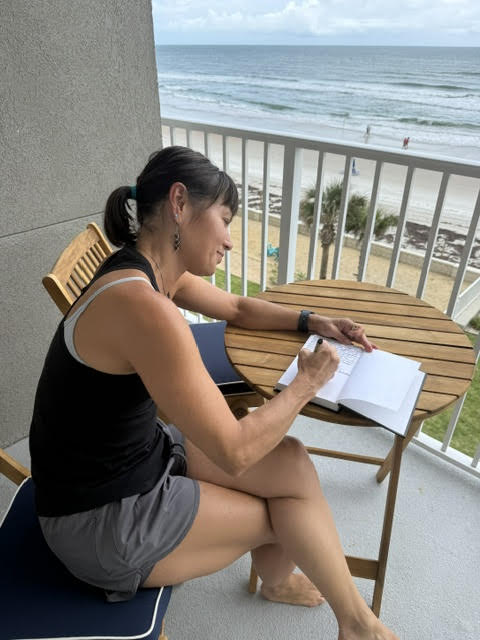
My Brain’s Under Renovation—


I’m currently in the process of rewiring my TBI‑affected brain — which, frankly, feels a bit like trying to update a 1998 operating system using a hand‑crank generator. But here I am, diligently cultivating new synapses and building the cognitive reserve I’ll need to outrun the long family line of Alzheimer’s and dementia that’s basically waiting for me like a surprise party I never asked for.

For those of us blessed with a high‑octane, Type‑A monkey mind, the challenge isn’t just memory retention. It’s the relentless internal chatter — the mental equivalent of a toddler with a tambourine — that keeps the brain stuck in a low‑grade stress loop. My goal is to slow that down, literally and figuratively, by using the physical act of cursive writing to drag my brain out of its frantic autopilot and into something resembling deliberate, structural growth.


Why Cursive? Because My Brain Apparently Needs Handwriting Therapy

Cursive isn’t just “fancy handwriting.” It’s a neurological workout disguised as nostalgia — and the science backs it up.

A 2024 high‑density EEG study found that handwriting (but not typing) activates widespread brain connectivity, especially in theta and alpha frequency bands, which are essential for memory and learning.
🔗 Van der Weel & Van der Meer (2024):
https://www.frontiersin.org/articles/10.3389/fpsyg.2024.1333250/full (frontiersin.org in Bing)

  • Bilateral Brain Activation:
    Cursive requires continuous movement, forcing the left and right hemispheres to communicate across the corpus callosum — something my brain, like many brains, doesn’t always do unless bribed.
  • The Power of the Flow:
    Cursive mimics how thoughts should move: fluidly, not like a bullet‑pointed grocery list written by someone who forgot why they walked into the kitchen.

And this isn’t just about aesthetics — handwriting is increasingly recognized as a sensitive marker of cognitive health, especially in aging and neurodegenerative conditions.
🔗 Frontiers in Aging Neuroscience (2026):
https://www.frontiersin.org/journals/aging-neuroscience (frontiersin.org in Bing)


Why 20 Minutes? Because That’s When My Brain Finally Stops Arguing

Neurologically, 20 minutes is the sweet spot.

  • The 5–7 Minute Shift:
    It takes that long for my monkey mind to stop screaming about laundry, emails, and the existential dread of “what was I supposed to be doing again.”
  • The Plasticity Window:
    Once I hit flow, the next 13–15 minutes are prime time for building new neural patterns — without tipping into the fatigue spiral that TBI brains know all too well.
  • Consistency Over Heroics:
    Twenty minutes is doable even on days when my brain feels like a browser with 47 tabs open and one of them is playing music but I can’t find which one.

This aligns with research on cognitive rhythms and time‑blocking:
🔗 Ahead App Research — The Science of Time‑Blocking:
https://www.ahead-app.com/blog/the-science-of-time-blocking (ahead-app.com in Bing)


The Warm‑Up: Two Minutes of Drawing Infinity Like I’m Summoning a Portal

Before journaling, I warm up with two minutes of continuous figure‑eights.

  • The Drill:
    Fill a page with looping infinity symbols without lifting the pen.
  • The Goal:
    This “synaptic reset” quiets the monkey mind and preps the motor cortex for the sustained, fluid motion of cursive — like stretching before a workout, but for your neurons.

The “Anthropologist from Mars” Inventory: Because Humor Is Cheaper Than Therapy

Writing factually shifts processing from the amygdala (panic HQ) to the prefrontal cortex (the adult in the room). But pure clinical detachment can feel robotic, so I add humor.

The Prompt:
Write 10 lines describing your current activity as if you’re an alien researcher observing a confused human.

Example: “The subject is staring at a glowing rectangle while consuming a heated liquid stimulant. The subject is aware of a laundry pile nearby but is ignoring it with impressive determination.”

This technique is supported by research showing that externalizing thoughts reduces default mode network activity, which is responsible for rumination.
🔗 Neurosity — Journaling and the Brain:
https://neurosity.co/blogs/news/journaling-and-the-brain-how-writing-helps (neurosity.co in Bing)

Why This Works

  • Third‑Person Distance:
    Calling yourself “The Subject” creates psychological space from stress.
  • Humor = Cognitive Cross‑Training:
    To find the funny angle, your brain must shift perspectives quickly — a high‑level cognitive skill that builds resilience.

The Cursive Practice: Satire Meets Motor Cortex

Now combine the humor with exaggerated cursive.

  • The Drill:
    Write your alien observations in long, sweeping, dramatic cursive — the kind of handwriting that would make your third‑grade teacher weep with joy.
  • The Technique:
    When you get clever, you’ll want to speed up. Don’t. Slow down and make the loops even more ridiculous.
  • The Goal:
    You’re training precision and creativity simultaneously — the neurological equivalent of juggling while doing squats.

And yes, handwriting is increasingly being studied as a preventative tool for Alzheimer’s, thanks to its multi‑sensory, motor‑cognitive demands.
🔗 Atena Editora — Cognitive Benefits of Handwriting:
https://www.atenaeditora.com.br/post/artigo-beneficios-cognitivos-da-escrita-manual (atenaeditora.com.br in Bing)


So… Is This Sustainable?

Honestly, yes. It’s structured enough to work on your busiest days, playful enough to keep you engaged, and scientifically grounded enough to satisfy your inner researcher. Plus, it gives your monkey mind something to do besides narrate your to‑do list in a panicked whisper.

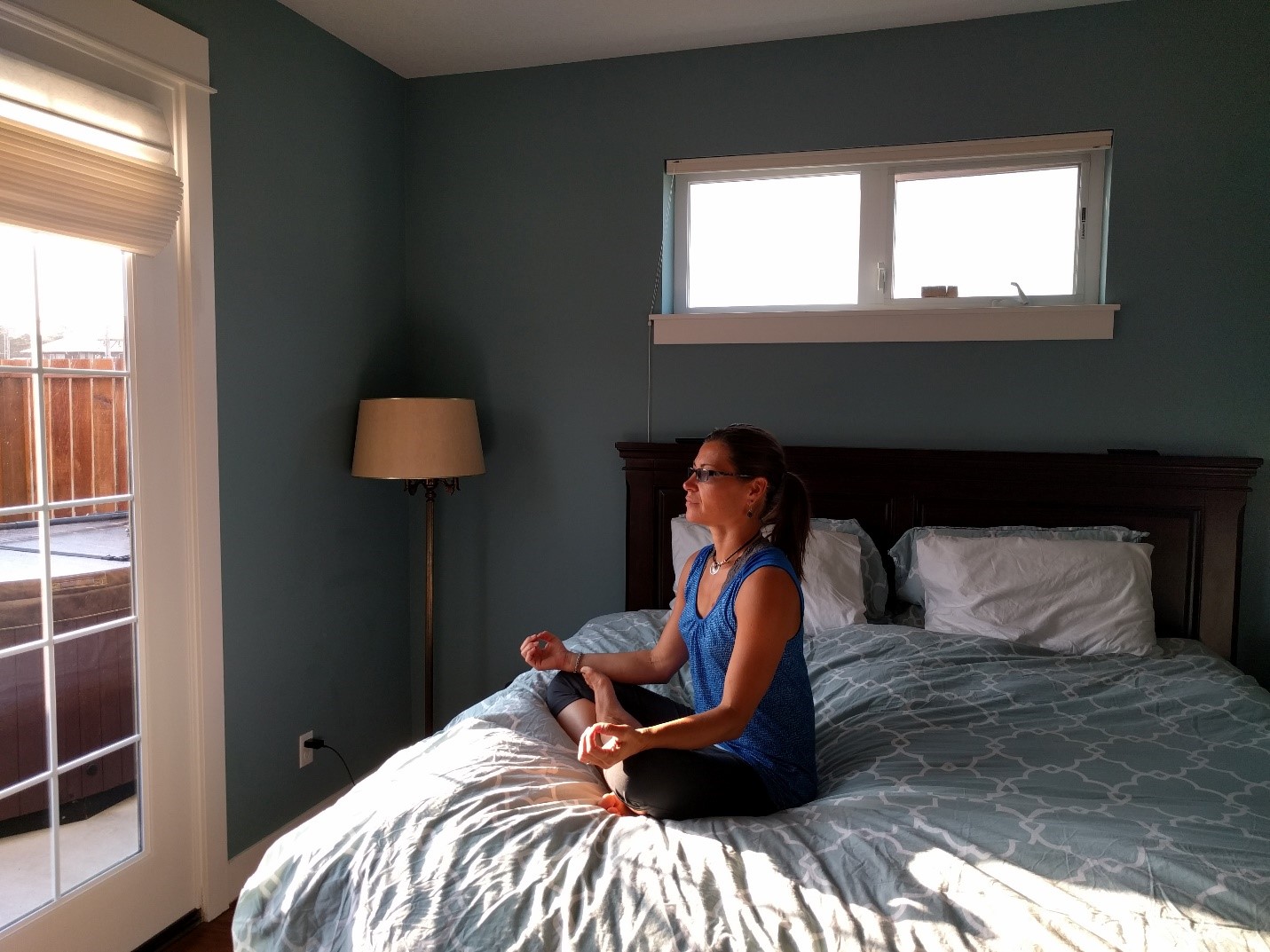
Learning mindfulness, mediation and tranquility

Through this ordeal I have learned a lot about concussions and traumatic brain injury. Every time I stress out and continue to blackout and hit my head, I could cause major neurologic and psychological problems. I finally took this seriously and decided I could not power on through.  In the next few paragraphs, I will give you a summary about stress, concussions and brain injury.  It’s a little dry taken from Mayo Clinic and a few other scientific publications but its helpful in your understanding why mediation is so important for those of us who are workaholics or survivors of traumatic brain injury.

Every year, 1.5 million Americans sustain traumatic brain injuries.  In a concussion, your neural cells are damaged and your brain must recover to rebuild these cells.  If you are always stressed your levels of cortisol will be high and the brain will take even more time to recover.  Cortisol is a corticosteroid hormone that is released by your adrenal gland during stressful situations. When your highly stressed then a large amount of cortisol remains in your brain. It generates more overproduction of myelin-producing cells and fewer neurons than normal. This can result in adverse effects that can impair important cognitive structures in your brain, like damage to your hippocampus (responsible for the processing and storage of short-term memory).  In addition, it affects the differences in the volume of gray matter versus white matter (creating more white matter and increasing atrophy in the white matter), as well as the and size and connectivity of the amygdala (is the integrative center for emotions, emotional behavior, and motivation).  The “gray matter” of the brain is densely packed with nerve cell bodies and is responsible for the brain’s higher functions, such as thinking, computing, and decision-making.

Multiple concussions reduce the amount of gray matter and decreases the number of stem cells that mature into neurons affecting learning, memory, decision making, multi-tasking and concentration. In post-concussion syndrome you can have symptoms like fatigue, sleep difficulties, irritability, balance and coordination problems, agitation, nausea, vomiting, dizziness, altered consciousness and difficulty processing information. I was suffering from all of these!  Studies and research have shown that Mindfulness meditation helps to reduce the symptoms and distress on the brain and helps increase gray matter in the insula, frontal cortex and sensory regions.  Researchers found that the frontal regions, anterior cingulate, limbic system and parietal lobes were affected during meditation and that there were different patterns of cerebral blood flow between the two meditation states i.e.“focused-based” practice and a “breath-based” practice.

Meditation increases regional cerebral blood flow (rCBF) in the prefrontal cortex.  As reported by researchers the cerebral blood flow of long-term meditators was significantly higher compared to non-meditators in the prefrontal cortex, parietal cortex, thalamus, putamen, caudate, and midbrain. In brief body-scans of meditators show meditation practice improves somatosensory perceptual decision making.  Meditation enhances cortical remapping and brain functions while it also helps to uplift mental health and causes healthy changes in the brain. It was time to take my meditation practice seriously!

So, for ten years I was trying to learn how to meditate but never had truly made a practice.  I had read a number of books on meditation, mindfulness and how to radiate calmness.  I even went to mediation workshops but I never stuck to it.  Now I had to or I may never get better.  In the beginning, trying to calm my monkey mind was impossible.  I would start focusing on my breath and then the next minute I would be thinking about what I would knit next, go back to my breath and then think about a new recipe to try.  I could never sit there for more than 5 minutes without having to twitch or move or scratch.

If you are a crazy Type A person, whose mind is always thinking and nerving on something.  The best way to get into a mediation practice is to start with guided meditation for sleep, called Yoga Nidra.  I started with this one and then later I downloaded the Insight Timer App from the Google Store, it is amazing and I highly recommend it. My first few weeks I focused on mediating for 15 minutes lying down in bed before sleep during my afternoon nap and right before bed. Your brain can much more easily focus on the voice.   Like what my favorite Tibetan Buddhist Meditation master: Yongey Mingyur Rinpoche says, “You must give your monkey mind a part-time job to be able to meditate.”  As I did these guided meditations, I began to really focus on breathing meditation.

So, a couple times a week before I got up to start my day, I would switch off my audiobook and focus on my breath.   I would chant in my mind rising and falling with the rise and fall of my breath.  When my mind would wonder to something I could hear I would chant hearing, hearing.  Then when it would calm I would go back to my breath and chanting rising and falling.  When I would feel my mind wandering and want to scratch or move my leg, I would start chanting feeling and I would then not need to move and then go back to focusing on my breath.  Soon I was building mindfulness and awareness.  Once again, I was only doing this for 10-15 minutes.  I could feel my energy increase, my twitching and constant need to move to slow.

I am also now enjoying chanting mediation called Om mani padme hum.  I took this from the Tibetan Culture website “Om mani padme hum, which is an ancient mantra that is related to the bodhisattva of compassion, Avalokiteshvara.  Every Tibetan child is taught the mantra by their parents, and they all use it very commonly in daily life, and especially if they make a prayer walk (kora) or go to the temple, or pray using a rosary (mala).  Basically, any mantra is “a sound, syllable, word, or group of words that is considered capable of ‘creating transformation.’”  There are great examples and guides on the Insight Timer App.

I then re-read all my meditation books, I highly recommend the following:

·         The Joy of Living: Unlocking the Secret and Science of Happiness, By Yongey Mingyur Rinpoche with Eric Swanson, Daniel Goleman

·         Joyful Wisdom: Embracing Change and Finding Freedom, By Yongey Mingyur Rinpoche with Eric Swanson

·         Turning Confusion into Clarity: A Guide to the Foundation Practices of Tibetan Buddhism, By Yongey Mingyur Rinpoche with Helen Tworkov, Matthieu Ricard      ranemediating

Rane mediating at our Beach House in Newport, Oregon

They now began to make more sense to me.  I now tried walking mediation when I went on my walks in Shevlin Park and around the golf course.  Trust me it’s not easy, I would have good weeks and have weeks in which I did no mediation and forgot about my practice.  But I wanted my brain to heal so I would then make sure even if it was only 5 minutes I did some type of mediation each day.  Then my friend Maribel taught me Hong Sau Mediation, which I love and can do for 30 minutes a day now.  I highly suggest this for beginners, here is a link to a great guide.

Today, I am focused on loving kindness and mindfulness mediation called Metta Bhavana.  In this practice, you start focusing on yourself and feelings of peace and calmness and then nurture your state of mind into strength and confidence while chanting ‘may I be well, may I be happy, may I be healthy and may I be free from suffering’ and cultivate the love within your heart.  The next stage you focus on a close friend.  Think about your connections, why you love this person, why you are encouraged by this person and begin chanting ‘may he/she be well and happy’ as you feel the love in your heart for that person grow.  Think of a person you are neutral with and have neither strong love or dislike for and think about this person’s humanity, what actions this person can make you feel encouraged and could make you love this person.  Begin chanting ‘may he/she be well and happy.’ Now think of someone you really dislike and have ill feelings toward (an enemy) and don’t concentrate on their negative actions but think about their positive actions, how can you think about the good intent he/she may have, how could you grow to love this person, how can you encourage this person and have good will towards this person.  Now chant ‘may he/she be well and happy.’ Lastly, in this practice you will think about all four people in positive light, now extend those thoughts to all the people you know, all the people in your neighborhood, all the people in your town, all the people in your region, all the people in your country, all the people and beings on earth.  Feel the love, encouragement, kindness you have for all these people.  Begin chanting ‘may all the people on earth be well and happy.  Slowly focus back on your heart and the love and kindness you are feeling and then step away from your practice.  This has grown into a 45-minute practice for me now.  Some great guides come from the buddhist centre.

My aspiration is for my experiences through mediation to help you in your desire to grow your meditation practice.  My greatest wish is this helps other Type A’s who feel: I really want to meditate but I just don’t have time or patience or the ability to focus their brain that way.  I am here to tell you, you can’t afford not to!  If you are a stress junkie like myself, you must start mediating ASAP you really want to repair the damage you are doing to your brain.   I am hopeful that this is helping my brain and in turn yours.  I am on twenty months of no blackouts and my migraines are diminishing.  I believe my memory is getting better.  I am also working much more on the right side of my brain with art, crafts, playing music but that is the next blog post.  Till next week, I hope you try a few of the practices above.