The old saying, “If I knew then what I know now”, echoes in my mind.
I would have not gone to the Hackathon in LA back in 2013 and when my doctor said I must rest. I would have had my husband hide my cellphone, laptop and taken it easy. Instead, for the next six months, I still went online on my phone doing emails and answering what I thought were crucial emails and calling colleagues on how to execute important projects.
Of-course looking back none of it was more crucial than my health, I wasn’t saving lives, things could have waited. Others within Microsoft would’ve taken the slack. However, my ego was hard to reign in. I thought what I was doing was so critical and no one else had the expertise and needed my coaching for things to be completed exactly the way I thopught they needed to be done.
Many of us think we can just ‘tough it out’ and work through cold, illness, etc. What ‘toughing it out’ did do was postpone my recovery. Failure to heed my body’s warning signs caused dizziness, migraines, memory loss, executive function and slowed my multi-tasking abilities. I now had to do eye therapy and my ability to focus (switching from looking close and away) diminished to the ability of an eight-year-old and required me to relearn my focus and get glasses for the first time in my life.
So, after six months of eye therapy, no driving (Five years later, I still lack the confidence to drive and am only slowly adding in daytime driving for short distances. But last month I did do my first long 200 mile drive from Bend to Newport, Oregon ), no television, no computer, no reading, no alcohol, no caffeine, no high intensity exercise, constant migraine headaches, dizziness, nausea, word searching, memory loss, six more black out concussions and lack of balance. Then one day I awoke with a clearing in my head I had not felt in 6 months. I went to the neurologist, she did some tests and said I think you are okay to go back to work but you must take it slow! Do not jump fully in and do not take too much on you have been resting your brain for 6 months you need a slow transition back to work.
I did not realize her definition of slow was very different from mine. Compared to the way I used to work, 12-18 hour days, I was only working 10 now. Instead of traveling 3 weeks a month, I started with just a few days a month. But as the months drove on, I was feeling more and more like myself again.
There was so much work to be done in diversity in computer science, combating human trafficking, committees for the White House Office of Technology Policy on computer science education for underrepresented groups and technology implications of human trafficking, hackathons, hacks for good, conferences, keynotes, panels, guest lectures, publications, projects with UN Women, NCWIT, ABI, CRA-W, ACM-W and the making of Dream Big (movie featuring young women in computer science changing the world), that I started back to my 16 hour days, and my crazy travel of three weeks a month.

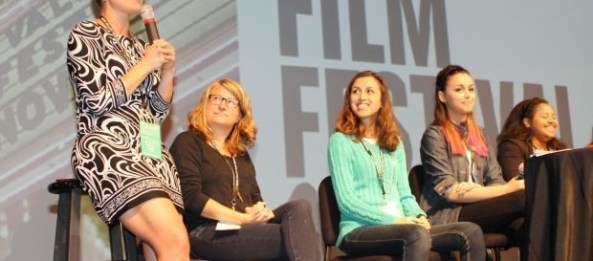
Rane moderating Big Dream Panel at the Napa Valley Film Festival
Taking on diversity and Computer Science efforts at top universities around the country heading to India, Korea, UK, Brazil, Singapore, and across the United States. In a previous blog post, you saw our film was featured at the Napa Valley Film Festival and was being shown all over the world. I was so excited about the progress! Also, the fact that Microsoft and Microsoft Research’s efforts were highlighted in many of the top publications (i.e. Slate, NPR, Huffington Post), I couldn’t but help agreeing to serve on nonprofit boards needing our help and expertise, at one point I was on thirteen boards. My hubris and type A drive which had carried me so far was a hindrance to my healing.
At every free moment, I was working on some project with one of the many non-profits (as you know I am a get shit done person and not just a sit and advise type person). In my spare time, I was at home trying to transform my local community (Bend, Oregon) by supporting more STEM efforts, starting a scholarship for under-represented groups in computer science and engineering at OSU-Cascades, helping entrepreneurs, volunteering with the tech community and local youth, mentoring and teaching a course called ‘Ethics and Computer Science’ at OSU-Cascades. I could feel the exhaustion coming on but I thought to myself “just one more conference and then I will take two weeks off and be fine.”
I am here to tell you, we are not robots and you can continue to ignore the signs your body gives off but if you don’t listen it will force you to listen. As Type A workaholics, passionate and ready to take on the world are bodies are resilient but not that resilient! You cannot ‘tough it out’ you must pause when your body needs a pause even if it is just a mental health day from work.
So, on May 23, 2015, while attending a conference on behalf of Microsoft I had just finished several sessions and presentations at Day one of the NCWIT Conference in Hilton Head. I had a dinner meeting with Mayim Bialik (Big Bang Theory-that was so cool!) discussing our film and her possible support and how Microsoft could possibly support a new Girls in STEM TV series she was going to kick off. We returned to the hotel and I saw several of the researchers I was working with on a number of projects at the bar talking asking me to come join them.
After discussing theories, projects, new opportunities and changing the world of computer science it was reaching midnight and time for me to head for bed. I was tired and started to feel a pain in my side (later I would figure out that would be a sign that I would blackout soon) but I ignored it and kept on. As I walked away from the bar area to the elevators, the next minute I know I awoke in someone’s arms, with so many people surrounding me, all dazed and confused as I try to get up. There was shouting, “Rane don’t move you’re bleeding and bleeding a lot.”
Suddenly, EMTs are walking briskly toward me as my eye sight slowly comes back from a fog of gray and blurs. “Ma’am you blacked out and hit your head, you have a good side gash on your head, can you just lay back we are going to put you in a neck brace and start an IV?” said the nice EMT gentleman. One of my research friends from Harvey Mudd University began telling the EMT what had happened and he had her and a staffer from NCWIT follow the ambulance to the Emergency Room (thanks Catherine & Colleen).
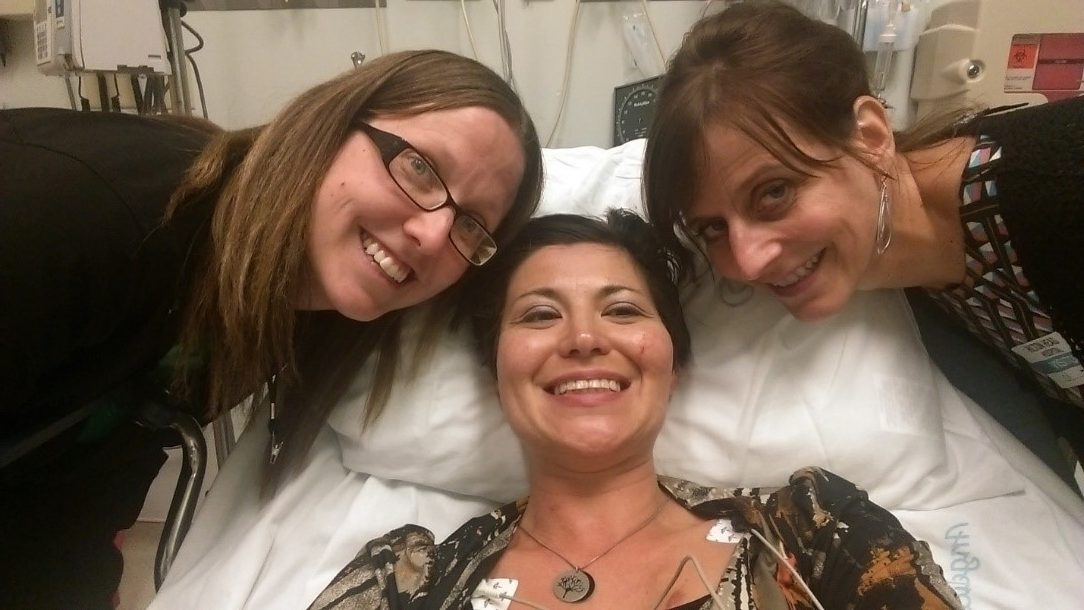
Rane in emergency room sending selfie to her husband to calm him down, trying to make it look not so bad.
I had thrown up a few times in the ambulance (sorry Mr. EMT guy- all over him) and still could not comprehend what was going on. While waiting for the doctor, my colleagues called my husband and tried not to scare him with me being in the emergency room again and blacking out after hitting my head. Once they were done, then I was taken for MRI, CT Scan, stitches and forced to stay awake for a few hours to ensure I wasn’t going to go to sleep and never wake up again. I finally got back to the hotel at 4AM looking like a semi-truck hit me, it took me an hour to wash all the coagulated blood out of my hair. I went to sleep and at 10am I awoke to call the airline and get a flight back to Bend, Oregon to go to my neurologist. I flew out with frustration, here we go again. With a horrible migraine, nausea and dizziness, I headed to the airport to what would be a multi leg eight-hour (the take offs and landings were excruciating with another concussion) flight before I finally got back to Bend and into the arms of my husband. It was also so humiliating for an extremely independent person to be whisked on and off the planes on a wheel chair as people looked at me like oh that poor young woman. Talk about a humbling experience. I was beaten down.
This resulted in the next several years of trying to figure out why I was blacking out, thirteen more concussions resulting in me having traumatic brain injury and fighting the insurance company for my long-term disability. Who would know the benefit you pay into hoping you will never have to use would be so difficult to obtain. Once you need this benefit, how difficult it is to get it, even harder to keep it and then battling their doctors, lawyers, appeals and lawsuits to get the money and benefits you need, deserve and have earned. No one explains how you need to fill out all these forms and one little error can make your benefits never happen. Having to go on unpaid medical leave due to this (I will have an entire blog dedicated to this subject later in my blog series to help those dealing with long-term and short-term disability claims, so you know what to do to get the benefits you deserve). I would move from one doctor visit a year with my primary care for annual physical and flu shot to multiple visits a week with the following healthcare providers: Neurologist, Vasovagal Specialist, Optometrist, Vestibular Therapist, Occupational Therapist, Neurofeedback Psychologist, Psychologist, Acupuncturist and Chiropractor.
I didn’t realize how life threatening it could be for you if you tried to just push through the pain. I plead with you if you have a concussion to please take the needed time off and screen time off! I learned the hard way and trust me you don’t want to go through this. During this process, I had to get character letters from friends and colleagues about the Rane before and the Rane after all these concussions for the lawyers and it was painful to read the new person I had become. As I researched what was wrong with me, I realized we still don’t know much about the brain and especially concussions. I read and listened to everything I could on TBI and concussions. I will spare you with the peer review scholarly research publications (they are quite dry, interesting but will put you to sleep) but here are my top three books for you to read if you or a family member is dealing with this issue. Next week, my blog will be on lessons learned on how Type A’s can rest your brain.
- Super Better by Jane McGonigal
- Mindstorms: The Complete Guide for Families Living with Traumatic Brain Injury by John W Cassidy
- Coping with Concussion and Mild Traumatic Brain Injury: A Guide to Living with the Challenges Associated with Post Concussion Syndrome and Brain Trauma by Barbara Albers Hill and Diane Roberts Stoler


 Encouraging the Minimalist Life