Virtual Tour Badger Springs Trail at Agua Fria National Monument, Arizona

IMG_4268So a little food for thought…  We are a few months in on living the full-time vanlife.  When we made this decision to rent our homes and go full-time for a year to visit all our US National Parks, monuments and beautiful outdoor spaces there was not an inkling of the global pandemic.  When you no longer have a home to go to, what do you do during a pandemic?  You try to be super diligent and responsible citizens.

We try to only use shopping services with curbside pick up at the store such as Walmart’s Grocery App and pick-up groceries (once a week or less).  We have the Pacific Pride Commercial Gas cardlock so we don’t go to ‘normal’ gas stations unless we need to fill with DEF (which may not be available at all cardlock locales).  We have focused on staying at BLM (Bureau of Land Management) public lands dispersed camping to avoid people and other RVers.  When there is a national park or monument or state park that is open we go very early in the morning and avoid other people and look for dispersed campsites or primitive campsites with the minimum people.  Once in a while though you must go to a park where there are people so you can dump and refill water, sometimes there are rest stops or gas stations that allow you to do this.

As I watch social media, people are being pretty harsh and disrespectful to RVers and vanlifers.  Saying we are irresponsible and making the pandemic worse.  We are seeing more and more of our outdoor spaces close, which we understand may be the right thing to do to slow the curve but there are many Americans who do live the RV life full-time who are struggling to find a spot to shelter in place.  Many of the RV private places are very expensive and difficult for those who have chosen this life to pay $75 a night for months on end and many have also closed.  We are lucky we have a lot of solar and lithium batteries to be able to be off the grid but many can’t live like us.  I understand folks being upset about RVers on the road but they must also understand not everyone can hunker down in their homes and stay in one place when they don’t have a home to stay at.  We need to have empathy and understanding that people can be responsible adults, do the right thing and that they are not out to be irresponsible and trying to make the pandemic worse but have no other choice because they made this choice of a different lifestyle.  I have spoken to friends where they see several people who are living in a home and going to the grocery store daily and come closer than 6 feet on trails and causing more issues than many RVers.  So how can we come together and help each other do the right thing when we have people with homes on wheels?  Can we stop shaming, lecturing and give more positive advice and understanding?  Can we be more supportive of people with different lifestyles?  Lets help each other, those who have stationary homes and homes on wheels be able to live and still flatten the curve.

So on to the virtual tour…

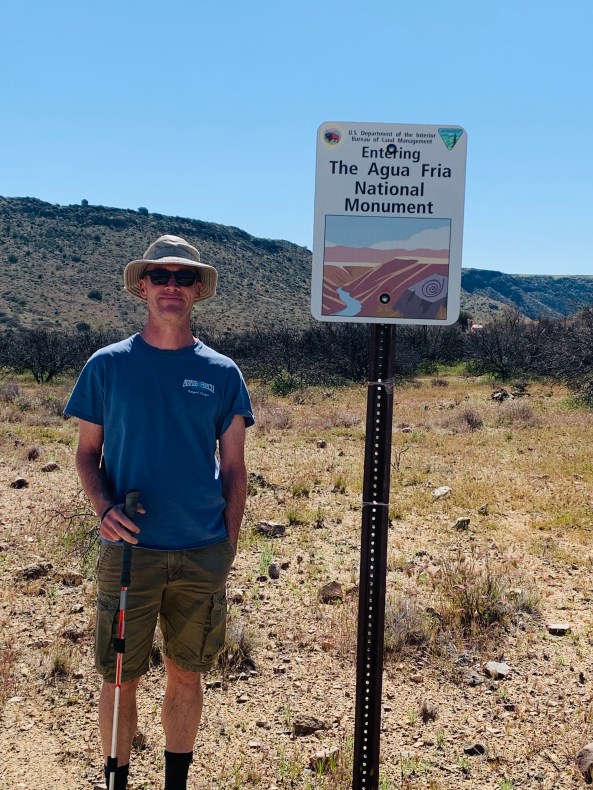
For those of you following us, who  have asked us to continue to do virtual tours of our hikes, monuments and places we see for your children’s virtual tour and online school work.  Here is our second installment.  We were at Aqua Fria National Monument in Arizona. It is 71,000 acres and about 45 miles from Phoenix.  Quoted from the BLM webpage, “The monument encompasses two mesas and the canyon of the Agua Fria River. Elevations range from 2,150 feet above sea level along the Agua Fria Canyon to about 4,600 feet in the northern hills. The diversity of vegetative communities, topographic features, and a dormant volcano decorates the landscape with a big rocky, basaltic plateau. This expansive mosaic of semi-desert area, cut by ribbons of valuable riparian forest, offers one of the most significant systems of prehistoric sites in the American Southwest.

In addition to the rich record of human history, the monument contains outstanding biological resources. The area is the home to coyotes, bobcats, antelope, mule deer, javelina, a variety of small mammals and songbirds. Eagles and other raptors may also be seen. Native fish such as the longfin dace, the Gila mountain sucker, the Gila chub, and the speckled dace, exist in the Agua Fria River and its tributaries.”

We ended-up being able to disperse camp (boondock) about 800 yards from the Badger Springs Trailhead.  The road from the freeway is a pretty rough dirt road, very rutted out, muddy in spots and most suited for a 4×4 vehicle.  The Badger Springs Trail is an easy 1.5 mile trail that really follows the Badger Springs Wash, so don’t wear running shoes like us, unless you don’t mind wet shoes and socks.  I’d suggest a good pair of hiking boots.  The trail isn’t well marked and has a lot of cactus and cheat grass growing over the trail.   I would say not very dog friendly once Summer time hits and the cheat grass has dried, tough on their little paws.  At the time we hiked it was very green and soft.  The trail ends  as Badger Springs Wash runs into the Agua Fria River Canyon, with a small waterfall through boulders and at an archaeological spot rich with a few petroglyphs.  Here is a link to our new video- enjoy!

Here is our virtual tour on the RGBAdventures YouTube Channel, don’t forget to subscribe to our channel!  We are almost to 100 subscribers, help us get over the line.  Enjoy!
IMG_4280


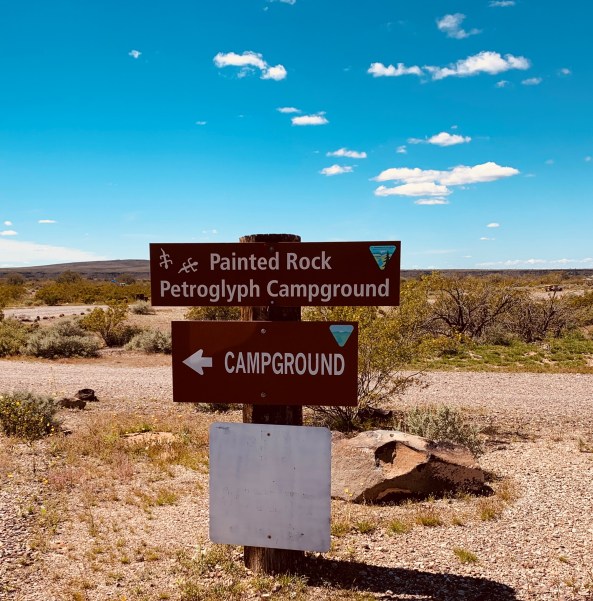
Camping & Exploring the Painted Rock Petrogylphs

paintedrock

If you have been following us, you know we put our home in Bend for rent for a year and have moved in our 2020 Winnebago Boldt for the year and if we like it or not this is our home until March 26, 2021.  So it has been a little over a week and a half since everything began closing down all over the country due to COVID-19, while we already started our one year trip visiting all the National Parks. We headed out of Bend, OR on March 1st where everything was okay and the world was functioning like whatever was everyday normal as we knew it as Americans.

Since then, we were able to visit the Lava Beds National Monumnent, Eagle Lake, Washoe Lake, Travertine Hot Springs, Alabama Hills, Death Valley National Park, Mojave Desert National Monument and Joshua Tree National Park. (More videos and blogs to come regarding each spot.)  While in Joshua Tree, state parks and national parks across the country began to shut visitor centers and some campgrounds. Many have now waved their frees and you can visit but there are no services. We have decided to go to places where they are in BLM or National Forests where there is free dispersed camping and you are well away from other campers.  We have a Pacific Pride Cardlock to fill at commercial diesel gas stations, so no interacting with people.  The only place we have to interact is grocery store which we try to only visit once a week or less.  We are trying to utilize the Walmart Grocery free curbside pick up service, but seems like everyone is doing that too.  When in a grocery store I am using gloves, distancing myself 6 feet from other shoppers, using the self-check out and going at times where there are the least amount of people.

So far we are still able to camp.  We were at Truckhaven Palm Wash BLM area and met a super nice local who wanted to make sure we weren’t stuck without resources.  Don’t worry we social distanced ourselves- him being outside our rig and us inside talking through the window.  Mike offered us ideas on nearby places of interest, where to dump and fill our RV if we needed it.  After Truckhaven, we headed to the BLM Pilot Knob Long Term Visitor Area, where it is free camping for 14 days and you are at least 500-1,000 yards from another camper.  This is different than Imperial Sand Dunes where there are a lot of RVers that are very close to each other, we would not recommend that area.  Today we arrived at thePainted Rock Petroglyphs, which are super cool. There are very few people here and social distancing is keeping us about 500 yards from other RVers.

sunsetpaintedrock

The Painted Rock Petroglyph Site is located on the eastern edge of the Painted Rock Mountains and about eighteen miles west by northwest of Gila-Bend, AZ. (information pulled from Wikipedia and BLM websites) The area is mostly flat and sandy with May-Oct daytime temperatures in the 100s. While we were here it was in the mid 70s in end of March.  The annual rainfall is only about six inches and the nearest irrigation water is the Gila River. In prehistoric times the Gila flowed west out of the mountains of western New Mexico, made a big dogleg turn at the town of Gila Bend and continued west to empty into the Colorado River. The Hohokam people once lived and farmed here. Ruins of their late Pioneer Period (AD 350 – AD 550) and Early Colonial Period (AD 550 – AD 700) villages are found to the north and west, and ruins of their Sedentary – Classic Period (AD 900 – AD 1400) villages are found to the south and east.  Over forty petroglyph sites have been recorded in the area, however; most of these sites are small with only a few dozen petroglyphs. The Painted Rock Site is the largest known site with about 800 images. While on my exploration I had the entire place to myself and did not cross anyone else.  Tomorrow I am heading out with Greg and Bode to hike on the historic Butterfield Overland Stage Route this was the old Oxbow Route that had mail travel from St. Louis to San Francisco back in 1858.

I recorded a short video for you to do a virtual tour and create activities for your children while they are off from school.  ( I have had requests from friends to do these little virtual tours).  I hope you enjoy it.  Keep checking back to our blog as we keep you up to date on how our  travels are going during this time and what you can and can’t do if you are a full-time RVer in the USA right now.

Top 10 Ideas for New RVers When Preparing for a Trip

top10Hi subscribers, we are currently in Joshua Tree National Park and decided before we go back to detailing our reviews (and it’s a rain/snow mix 38 degrees) of our National Parks and best boondocking spots across the West, we thought it would be helpful to get a “Top 10 things new Vanlifer’s/ RVer’s should have or do before heading out on your trips.”  After living in our van for nearly three months here are the things that have truly made life easier on the road.

10. Foldable Durable Shovel- In our first trip, we were in the Mohave Desert going down a dirt road to a boondocking spot and the dirt was very soft due to a recent rainstorm so we got stuck. This foldable shovel we got at REI, packs away easily under our bed storage and has become helpful a number of times already.  It’s also useful for properly preparing a fire pit (digging out and disposing of ash so you can have a safer fire), or burying human or pet waste at the proper depth.

REIshovel

9. Boondocking- If you are like us, we are not too interested in staying in RV parks unless we need to dump tanks or catch up on washing clothes. We prefer more open space and would rather not listen to generators or close neighbors-we get enough of that at home. We prefer the freedom of staying off the beaten path.  Especially with Coronavirus, this helps with the new social distancing guidance.  We found having a membership with Harvest Host- we have listed a 15% discount code you can use to join has been helpful.  These are farms, vineyards and golf courses who welcome you to stay a night for free, in exchange for their hospitality, Harvest Host asks you to make a small purchase in return.  Such as, a bottle of wine, some produce, happy hour or play a round of golf.  We also found the websites freecampsites.net and Campendium to be very helpful at finding spots to camp off the beaten path.  Don’t forget to stop at BLM (Bureau of Land Management) and Forest Service Ranger Stations to also get information on the best free dispersed camping opportunities when you go into a national forest area. At the time of this blog all of the BLM and Forest Service offices have been closed due to Coronavirus so you will need to visit the BLM website and National Park and Forest Service websites.  They do a pretty good job of highlighting free disperse camping areas.  If you check back to our blog we try to highlight the various boondocking spots we have visited on our trips, moving forward.  Also, with COVID-19 you will now want to check out these two sites on Park closures, thanks to DYRT for this well-done article and links to every state.

  1. https://thedyrt.com/magazine.local/campground-closures-list-covid-19/
  2. https://www.nps.gov/planyourvist/alerts.htm

Camping

8. Dumping- Dumping and flushing your tanks is not for the faint of heart. Here is a good website to find RV dump spots, several gas stations have them for free if you fill up for gas and in many of the small towns their city parks have dump stations, waste treatment plants and many rest areas also make them available. We found to keep your Van/RV clean it’s nice to purchase a small trash can with attached lid to put your sewer elbow, a 25 ft black tank flush hose, gloves and to purchase this sewer hose and elbow for the Boldt or similar RV without exterior storage. We have hyper-linked our favorites on Amazon by Camco, we are part of the Amazon Associates program designed to provide a means for us to earn fees by linking to Amazon.com items we have highlighted in this post.

If you don’t have outside storage, we put this trash can (when we purchased it, it was only $9.99, think prices went up with COVID-19) in our bathroom until we get some outside storage.  (We are still testing out our van and our needs and since we have 1 year free roadside assistance we aren’t rushing to go purchase just yet, but considering these two companies spare tire and storage options for Sprinters- OWL and ALUMINESS seems to get the best reviews on the REVEL Facebook groups).

7. Atlas- You are going to be places where there my be limited cellular service and your navigation system may not take you the most efficient or correct route, it is always good to have an old school paper Atlas. It is cheap peace of mind.  One can also make notes about areas to visit or recon later. This atlas also highlights the national parks, it is one of our favorites-less expensive and has saved us a number of times.  They also list most of the rest areas that sometimes your navigation system may miss.  We have found a number of rest areas also provide free or $10 RV dumping options.

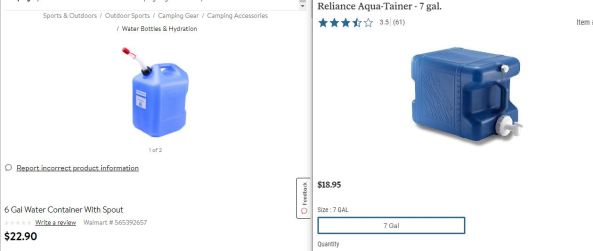
6.Extra Water- We found bringing this 6-gallon plastic water container has been very helpful. Many vans and RVs have a gravity fill option. We have found in many parks, campground and rest areas there will be water spigots but not ones you can attach a hose to.  This way you can fill up the container and easily gravity fill till your tanks are full.  Also, you may be boondocking in areas where there is no water and its nice to have extra capacity so you don’t run out.  Here is one we purchased when we had to do a Walmart run in the middle of no where California.  REI has much nicer one (it has a valve you can open for faster pours) we also have purchased but forgot at home when we left on our trip.

waterstorage

5. Dog Sign– Everyone loves the four-legged furry friend and if they see one when it is hot outside they will think they are coming to the rescue to break one of your windows so our little friend doesn’t cook. It is important to let people know you have ventilation, your AC on, there is food and water and there is no need to break your Van or RV window trying to be a good Samaritan. Here is an example of one I made for Bode.

Dogsign

4. Gloves– If you have a diesel rig, diesel pumps are different at every station. Some fill slow, some fill fast, some spill, some don’t. We found it is helpful to have gloves to fill your tank so you don’t have diesel carcinogens on your hands.  We purchased these at Walmart when filling gas nearby but here is a pair on Amazon that should also work well.  Also, extra advice I used to be a NO NO will never shop at Walmart because of the way they treat their employees but in this new world of Coronavirus their free Walmart grocery service where you can go online order all the items you need and then have it ready for pick up and not have to step inside the store is a great option in our new reality. Keep other shoppers, employees and yourself  safe and healthy! Download the app.

Dogsign

3. DEF– If you have a diesel rig you need to refill your DEF. In many rigs it is about 5 gallons. This stuff is somewhat toxic so you don’t want it inside your Van/RV to spill.  We also learned that many gas stations, Walmart and stores that carry the 1-2.5 gallon DEF it could be on the shelf too long and go bad (we didn’t realize DEF has a shelf life).  We have found many of the large truck stops like PILOT, Flying J’s and Travel Centers have DEF pumps where you can fill directly into your rig at a better price for ‘fresh DEF’ and you don’t have to store it.

def2

2.Commercial Cardlock Gas Membership We did not know this, but those commercial gas stations you see across the country where you have to have a special card to use the pumps are sometimes open for individuals with diesel RVs/Vans to join. We signed up with Pacific Pride/CFN.  We have found so far the prices are lower than the typical diesel gas station.  When you apply tell them Greg Stempson sent you and we may get a little credit in the future.  They don’t provide an affiliate program but if they see enough people join because of this blog/vlog then they are considering creating one in the future that you could join too.  So you don’t have to learn the hard way, here are a couple things to keep in mind when you start using the cardlock. There are two sizes of diesel nozzles, you want the smaller for RVs. Second, try it in your tank first sometimes the nozzle can be damaged then go to the cardlock and select your pump and put in your code. You can only put in a code 3 times then you get locked out and you must call the number on the front of your card for them to unlock up, it takes 10 minutes. This is to ensure no one steals your card and tries to get gas. When there isn’t a cardlock available we sometimes use the gas buddy app.  It is fairly accurate and helps to find the next best diesel gas station.

pacific pride

1.Pre-Trip check- And Our number 1 advice for new Vanlifers/Rvers is to do a pre-trip check. If you are on the West Coast Les Schwab Tire Centers offers free Pre-Trip checks where they will check your tire pressure, fill any tires and tighten your lug nuts. The last thing you want is to have your wheel fall off in the middle of no-where.  Les Schwab also offers another great service if you are full-time RVers they will stow your tires if you have studded winter tires and then summer tires and change them out whenever you need.

lesschwab2

We hope these were helpful hints for you.  Here is our video for those you are auditory learners! Next week, we will go back to our adventures and later on we will provide our top 10 gadgets for Vanlifer’s/RVers!  Cheers! For your enjoyment here is a picture of us at Joshua Tree National Park in middle of a snow storm in March, crazy when just a few days earlier it was in the 70s and later Bode enjoying the rocks after the snow subsided!