Vanlife is Always Eventful

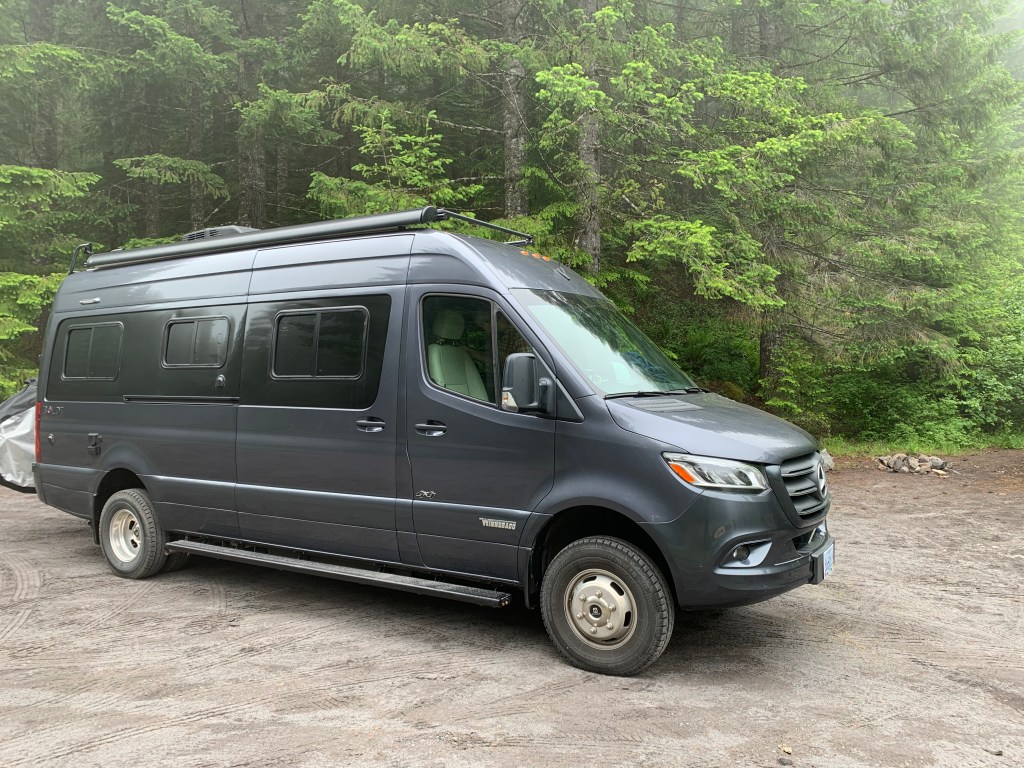
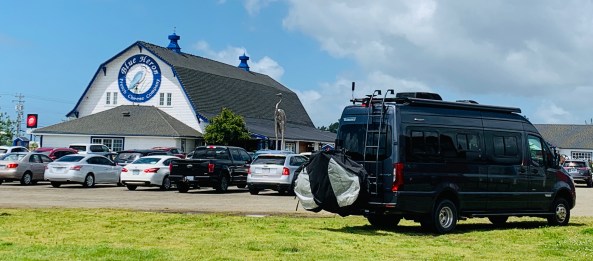
We have learned life on the road is always eventful and you have to expect the unexpected.  (For those who are visual here is our video for this blog.) We headed out of Newport, Oregon to go check out Mt. St. Helens National Volcanic Monument, Mt. Rainer National Park, Wenatchee National Forest, Sandpoint, Priest Lake, FlatHead-WhiteFish and Glacier National Park. First, we stopped by Harvest Host Blue Heron in Tillamook, Oregon on our way to Mt. St. Helens. As we arrived in Mt. St. Helens, we hit turbo fog and the reason we moved out of Washington to Central Oregon as the temperature drops from 75 to 60s and mist then rain hits us in early July.  We found a nice boondock spot about ¾ mile from Marble Mountain Snowpark and the June Lake trailhead.  We were hoping to hike up to June Lake and the rim of Mt. St. Helens but when we awoke to pouring down rain, fog and no view a few feet ahead of us, we decided it was time to head to Mt. Rainer and see if we can get above the rain clouds to some nicer weather.  As we were driving down and around Mt. St. Helens and up to Mt. Rainer we began hearing a loud knocking sound in our engine compartment.  Searching online what this could be we thought it is either the Mercedes Alternator or the Winnebago 2nd alternator that runs the house of our RV with the Volta Power System. Having zero reception, we kept one eye on our bars while we drove through Mt. Rainer National Park (still closed to camping as of July 1) to have enough bars to call Mercedes in Seattle. 

As you head to Mt. Rainer on Forest Service Road 2586 near the catch and release fishing sign and a bend in the river is a good possible boondock spot- there were no signs indicating no camping and a few fire rings. Another possible site is Northbound Forest Service Road 25 before MM 27 and near MM 24. 
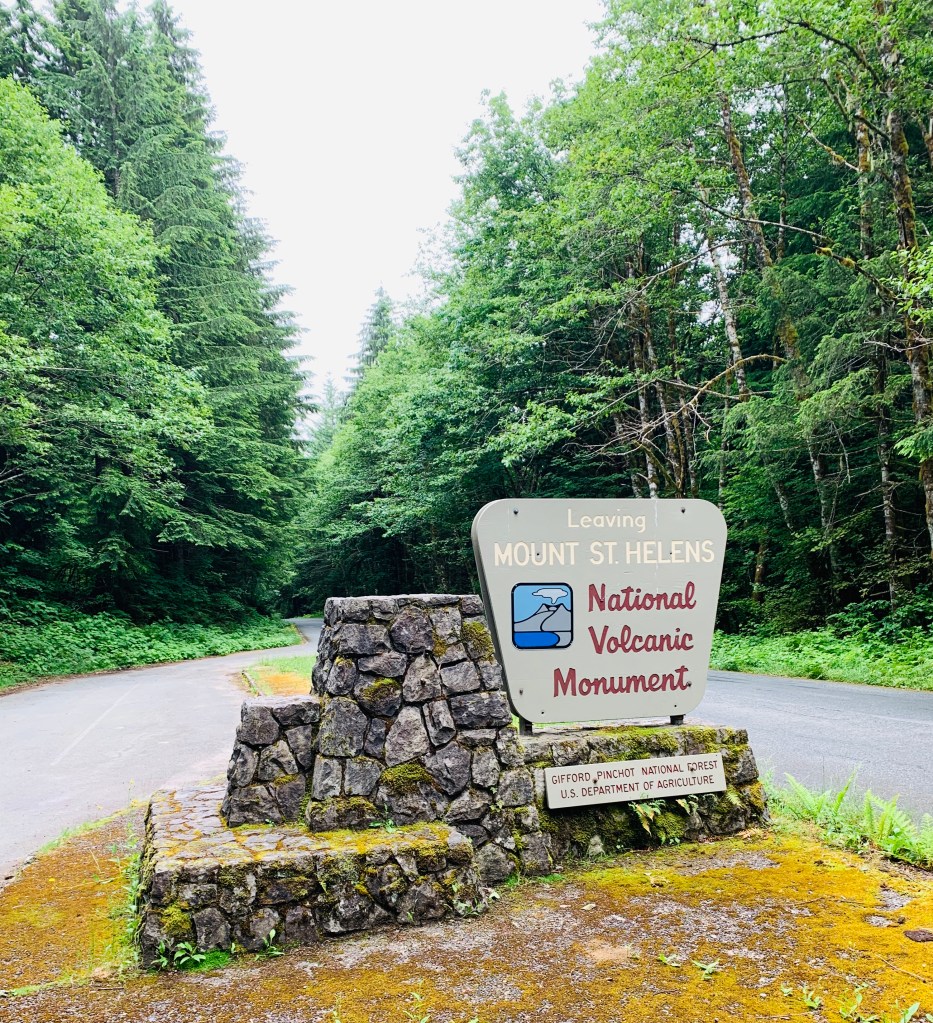
The road to Mt. Rainer (FR25) is paved but is very rough.  There are many spots where the road is falling apart and disintegrating into the cliff.  It is very windy but quite beautiful.  Unfortunately, in the pouring rain and turbo fog we couldn’t see the views of the mountain or the overlooks.  As we reached higher and higher up the mountain pass the temperature dropped to the 30s with snow surround us.  We decided we’d rather not camp in the snow and went on to Issaquah to visit Greg’s brother’s family.  On our way, near the small town of Randle, WA we found a county rest area near a cute pound and wetlands area with a few Beaver lodges that allowed you to rest for 8 hours.  We took an 8-hour break here to have dinner, nap and rest before heading to Issaquah, WA.  We also had a few bars in this location to contact Mercedes Bellevue and get an appointment to find out what is wrong with our rig. Later when we got to Issaquah, we got a phone call from Bellevue apologizing for booking an appointment with us as they don’t work on Sprinter vans and we must go to Seattle Mercedes.  Thankfully, Seattle Mercedes could see us at 8am on Thursday, July 2. 

Greg got to Mercedes at 8am and found out several techs took personal days for the 4th of July holiday and they may not get to our rig!  (Never break down before 4th of July holiday!)  after several disgruntled phone conversations with the service manage finally, by end of the day, we find out that the engine and alternator in the Mercedes were good but It was the 2nd alternator that Winnebago and Volta put in that is dead.  Of course, its 5pm Thursday.  Winnebago is closed for the holiday, Volta is closed for the holiday and every Winnebago service center is booked solid so we have to stay in Issaquah until Monday as we need to be plugged into to shore power to be able to use our rig.  After spending all day Monday on the phone with Winnebago, Volta and contacting every Winnebago service center in the Washington area were all booked solid for the next 3 weeks, we get approval for Mercedes to put in the alternator and for it to be overnighted.  So on Wednesday, July 8th, Greg heads back to Mercedes Seattle to get the 2nd Alternator installed and hopefully all our issues go away. 

At noon, Greg arrives at his brother’s house and it seems like our issue is fixed.  The Volta system is green, the engine knocking sound is gone.  So, we pack up and head to Wenatchee for some much-needed sun and warmth!  After a few hours of driving we notice our batteries are not charging, so I begin texting back and forth with the Volta technical support technician as they think Mercedes has damaged the system when installing the alternator.  We are now 200 miles away, we decide to boondock at Washington Fish and Wildlife Area Watt Canyon, (near Ellensburg, WA) which is a nice, picturesque spot and next to a pretty irrigation canal.  We parked in a fairly flat gravel parking lot and if we weren’t exhausted from all the vehicle issues, we would have mountain biked the area, there are miles of gravel roads to explore in the area.  In the morning, we were down to 70% and no charging of our batteries.  We then called around a dozen Winnebago service centers in Washington, Oregon and Idaho who are all booked out for the next 2-3 weeks and they couldn’t fit us in.  Finally, Volta Power Systems came through and found us a service center in Eugene, Oregon that could see us and are certified technicians of the Volta power System.  So as we were headed towards Idaho, we needed to do a course correction and began heading Southwest and 400 miles out of our way to get our rig fixed.  At least, Oregon Motorcoach Center owner Matt Carr was super empathetic, helpful and tells us as soon as we get here, he will help us out!  He took the time to talk to Volta technicians and Winnebago to ensure we are taken care of and that all the parts that could be needed were at his shop!  YEAH, someone good, we hoped!

We decide its time to use our Harvest Host membership and head to Zillah, WA to stay at Bonaire Winery on the way to Oregon. They are super friendly, beautifully landscaped property and yummy wines that are currently 50% off because of COVID19.  We enjoy a lovely bottle of chilled Rose Syrah paired with instant pot lentil soup at dinner.  The next morning, we awoke to our breakers beginning to trip as we try and use the microwave and stove for breakfast with our power down to 60%.  We decide its time to take the big push and drive over 250 miles from Yakima Valley to Eugene.  At 2:30pm, we arrive at Oregon Motocoach Center to Matt taking good care of us and getting us parked, plugged in, discuss the issues and offer us to use their barbecue gazebo area for the weekend and 730am Monday morning he would get our rig fixed.  After an hour being plugged into shorepower we are back to 100% and some relief flooded our bodies!  We grilled a couple of steaks and roasted vegetables on their grill and finally enjoy a couple beers, AC and some Jimmy Buffet Cheeseburger in Paradise!

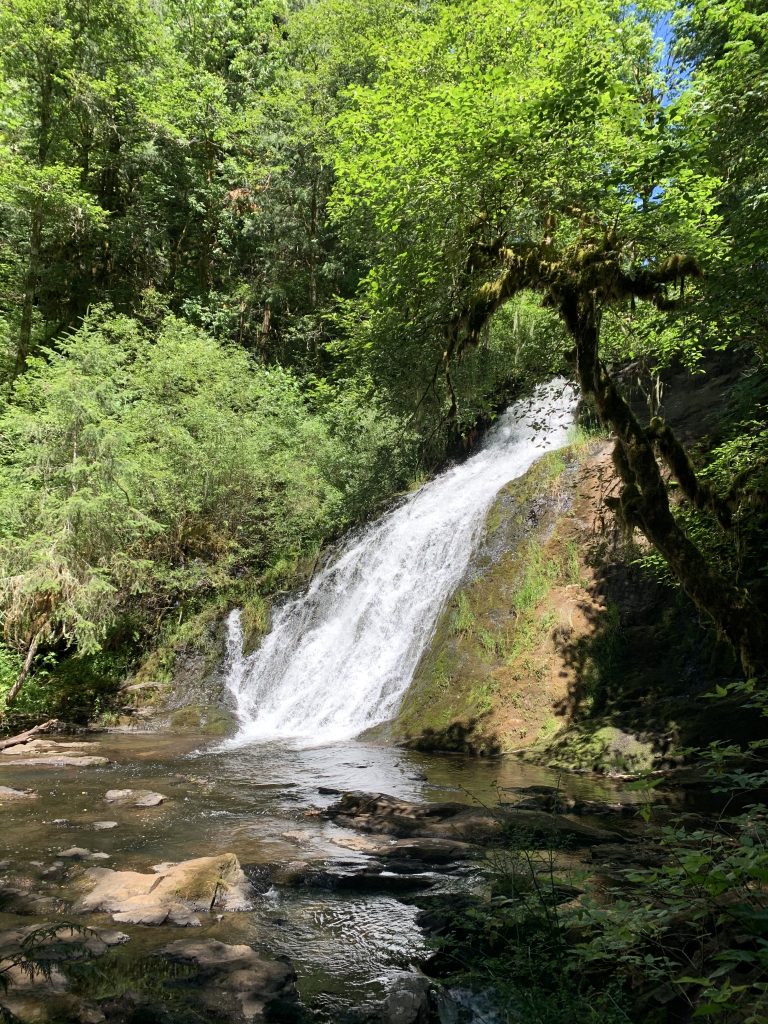
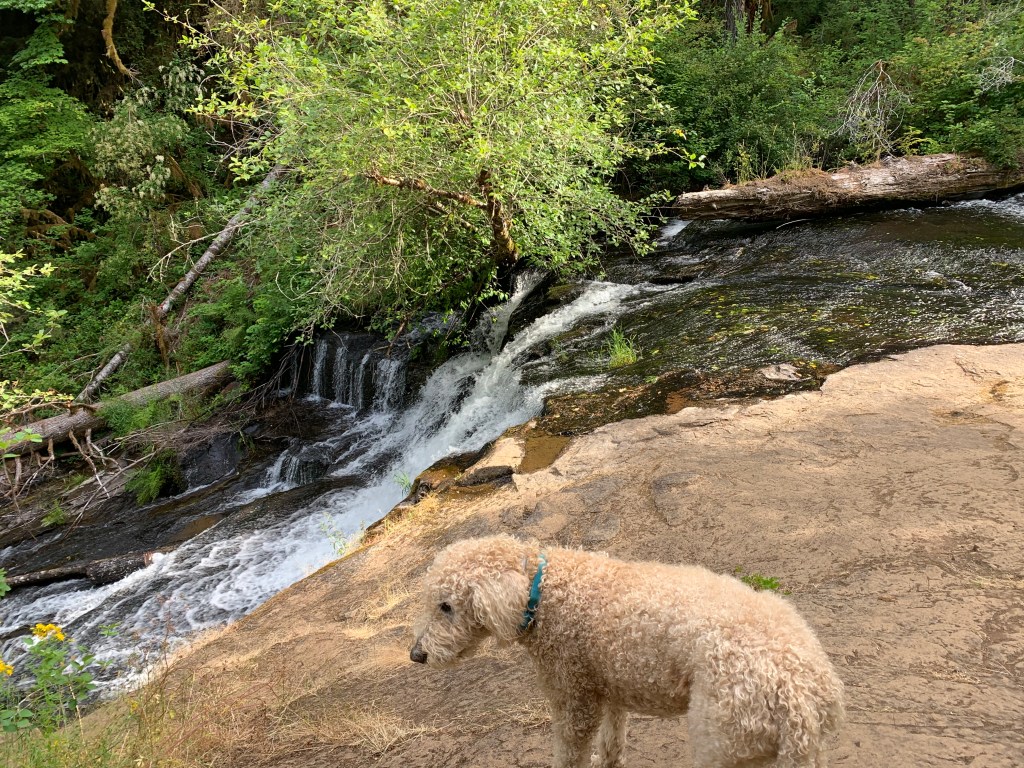
When life gives you lemons you must make lemonade, so on Saturday morning we decided to head to our beach house in Newport to get a few errands completed and see the beautiful countryside and boondock in some pretty places on the Oregon Coast since were fully charged. We took the back-country roads from Eugene to Philomath that are so stunning and relaxing with very little to no traffic.  We highly recommend this route (follow Territorial Highway and Bellfountain Road).  After finishing our errands, we took a couple hours to relax at Seal Rock and watch the sunset and cook Instant Pot Split Pea Soup (I’ll have a blog soon on my favorite Instant Pot recipes).  After the beautiful sunset we took the back road Highway 34 towards Alsea Falls and boondock in the Siuslaw National Forest near the Old Strawberry Farm.  This part of the Alsea River is gorgeous and very green with a very rainy spring bringing lots of new growth.   In the morning, we headed back down 34 and backroads to Alsea Falls for a hike, mountain bike and check out the campground and BLM dispersed camping opportunities for the future as we headed back to Oregon Motorcoach Center.  Note there is no reception in this area. 
First thing Monday morning at 7:30am, they took out rig and started testing systems.  We found out that Mercedes Seattle installed the alternator wrong and it shorted out the 2nd alternator and shorted out the main Volta Power System brain and they would have known they did this, as the technician must have been electrocuted.  After hearing this, we thought great it is going to take at least another 2 days as another alternator would need to be shipped.  With COVID19, we were seated outside and it was about to hit 90 degrees, so we got a rental car and hotel for the night and more phone calls to Winnebago to ensure we get the parts we needed.   As we were trying to relax at the hotel, we got a phone call from Volta ensuring us that everything will be fixed and it was under warranty and we would not be charged. They promised they would make sure the system is working properly and fully tested before we left Oregon Motorcoach Center.  It was great to hear their attention to our situation and ensuring that our system will be 100% before we left.  Then Oregon Motorcoach Center called that they were done and that they had an alternator and a Volta System Brain in stock they used to fix our system.  Since it was already 3pm and we were already checked in to the hotel, we agreed to come first thing Tuesday morning to get a walk through and pick up our rig. 

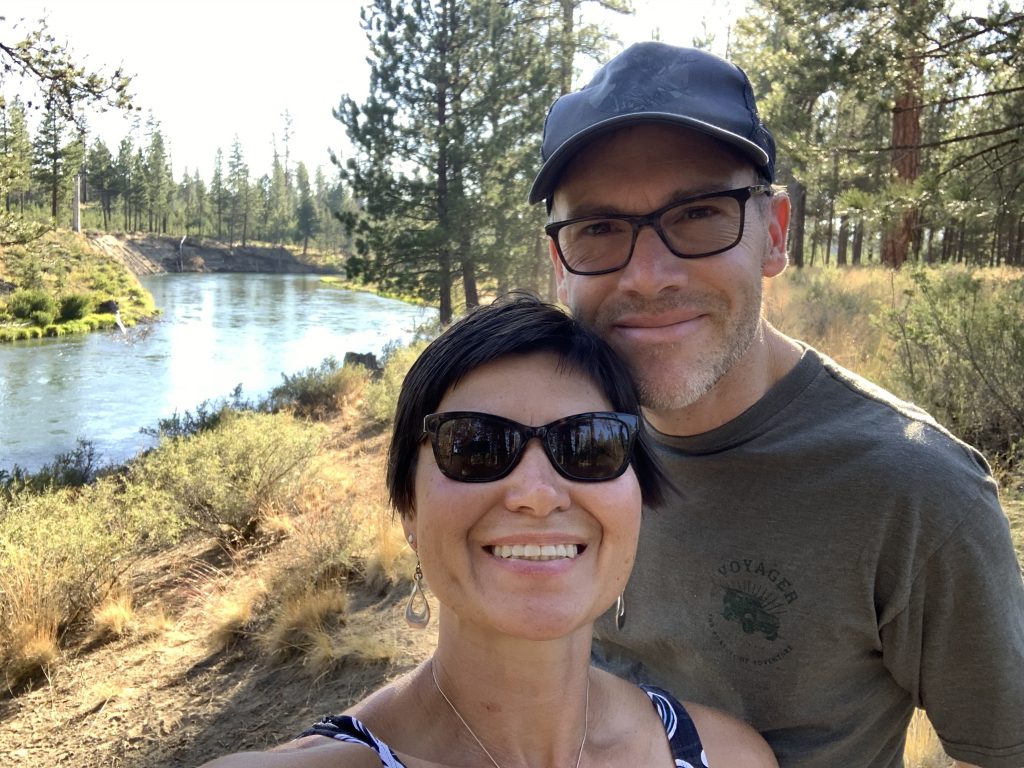
The technician walked us through everything they did and what to look at if something goes wrong again.  We decided to head back to Alsea Falls Campground and stay there for three days and test the system.  After three days our system did not trip any breakers and was down to 25%, we then headed to Harvest Host Summerfield Winery on the edge of Springfield/Eugene area off Highway 58 for the night.  It charged back up to 90%, yeah so far so good!  The owner Cris is wonderful and she gave me a lovely wine tasting and we enjoyed a bottle of Pinot Blanc and a bottle of Pinot Noir to enjoy another day.  Cris was so friendly and she chilled the bottle of Pinot Blanc for us.  The next day, we headed down 58 which is a beautiful route with very little traffic, such an enjoyable drive.  We should have boondocked at Salt Creek Summit Snow Park but I used Google satellite view and saw RVs parked at Black Rock Pit so we decided to go there to get further Northeast.  I was totally wrong and there was no public entrance but a locked gate.  So we headed further North and boondocked for the night in the national forest near the Sunriver exit off I-97.  There must have been a last-minute cancellation and we were able to get one night at La Pine State Park which was great as there are lots of hiking, running and mountain biking trails to enjoy and the beautiful Deschutes River.  It was flowing pretty fast so I did not pull out the paddleboard.  The next day we headed to Cove Palisades State Park.  We were surprised to see there was availability in the Summer in Loops A, B and C.  Note: DO NOT STAY at Loops A, B or C (called Deschutes campground) there are no views, no hiking or biking trails and no shade- its super-hot and not very interesting!  You want to stay at loop E (crooked River Campground) It has trails, is closer to the Day Use area and a much nicer campground.  We typically never do full hookups but we were super happy that we did as the temperatures go to 98 and as it was the first time, we ran our AC all afternoon, evening and night! 

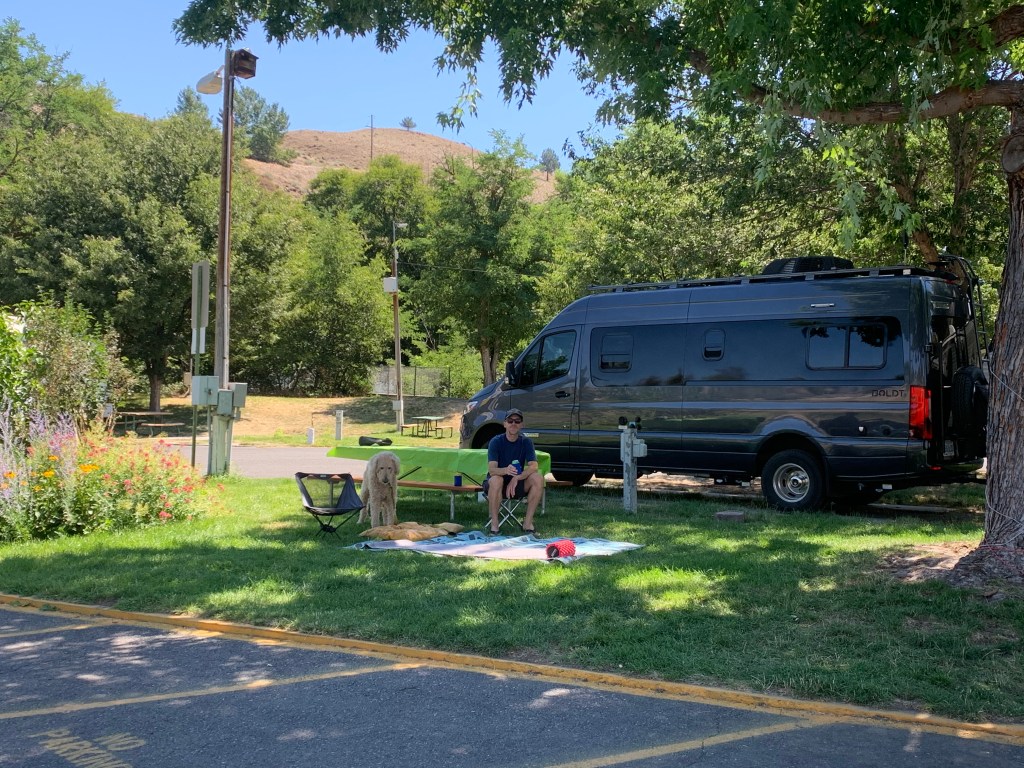
We were happy to head out at 5:30am the next morning and stopped at the Maupin City Park.  It is an amazing spot, great shade, full hookups and a dock to paddleboard or swim or put in your kayak or raft.  It is quite spendy at $48.00.  I enjoyed a paddle on the river and we relaxed with beers in the shade with our awning out.  While at Maupin we met the City Park Manager and her husband the Maupin City manager who are super friendly and wealth of information! If you want a guided trip down the Deschutes feel free to contact Forward Paddle which is managed by Greg’s cousin The next day we went for bike rides on the Deschutes BLM Access Road.  We then found in the next 6 miles 6 different primitive campgrounds that were only $8 during the week $12 on the weekends and 50% off for Access and Golden Passholders. Next time, when we don’t need AC all night we will definitely stay at one of those.  During the week, they all had available spots.  I would not recommend anything over 32 feet the spots are small. 

The next day we reached Bonair Winery again and could begin our track to Idaho and Montana.  Those stories to come in the next blog.  So here are your call to actions:

  1. If you hear an engine knocking sound go to Mercedes first and make sure nothing is wrong with your engine.
  2. If its your second alternator call Volta Power Systems first and have them help you find the right Winnebago Service Center that has a certified Volta technican
  3. Then call Winnebago customer care to get warranty to cover it and work with Volta and the service center to get all the necessary parts. 
  4. If you have to get a service center that doesn’t have a Volta certified technican make sure they call Volta technical support first before installing your alternator so they unhook power, turn of system and install it correctly!
  5. If you aren’t a Harvest Host member and want a 15% discount here is our link and here are the websites of Bonaire Winery and Summerfield Winery.
  6. Here are the websites for La Pine State Park and Maupin City Park.
  7. Here is the website for Forward Paddle if you want to do a guided trip on the Deschutes River
  8. Here is the link to the video for this trip.
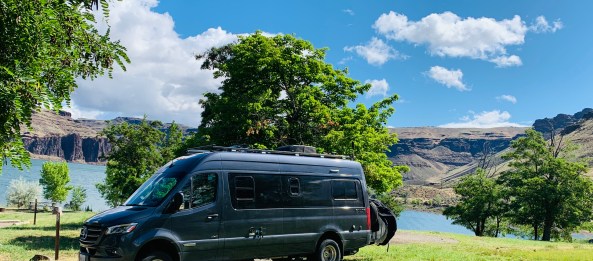
On the Road to Eastern Oregon

We are back on the road, yeah!  As Oregon and much of the USA is starting to re-open and even in some places in phase 3 of 4 phases of re-opening, it seemed we would be okay to head back out. Plus, Newport allowed vacation rentals to begin hosting guests again, so our beach house has been rented and we need to move on before guests arrived.  Before hitting the road, we called several BLM, Forest Service and state park offices and they all said YES, WE ARE OPEN, so we headed back out on June 8th.  We decided it was time to explore Eastern Oregon, being Oregonians most of our lives it is a shame we haven’t explored it more, so here we go. We like to limit our daily driving to less than 125 miles, so we took our time heading toward Eastern Oregon.

As we left the coast, we stopped first at a nice boondocking spot on Highway 20 after Sweet Home by the Willamette National Forest sign, past Cascadia Campground but there was zero cell coverage and we needed to make sure our guests got in okay.  After dinner we headed back up Highway 20 east past Tombstone Pass where there is a nice snow park (Lava Lake) with cell reception that we boondocked for the night.  The next morning after breakfast we headed to Bend where we took a friend’s advice to boondock on BLM lands near Pine Mountain Observatory.  It is very secluded, pretty much just sage brush, cows and miles of pretty rough dirt roads (we call is moon dust because it is fine and just gets into everything).  If you like seclusion you will like this area, we got a little tired after driving 10 miles on rough dirt roads before we could find a good pull off stop.  We’d suggest boondocking at the big flat parking lot by the Badlands instead, as its super easy and not far off Highway 20.  We saw several RVs stopped there and the Badlands is a great place to hike with your four-legged friend.

The next day, we stopped at Chickahominy Reservoir which is a great BLM camp spot for only $8 a night/ $4 for Golden and Access Pass holders.  There are several waterfront sites (28 total sites), they are spacious and dispersed a good distance between each other that you feel you almost have the lake to yourself.  It is stocked twice a year with rainbow trout and there were several anglers fishing the banks and in boats.  The location has a fish cleaning station, picnic tables, fire-rings, drinking water, trash cans, vault restrooms and a boat ramp.  We enjoyed this spot for a couple of days and did bike rides and runs around the reservoir.

We then ventured to Chukar Park near Juntura, Oregon another BLM camp spot which was only $5 a night/ $2.50 Golden and Access Pass holders.  It was more primitive, with just picnic tables, fire rings, vault toilets and the water wasn’t turned on yet when we were there.  It is set next to the Malheur River but its very overgrown so you can’t see the River, there are nice full sun and shade sites depending on your interests.

Next, we boondocked about ¾ mile past Snively Hot Springs in the Owyhee Wilderness on Snively Gulch Road.  It is a fairly even and flat gravel area along the Owyhee River that leads to the Owyhee Reservoir.  We stayed there a couple of days and only ventured to the Hot Springs once, as it rained so much that the water was really muddy and not to appealing.  The hot springs felt great and there are two pools one quite hot and the other more luke warm.  We decided to head up to the state park and check out the main campground by the dam.  There are many boondocking spots along the river all the way to the dam, the road gets very narrow and up against steep cliffs with a lot of rock falls (we saw a rock fall on the vehicle ahead of us).  It gets a bit stressful as there are a lot of large trucks hauling boats and 5th wheels and barely enough room to pass each other in many spots.  The state park campground is nice with 67 campsites at McCormick Campground and then Indian Creek Campground around the bend both  having full electrical hook ups and tent primitive sites, with showers, bathrooms, trash, fresh water, dump station, fire rings and picnic tables.

We had a lot of wind and rain for June so we decided to head to some sun and heat in Idaho and ventured to Morley Nelson Snake River Birds of Prey Conservation Area outside of Boise, Idaho.  Do not take the short route on Google Maps that goes directly to the boondocking spots it takes you to private property and you cannot take the road through.  You need to go through Kuna and down Swan Falls Road, a much better route.  Idaho Power actually maintains 18 campsites even with trash cans with picnic tables and fire rings, we saw an employee every morning going to and cleaning out camp spots. Please be a conscientious camper and don’t dispose of trash that does not burn or cans in firepits as there are dumpsters just up the road at the dam and boat ramp. After the 18 they maintain then it turns to BLM camp spots that are not very well maintained and are more primitive.  The road is a mixture of hard dirt and gravel, there are parts that are very rutted out.  I would recommend 4X4 Class B and C and smaller truck trailer RVs.  We were surprised to see a Class A size 5th wheel make it down the road and into one of the sites, I wouldn’t recommend it though unless you are very confident about your driving skill and rig.

You may stay here free for 14 days, it’s a beautiful spot on the Snake River and amazing wildlife to view. We saw so many birds of prey (falcons, hawks, eagles, osprey, pelican), coyotes, lizards, a rattlesnake or bull snake, jumping bass and deer, the wind is super strong here.  There are rattlesnakes so watch out!  We ran into a baby snake in our camp, ground squirrels and there are ground hog like looking animals everywhere.  It is also a popular place for locals to rock climb, fish and play in the river.  Watch out for some fast vehicles going down the dirt road if you are biking or running.  We hope you may enjoy visiting these spots.  Below are hyperlinks to the descriptions and GPS coordinates from freecampsites.net.  Next week, we will tell you about our stay in the McCall, Idaho area and our request from our subscribers to help us plan the rest of our Summer and Fall travels.

  1. Tombstone Snow park
  2. Badlands by Bend, OR
  3. Chickahominy Reservoir
  4. Chukar Park
  5. Snively Gulch Road
  6. McCormick Campground
  7. Snake River
  8. Check out our video of this trip!


Manzanar Virtual Tour and boondocking in Alabama Hills & Death Valley

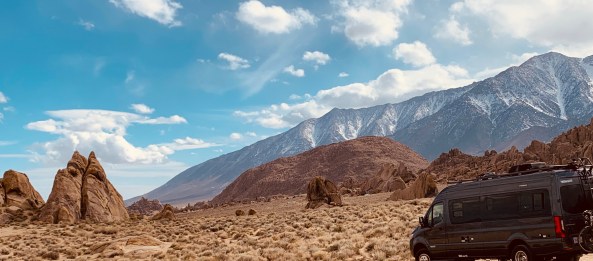
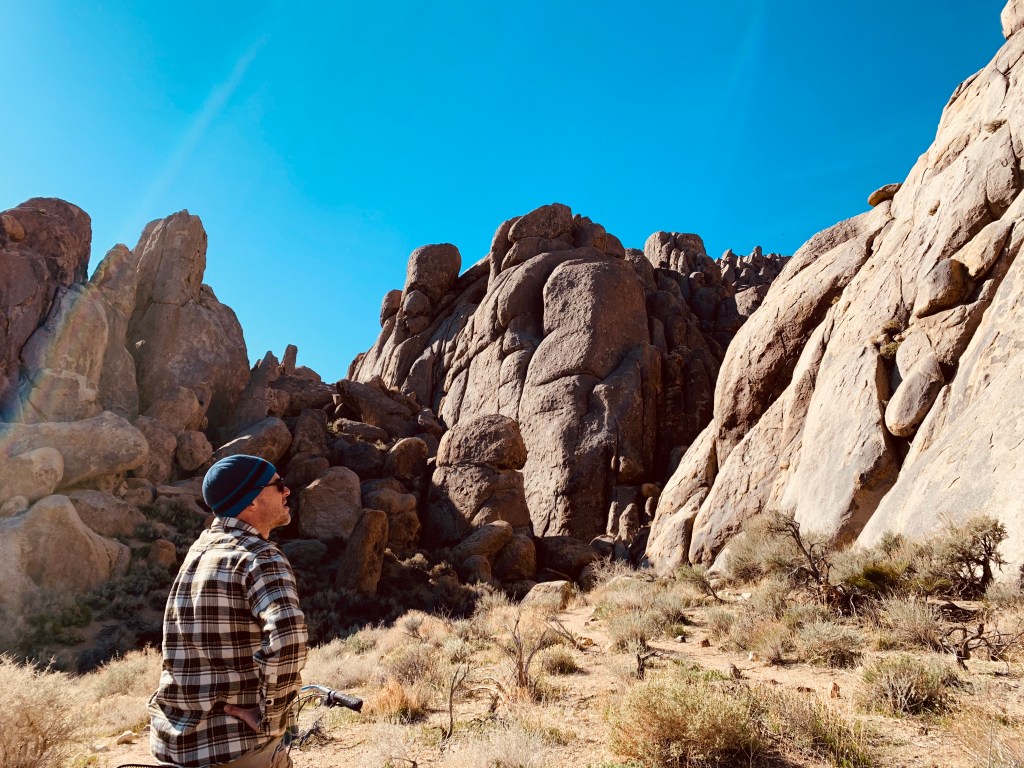
As you head to Death Valley from Alabama Hills Recreation Area you will drive past Manzanar National Historic Site on highway 395 in California.  First off, you must stop by Alabama Hills it is an outdoors person and rock climbers dream!  So many amazing rock formations, places to climb and hike and all for free.  The best boondocking ever!  We can also recommend free camping at WildRose in Death Valley.  It is a very long drive to this campground, skinny road and very windy (we would not recommend any rigs bigger than 30 feet to attempt) that only has picnic tables, fire rings, a vault toilet and potable water but it is on your way to seeing the WildRose Charcoal Kilns, (the road is gravel and pretty rough) which are pretty cool and a nice hike to Wildrose Peak that is about 8 miles roundtrip.  We went in winter time/early spring so it was quite cool (temperature that is). If you can get in, we’d rather recommend staying at Texas Spring Campground it is a good central location, much warmer, prettier and better facilities but costs $16/night.  Now back to Manzanar…

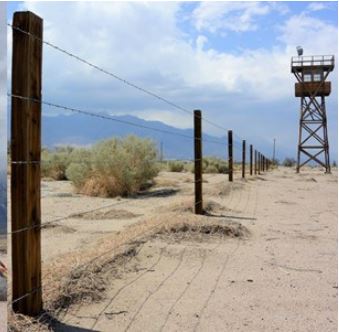
Being an Asian American, I had to stop and visit the WW2 relocation center and I highly recommend stopping for a self-guided tour.  It is very well done and reminds us of the atrocities we faced in this country during fears of war and people who looked different and had a different cultural background.  In 1942, the United States government ordered more than 100,000 men, women, and children to leave their homes and detained them in remote, military-style camps like the Manzanar War Relocation Center which was one of ten camps where Japanese American citizens were incarcerated during World War II.  People of Japanese decent who were US citizens from across this country lost all their possessions, dignity and were forced into these Relocation Centers. 

A little history course for folks who may not be aware.  Relocation isn’t new in the history of Manzanar and the Owens Valley. We can’t forget that the Paiute and early settlers as well as Japanese Americans all were uprooted from their homes. American Indians began utilizing the valley almost 10,000 years ago. About 1,500 years ago the Owens Valley Paiute established settlements here. They hunted, fished, collected pine nuts, and practiced a form of irrigated agriculture.  Miners and ranchers moved into the valley in the early 1860s and homesteaded Paiute lands raising cattle, sheep, fruit, wheat, and other crops. The military were called in and forcibly relocated nearly 1,000 Owens Valley Paiute to Fort Tejon in 1863. Many Paiute returned to the Owens valley and worked on the local ranches.

The town of Manzanar—the Spanish word for “apple orchard”—developed as an agricultural settlement beginning in 1910. Farmers grew apples, pears, peaches, potatoes, and alfalfa on several thousand acres surrounding the town. The Los Angeles Department of Water and Power began acquiring water rights in the valley in 1905 and completed the Los Angeles Aqueduct in 1913. Land buyouts continued in the 1920s, and by 1929 Los Angeles owned all of Manzanar’s land and water rights. Within five years, the town was abandoned. In the 1930s local residents pinned their economic hopes on tourism. With the onset of World War II tourism diminished.  Then in 1942 the U.S. Army leased 6,200 acres at Manzanar from Los Angeles to hold Japanese Americans during World War II. Though some valley residents opposed the construction of the internment camp, others helped build it and worked there.

First, we walked through the mini museum that is very well done and tells the stories of the families that lived here during the WW2 internment.  There is a 3.2-mile self-guided auto tour where you can see the original sentry posts, Block 14 buildings, mess hall, women’s latrine and barracks, the cemetery monument, remnants of the administrative complex, rock gardens, parks, orchards, the hospital grounds, the uncovered foundations of the Children’s Village  which was the only orphanage of the ten War Relocation Centers in the US.  In the museum, you will find images Ansel Adams took in late 1943 where he acknowledges the prejudices and fears that led the U.S. government to confine American citizens and legal immigrants of Japanese ethnicity behind barbed wire.

From the website, I wanted to provide you more details on what is still on the property and what you will encounter in the video.

Mess Hall: The US Army constructed this mess hall at Bishop Air Base in 1942. The National Park Service moved it to Manzanar in 2002 and eventually restored it. It is identical to the 36 mess halls that together produced over 28 million meals here from 1942 to 1945. Walk through the kitchen, sit at the picnic benches, and learn about the logistics and politics of food in Manzanar.

Women’s Latrine: The women’s latrine was reconstructed in 2017. The communal shower and rows of toilets depict some of the harsh realities of living at Manzanar. Overcrowding led to long lines, unpleasant odors, and an extreme lack of privacy.

Barracks Buildings: The two barracks buildings were rebuilt in 2015 with exhibits being added in the following years. The four barracks exhibits will tell you about arrival to Manzanar, the importance of the Block Manager’s Office, the loyalty questionnaire, school at Manzanar, and more.

Cemetery: In 1943 the people in Manzanar decided to erect a monument to honor their dead and skilled stonemason Ryozo Kado was recruited to supervise the work. The cemetery serves as a poignant reminder that some of the 10,000 Japanese Americans incarcerated at Manzanar never saw freedom again. Over 145 Japanese Americans died while confined in Manzanar during World War II. Many were cremated, in the Buddhist tradition, and some were sent to their home towns for burial. Fifteen people were buried in a small plot of land just outside the camp’s security fence. When Manzanar War Relocation Center closed, the families of nine of the deceased removed the remains of their loved ones for reburial elsewhere. In 1999, NPS archeologists confirmed that five burials remain at the site. The three characters on the front (east side) of the cemetery monument literally translate as “soul consoling tower” ( I REI TO ). The inscriptions were written by a Manzanar Buddhist priest, Shinjo Nagatomi.

Merritt Park: The people incarcerated at Manzanar left a lasting legacy by creating more than 100 Japanese gardens. The largest of the gardens was Merritt Park, named for the camp director, Ralph P. Merritt. Merritt Park served as community refuge from the hardships of camp. After Manzanar closed in 1945, many of the gardens disappeared as debris from demolished barracks, sand, and vegetation covered them. Recent archeological excavations have uncovered and stabilized some of these gardens including Merritt Park. Today you can view what’s left of this symbol of beauty and the resilience of the human spirit.

Japanese Garden Tour: Private and community gardens covered much of the Manzanar landscape. For many people, these rock gardens and pools served as a source of peace and an escape from their incarceration experience. Today, eleven of the over 100 Japanese gardens have been uncovered and stabilized.

The location was beautiful but also a sad reminder about how we treated fellow Americans.  It makes you sad to see how people were forced to live and were ripped from all their loved ones and their belongings because of a war.   How our fears caused us to overlook people who were citizens and part of our community and treated them like they were enemies because of their former homeland that they had left for a new life in the USA.  Perhaps, it is a reminder about how we can do better in the present and future generations of immigrant people.  We hope you enjoy watching our virtual tour.