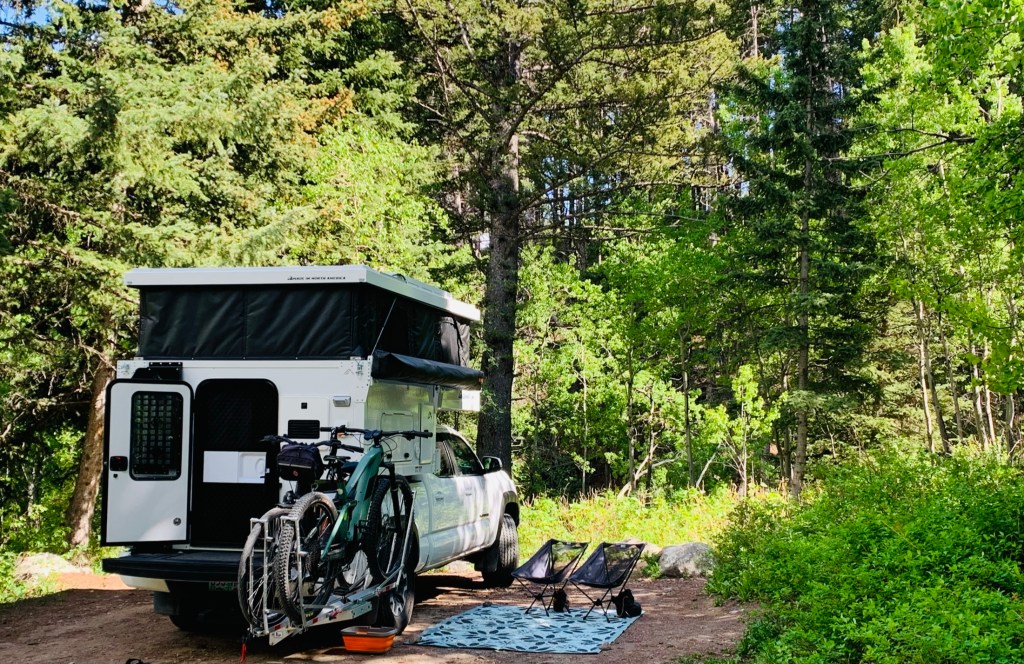
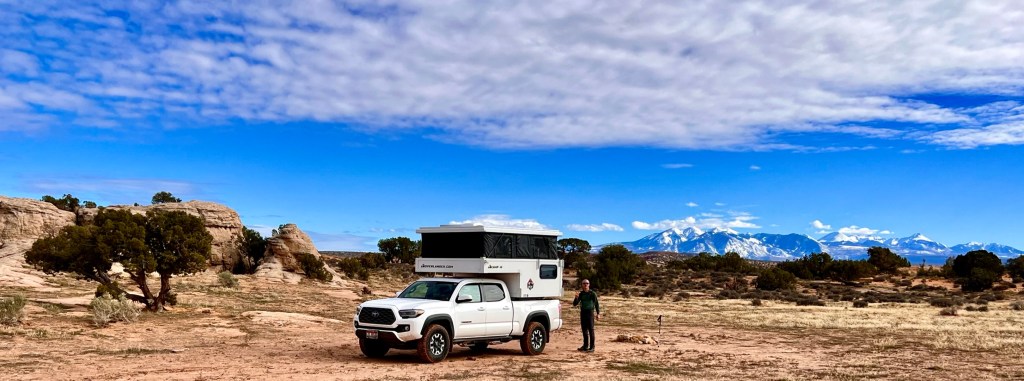
Summer Fun with OVE Camp M and Toyota Tacoma TRD 6′ For Sale- See us at Overland Rally

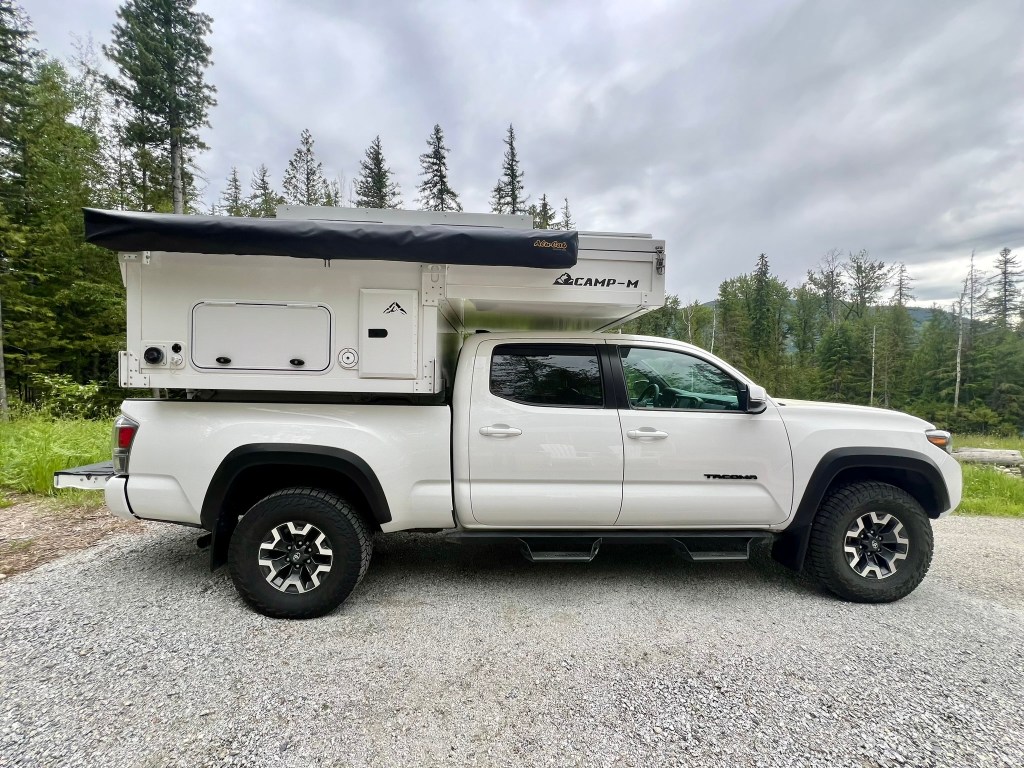
Meet us at Overland Rally June 20-23. If you are looking for an overlanding camper that is super durable, light and great for winter camping this is what you want. We will sell just camper or include the truck. We will also deliver if you cover gas costs (we’ll keep receipts). Truck & Camper details below. Priced to sell a new camper with all our accessories would cost $50K, New Tacoma (can’t get V6 anymore) $55K.

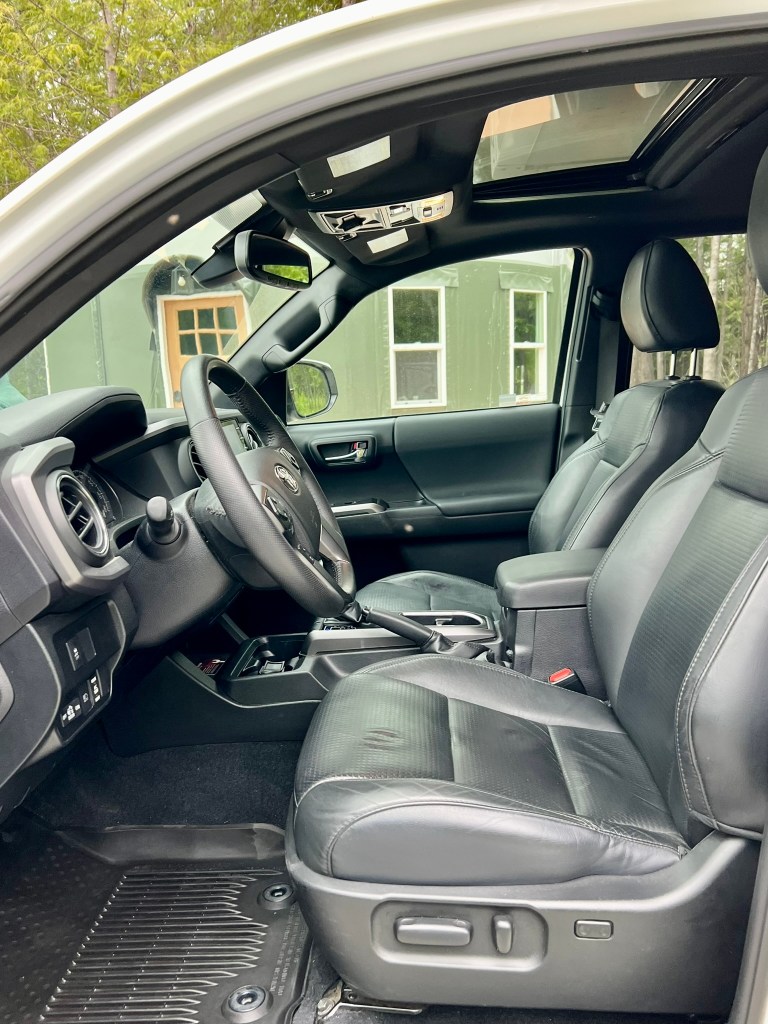
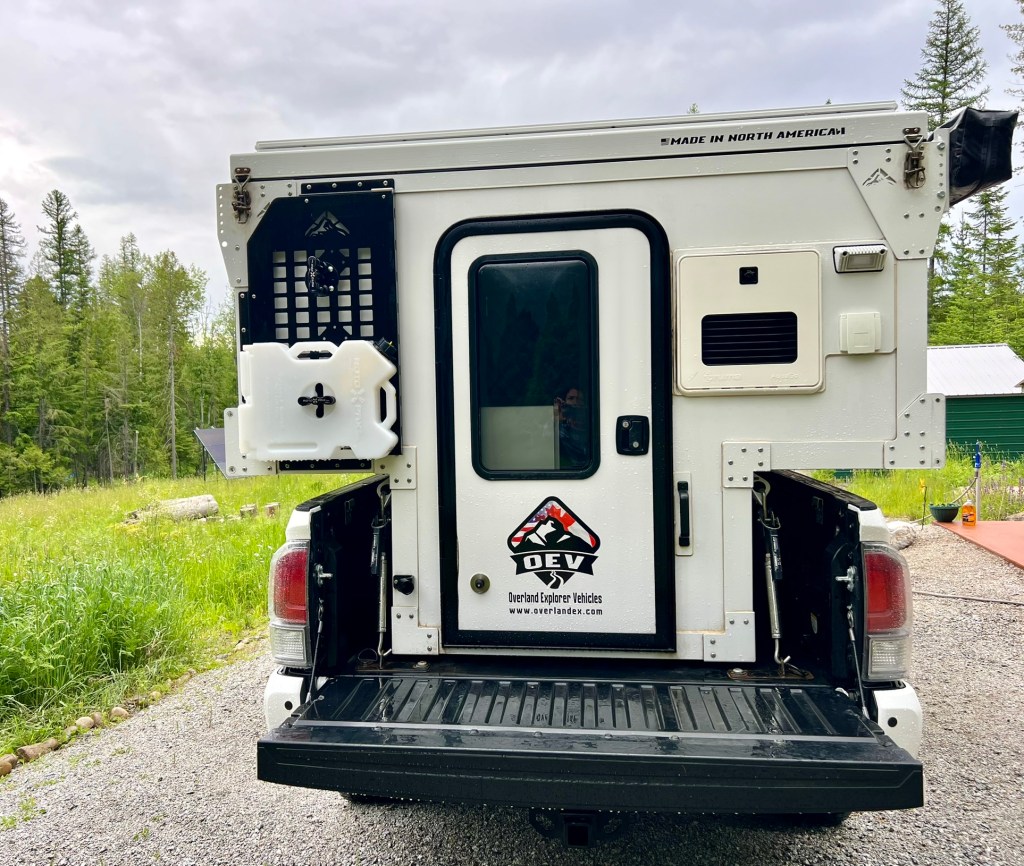
$69K for both or $29K for Camper Only OBO-2021 Camp M Overland Explorer in mint condition-well taken care of when not in use parked in garage or under carport-winterized. Here’s why we love this combination:

  1. Durability: The Tacoma Off Road variant is a rugged companion, built for off-road adventures. Its narrow body allows us to explore even the most challenging terrain. The Camp-M is made from extruded aluminum, the interior is clean and tough.
  2. Comfort: The Tacoma’s interior is surprisingly comfortable, making long drives enjoyable. Plus, the quiet cabin ensures a peaceful journey. The Camp-M
  3. Off-Grid Capabilities: The Camp-M is designed for off-grid living. With its composite construction (extruded in one piece to prevent leaks), we can confidently camp in remote locations.
  4. Winter Camping: Thanks to the Camp-M’s insulation and thoughtful design, winter camping is a breeze. No more shivering nights!

If you’ve never heard of OEV, they’re a branch of LITE Industries Inc., from Alberta, Canada, with a knack for turning any old pickup truck into a mobile home suitable for off-grid travels and life. The campers they produce are completed from composites, extruded in one piece to ensure no leaks and tailored to fit mid-size beds from 5 feet (1.53 meters) to 6 feet (1.83 meters) in length.

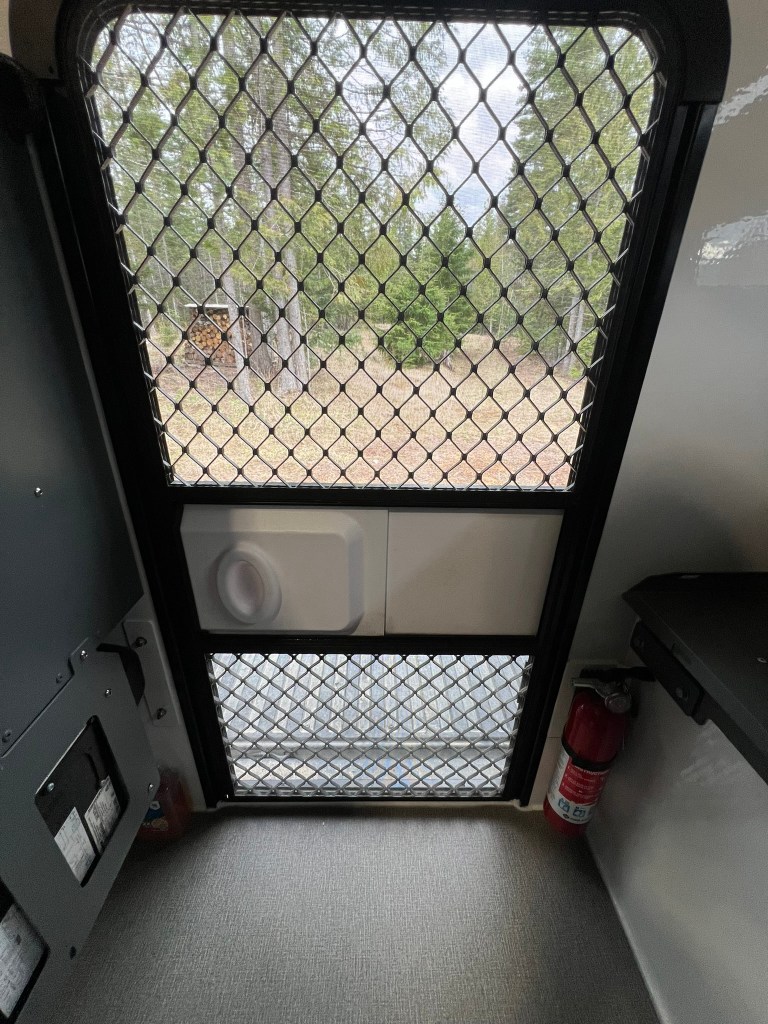
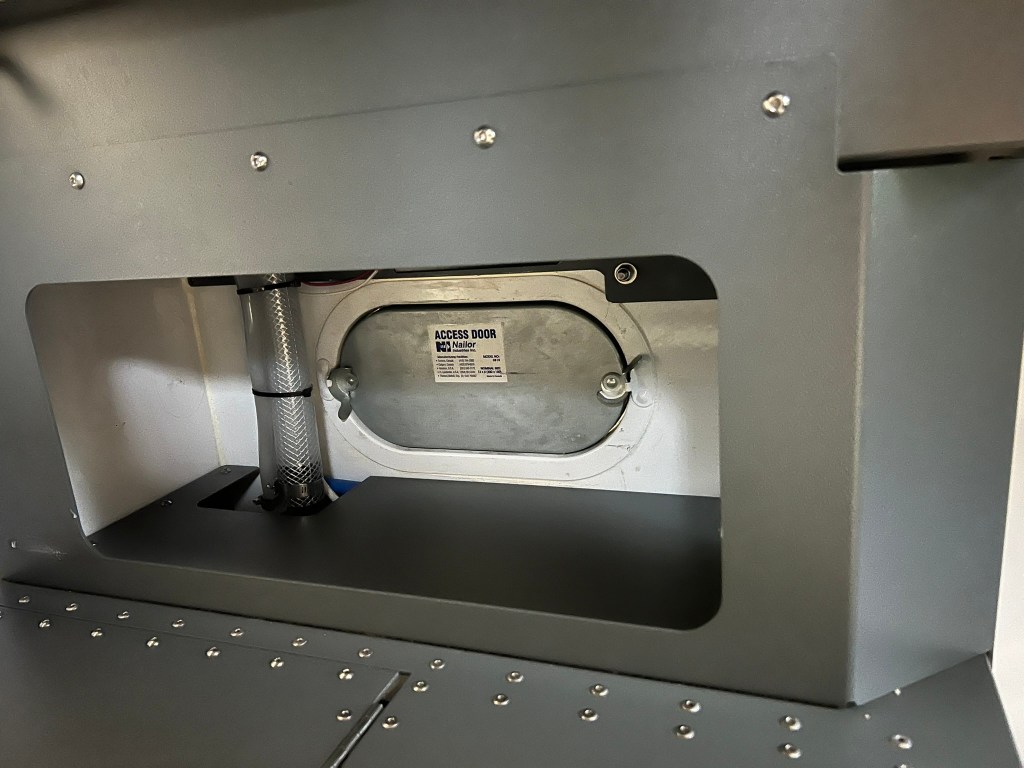
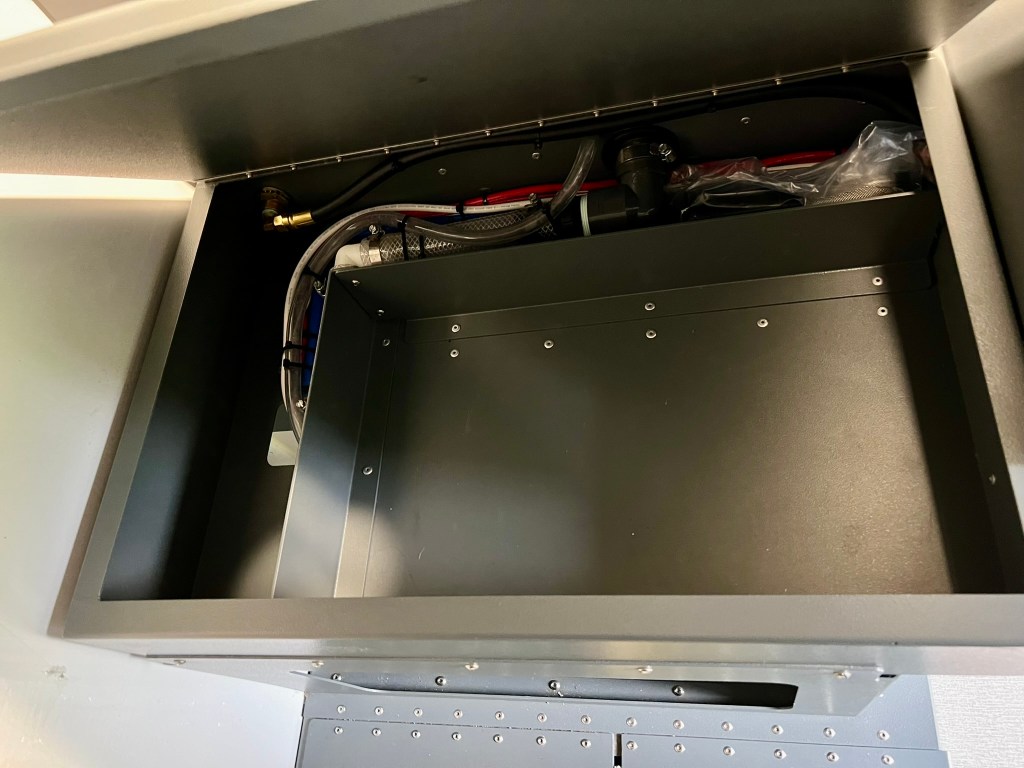
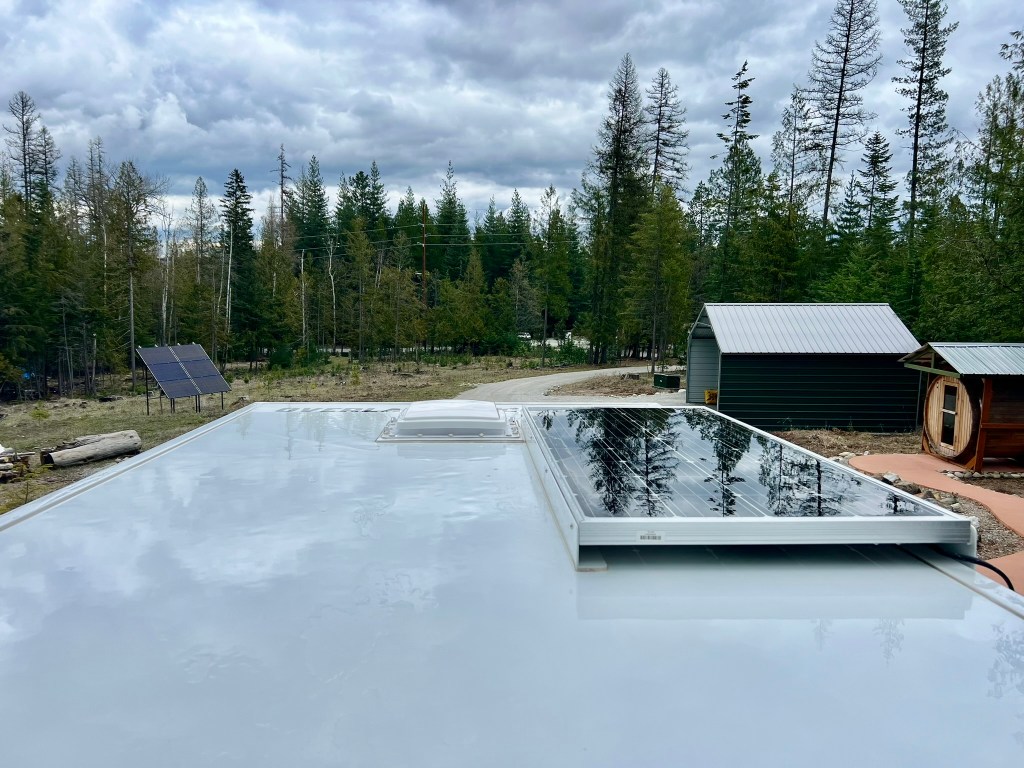
The Camp-M is great off the grid and has features to make your off the grid experience more comfortable including (this is a mix of what is included and options we selected: a Truma Vario w/thermostat and AquaGo instant water heater, multi-speed MAXXfan roof vent, 20-gallon (91-liter) freshwater tank, and interior propane connection for a portable cooktop. A beefed-up electrical system is also in place and features everything from dual USB ports, a 12-volt auxiliary connection, a Redarc charger, lithium battery and 200 W solar panels. The screen door is a wonderful feature to keep the bugs out but get better cross ventilation and fresh air on those hot summer days and nights! It has a 10-pound propane tank for your heater and cooking needs. We loved the outside instant hot water shower and found standing on your tailgate to shower made it easy and kept your feet clean! Compared to many campers the electrical and plumbing are clean and organized and easy to follow. The extruded aluminum construction makes it very durable, lightweight and long lasting with no wood to fail. The composite panels have the same automotive gel coat finish as a fiberglass boat or Corvette. The aluminum extrusions are powder-coated white. If you are in a good sunny spot and near a stream for additional water, we were able to boondock a week when we were in Red Lodge, MT.

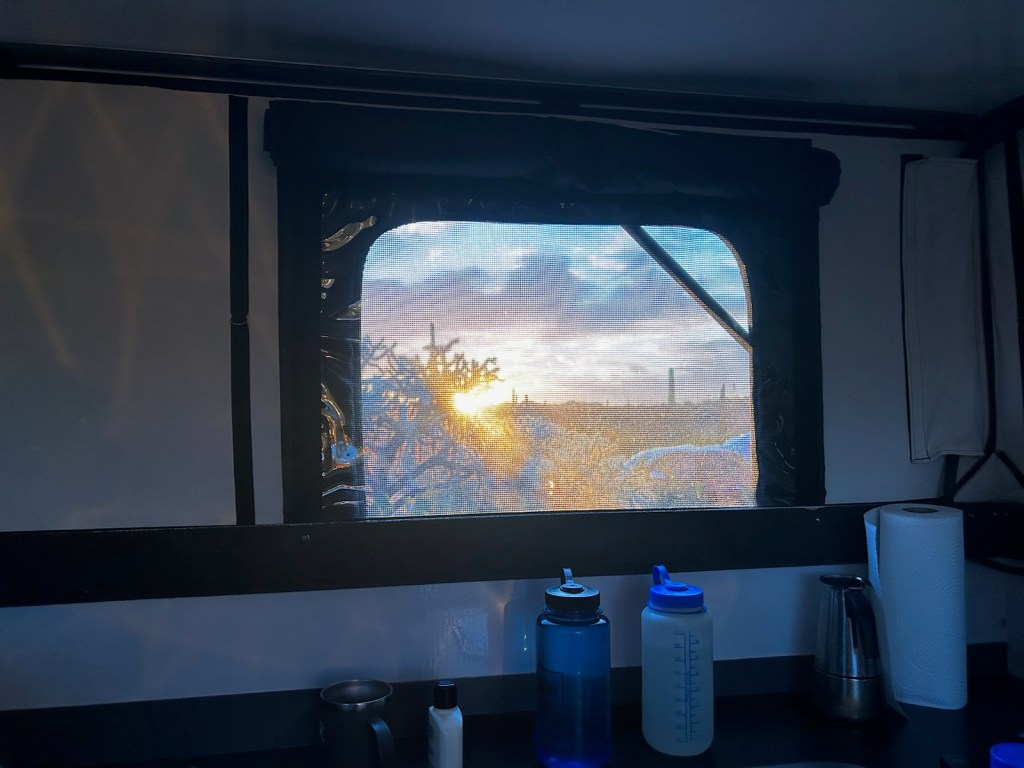
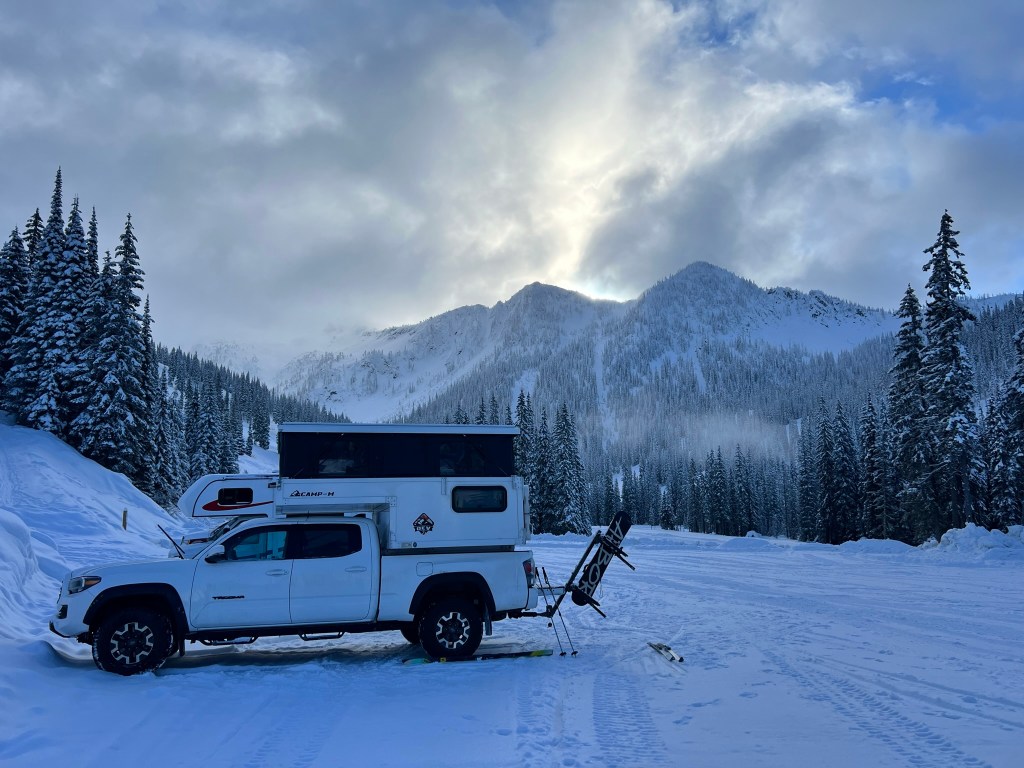
We like to do a lot of winter camping as we go searching for the powder skiing. The soft walls are rated R-4, made from a coated nylon on the exterior, a thermal fill for insulation, and a fire-rated canvas on the interior. The nylon they chose has the highest UV rating on any exterior-purposed nylon product on the market. The exterior nylon is dark grey for the highest UV block. The interior canvas is light cream to brighten up the interior. The sidewalls are designed to breathe. That prevents the sidewalls from retaining moisture. With the heater going all night and you breathing we found there was a lot of condensation, we crack the side window to help with that.

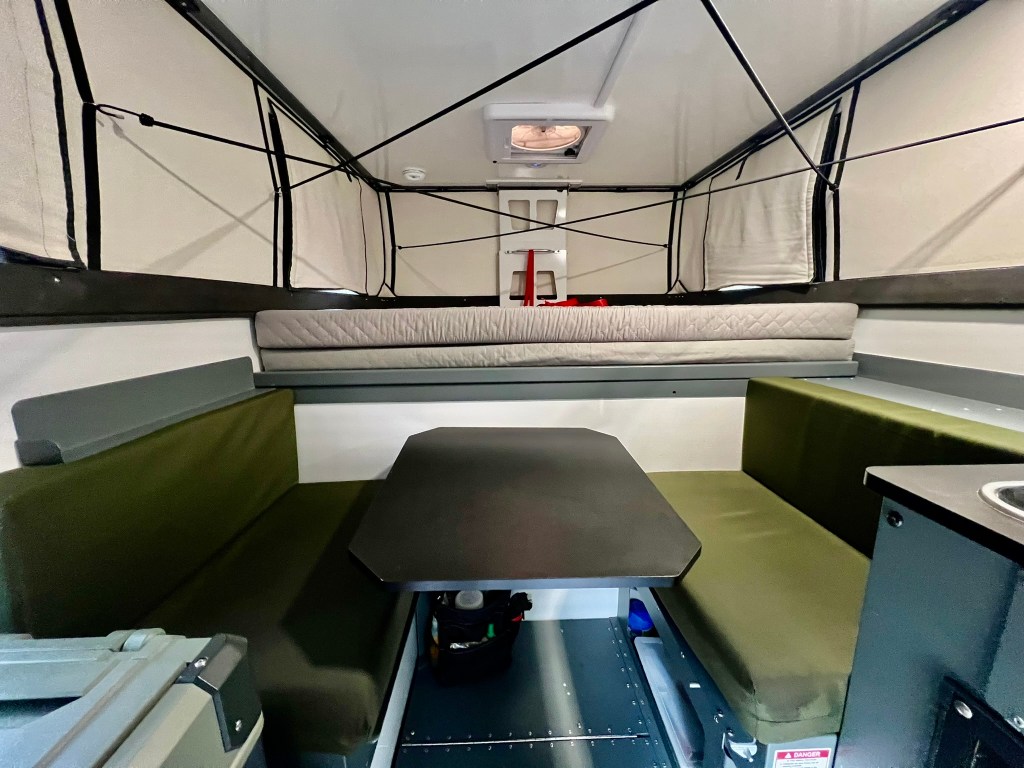
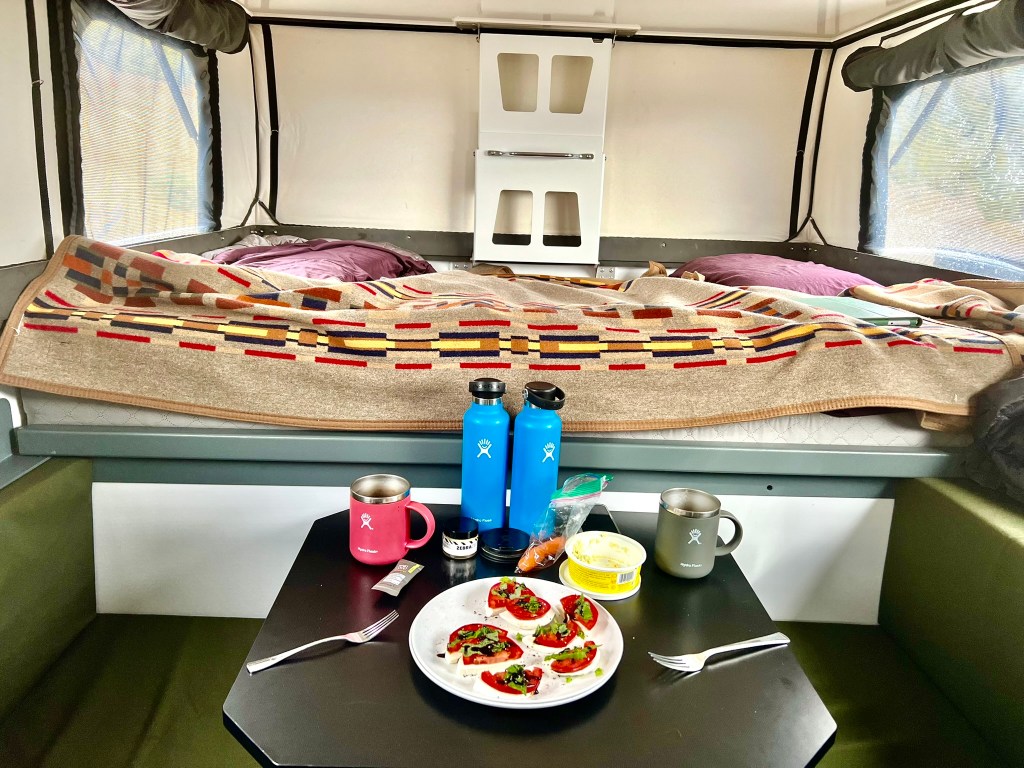
Inside the Camp M, sitting above the cab, you’ll find the bedroom with a 4″ memory foam queen mattress with an extender and additional memory foam to make it a King bedding suitable for two guests plus a four-legged friend or small child, I fit snuggly at 5’3″. A dinette sits at the foot of the bed. This dinette can also be converted into a sleeping area ideal for another smaller occupant and has storage under the seats. The cushions are made from marine grade fabric that is 4” medium-density foam. At the entrance of Camp M, you’ll find the kitchenette with a countertop, sink, faucet, gas connector for your stove, more storage and the tray for your cooler style refrigerator. We purchased the dependable, efficient Truma C63. The vinyl flooring is pretty indestructible, easy to clean and functional. The dimmable LED lights are one of our favorite features, especially as you wake up in the morning and don’t want to get blasted with a bright light right off the bat.

Dimensions: Exterior: 122″L x 77″W x 61″H closed, 83″H open Dimensions Interior: 118″L x 72.75″W x 81″H open  Dry Weight: 975 pounds

Quick walk-through of the Camper and Truck

Features:

-Cold weather package

-includes 10 rubber feet protect camper and truck bed 4
torque lift tie down latches

 -powder coated
aluminum extrusions

-OVE generation 4 composite floor

-Walls and roof R8

-Insulated soft walls R4

-locking roof supports

-gas struts assist for lift -DOT LED Lights

-Truma CP and Vario heat w/thermostat

-Truma AquaGo LP Gas instant water heater

 -continuous hot
water with sigiva outside shower connection and hose extension

-Truma C63 refrigerator

-10 speed Maxxfan roof vent

-20 gallon fresh water tank w/12v Flow Max Fluid Pump
-s/s sink w/flush mount glass top

-propane connection for portable cooktop

-entrance door grab handle

-screen door

-aluminum propane cabinet w/10lb bottle

-front east/west dinette folds down into a small bed
(28’x63.25″) w/under seat storage

-flip up countertop

-large exterior storage access via locking cargo door

-marine canvas cushions

-4.5″ medium density foam cushions -King Bed
extension

-high traffic grade Lonseal vinyl flooring

-fire rated thermal break kit and fire extinguisher

-structural powder coated aluminum interior cabinet
cabinetry

-LP/Smoke and CO detectors

-Dual USB Plug -12v auxiliary connection

-LED entry Light

-LED interior lights (dimmable)

-LED exterior lights

-REDARC BC/DC 1240 charger

-Dual Pane acrylic side window

-RIECON Titan 4 corner camper jacks heavy duty 2000 lb per jack capacity full 36″ lift

-180W solar panel

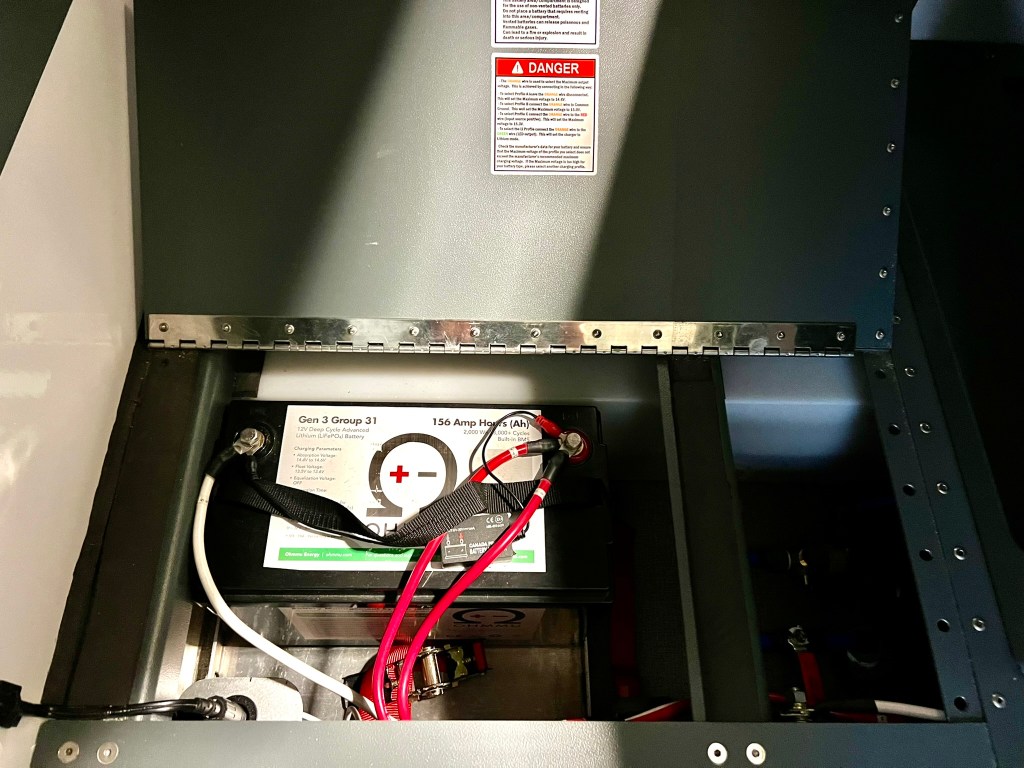
-OHMMU Gen 3 Group 31 Premium Lithium Battery 156 Amp hours 2000Wh built in BMS

-Canada Proof Battery Monitor

-Alucab 270 shadow awning (length 2.6m, weight 24 kg, shade area 10m2, aluminum construction, RHS mount, material is acrylic impregnated, with a heat reflection silver coating on one side. Has additional
water repellent coating on surface side, built in fungal resistance to prevent mold, water penetration/water column capability greater than 1000mm/1m -powder coated aluminum awning adapters

-OVE Molly rear accessory rack w /1 -2 gal water rotopax

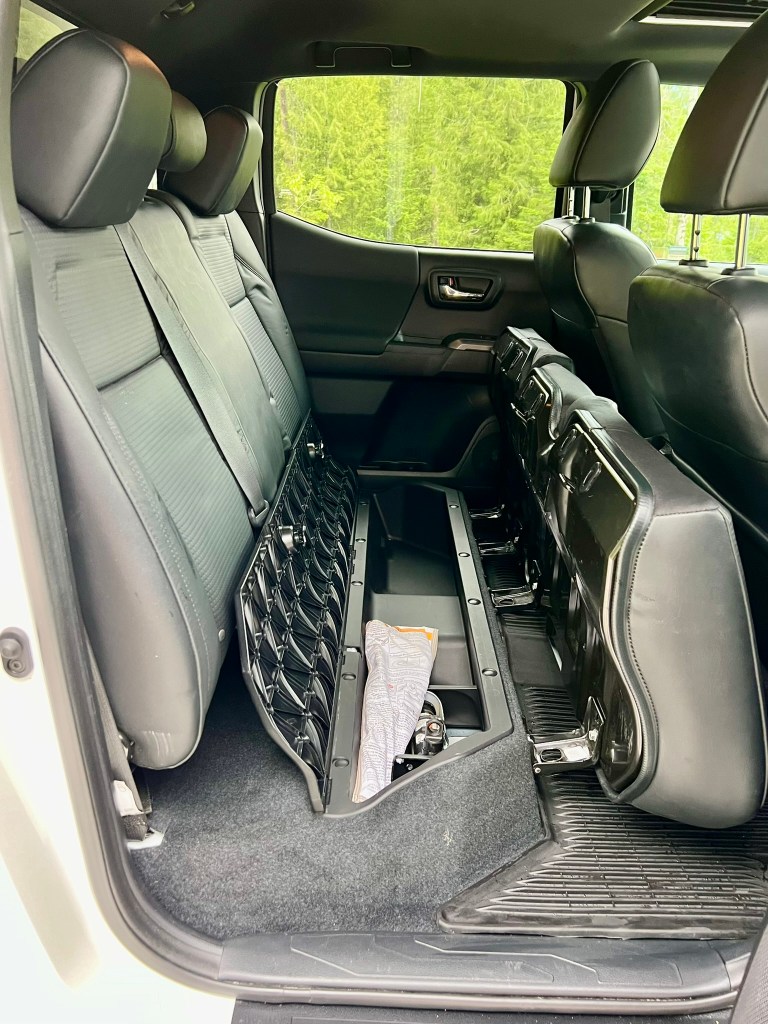
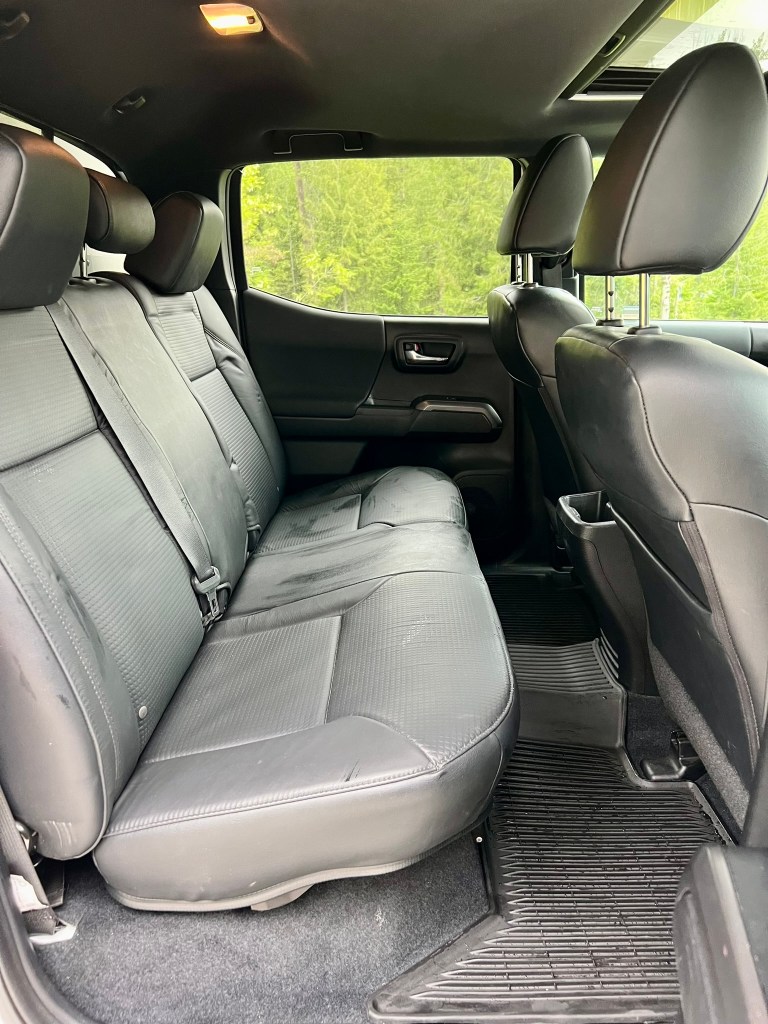
Toyota Tacoma TRD OffRoad 6 ft bed 2021 4X4 DBL King Cab L/B 3.5LV6

Milage: 43,166

Features:

-Super white w LC27 Black Rubber truck bed protector

-TRD Premium Offroad package

-Technology Package -Leather Interior -N-FAB running boards (sanded and new 3 coast Rustoleum paint)

-Goodyear Airbags

-All weather floor liners/door sill protection

-2022 Falcon WildPeak AT3W Tires LT265 75R 16

-Bed Lights

-Bed outlet

-Mudguards

-Fluid Flow undercarriage sealer
Manzanar Virtual Tour and boondocking in Alabama Hills & Death Valley

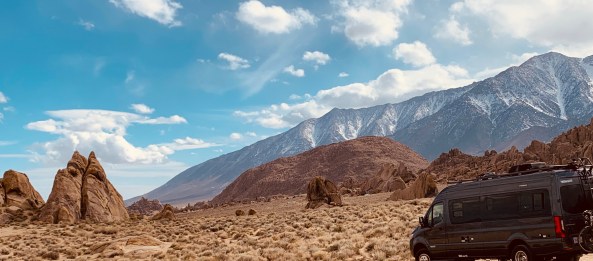
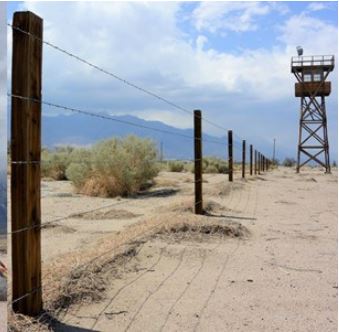
As you head to Death Valley from Alabama Hills Recreation Area you will drive past Manzanar National Historic Site on highway 395 in California.  First off, you must stop by Alabama Hills it is an outdoors person and rock climbers dream!  So many amazing rock formations, places to climb and hike and all for free.  The best boondocking ever!  We can also recommend free camping at WildRose in Death Valley.  It is a very long drive to this campground, skinny road and very windy (we would not recommend any rigs bigger than 30 feet to attempt) that only has picnic tables, fire rings, a vault toilet and potable water but it is on your way to seeing the WildRose Charcoal Kilns, (the road is gravel and pretty rough) which are pretty cool and a nice hike to Wildrose Peak that is about 8 miles roundtrip.  We went in winter time/early spring so it was quite cool (temperature that is). If you can get in, we’d rather recommend staying at Texas Spring Campground it is a good central location, much warmer, prettier and better facilities but costs $16/night.  Now back to Manzanar…

Being an Asian American, I had to stop and visit the WW2 relocation center and I highly recommend stopping for a self-guided tour.  It is very well done and reminds us of the atrocities we faced in this country during fears of war and people who looked different and had a different cultural background.  In 1942, the United States government ordered more than 100,000 men, women, and children to leave their homes and detained them in remote, military-style camps like the Manzanar War Relocation Center which was one of ten camps where Japanese American citizens were incarcerated during World War II.  People of Japanese decent who were US citizens from across this country lost all their possessions, dignity and were forced into these Relocation Centers. 

A little history course for folks who may not be aware.  Relocation isn’t new in the history of Manzanar and the Owens Valley. We can’t forget that the Paiute and early settlers as well as Japanese Americans all were uprooted from their homes. American Indians began utilizing the valley almost 10,000 years ago. About 1,500 years ago the Owens Valley Paiute established settlements here. They hunted, fished, collected pine nuts, and practiced a form of irrigated agriculture.  Miners and ranchers moved into the valley in the early 1860s and homesteaded Paiute lands raising cattle, sheep, fruit, wheat, and other crops. The military were called in and forcibly relocated nearly 1,000 Owens Valley Paiute to Fort Tejon in 1863. Many Paiute returned to the Owens valley and worked on the local ranches.

The town of Manzanar—the Spanish word for “apple orchard”—developed as an agricultural settlement beginning in 1910. Farmers grew apples, pears, peaches, potatoes, and alfalfa on several thousand acres surrounding the town. The Los Angeles Department of Water and Power began acquiring water rights in the valley in 1905 and completed the Los Angeles Aqueduct in 1913. Land buyouts continued in the 1920s, and by 1929 Los Angeles owned all of Manzanar’s land and water rights. Within five years, the town was abandoned. In the 1930s local residents pinned their economic hopes on tourism. With the onset of World War II tourism diminished.  Then in 1942 the U.S. Army leased 6,200 acres at Manzanar from Los Angeles to hold Japanese Americans during World War II. Though some valley residents opposed the construction of the internment camp, others helped build it and worked there.

First, we walked through the mini museum that is very well done and tells the stories of the families that lived here during the WW2 internment.  There is a 3.2-mile self-guided auto tour where you can see the original sentry posts, Block 14 buildings, mess hall, women’s latrine and barracks, the cemetery monument, remnants of the administrative complex, rock gardens, parks, orchards, the hospital grounds, the uncovered foundations of the Children’s Village  which was the only orphanage of the ten War Relocation Centers in the US.  In the museum, you will find images Ansel Adams took in late 1943 where he acknowledges the prejudices and fears that led the U.S. government to confine American citizens and legal immigrants of Japanese ethnicity behind barbed wire.

From the website, I wanted to provide you more details on what is still on the property and what you will encounter in the video.

Mess Hall: The US Army constructed this mess hall at Bishop Air Base in 1942. The National Park Service moved it to Manzanar in 2002 and eventually restored it. It is identical to the 36 mess halls that together produced over 28 million meals here from 1942 to 1945. Walk through the kitchen, sit at the picnic benches, and learn about the logistics and politics of food in Manzanar.

Women’s Latrine: The women’s latrine was reconstructed in 2017. The communal shower and rows of toilets depict some of the harsh realities of living at Manzanar. Overcrowding led to long lines, unpleasant odors, and an extreme lack of privacy.

Barracks Buildings: The two barracks buildings were rebuilt in 2015 with exhibits being added in the following years. The four barracks exhibits will tell you about arrival to Manzanar, the importance of the Block Manager’s Office, the loyalty questionnaire, school at Manzanar, and more.

Cemetery: In 1943 the people in Manzanar decided to erect a monument to honor their dead and skilled stonemason Ryozo Kado was recruited to supervise the work. The cemetery serves as a poignant reminder that some of the 10,000 Japanese Americans incarcerated at Manzanar never saw freedom again. Over 145 Japanese Americans died while confined in Manzanar during World War II. Many were cremated, in the Buddhist tradition, and some were sent to their home towns for burial. Fifteen people were buried in a small plot of land just outside the camp’s security fence. When Manzanar War Relocation Center closed, the families of nine of the deceased removed the remains of their loved ones for reburial elsewhere. In 1999, NPS archeologists confirmed that five burials remain at the site. The three characters on the front (east side) of the cemetery monument literally translate as “soul consoling tower” ( I REI TO ). The inscriptions were written by a Manzanar Buddhist priest, Shinjo Nagatomi.

Merritt Park: The people incarcerated at Manzanar left a lasting legacy by creating more than 100 Japanese gardens. The largest of the gardens was Merritt Park, named for the camp director, Ralph P. Merritt. Merritt Park served as community refuge from the hardships of camp. After Manzanar closed in 1945, many of the gardens disappeared as debris from demolished barracks, sand, and vegetation covered them. Recent archeological excavations have uncovered and stabilized some of these gardens including Merritt Park. Today you can view what’s left of this symbol of beauty and the resilience of the human spirit.

Japanese Garden Tour: Private and community gardens covered much of the Manzanar landscape. For many people, these rock gardens and pools served as a source of peace and an escape from their incarceration experience. Today, eleven of the over 100 Japanese gardens have been uncovered and stabilized.

The location was beautiful but also a sad reminder about how we treated fellow Americans.  It makes you sad to see how people were forced to live and were ripped from all their loved ones and their belongings because of a war.   How our fears caused us to overlook people who were citizens and part of our community and treated them like they were enemies because of their former homeland that they had left for a new life in the USA.  Perhaps, it is a reminder about how we can do better in the present and future generations of immigrant people.  We hope you enjoy watching our virtual tour.   

Virtual Tour Badger Springs Trail at Agua Fria National Monument, Arizona

IMG_4268So a little food for thought…  We are a few months in on living the full-time vanlife.  When we made this decision to rent our homes and go full-time for a year to visit all our US National Parks, monuments and beautiful outdoor spaces there was not an inkling of the global pandemic.  When you no longer have a home to go to, what do you do during a pandemic?  You try to be super diligent and responsible citizens.
We try to only use shopping services with curbside pick up at the store such as Walmart’s Grocery App and pick-up groceries (once a week or less).  We have the Pacific Pride Commercial Gas cardlock so we don’t go to ‘normal’ gas stations unless we need to fill with DEF (which may not be available at all cardlock locales).  We have focused on staying at BLM (Bureau of Land Management) public lands dispersed camping to avoid people and other RVers.  When there is a national park or monument or state park that is open we go very early in the morning and avoid other people and look for dispersed campsites or primitive campsites with the minimum people.  Once in a while though you must go to a park where there are people so you can dump and refill water, sometimes there are rest stops or gas stations that allow you to do this.

As I watch social media, people are being pretty harsh and disrespectful to RVers and vanlifers.  Saying we are irresponsible and making the pandemic worse.  We are seeing more and more of our outdoor spaces close, which we understand may be the right thing to do to slow the curve but there are many Americans who do live the RV life full-time who are struggling to find a spot to shelter in place.  Many of the RV private places are very expensive and difficult for those who have chosen this life to pay $75 a night for months on end and many have also closed.  We are lucky we have a lot of solar and lithium batteries to be able to be off the grid but many can’t live like us.  I understand folks being upset about RVers on the road but they must also understand not everyone can hunker down in their homes and stay in one place when they don’t have a home to stay at.  We need to have empathy and understanding that people can be responsible adults, do the right thing and that they are not out to be irresponsible and trying to make the pandemic worse but have no other choice because they made this choice of a different lifestyle.  I have spoken to friends where they see several people who are living in a home and going to the grocery store daily and come closer than 6 feet on trails and causing more issues than many RVers.  So how can we come together and help each other do the right thing when we have people with homes on wheels?  Can we stop shaming, lecturing and give more positive advice and understanding?  Can we be more supportive of people with different lifestyles?  Lets help each other, those who have stationary homes and homes on wheels be able to live and still flatten the curve.

So on to the virtual tour…

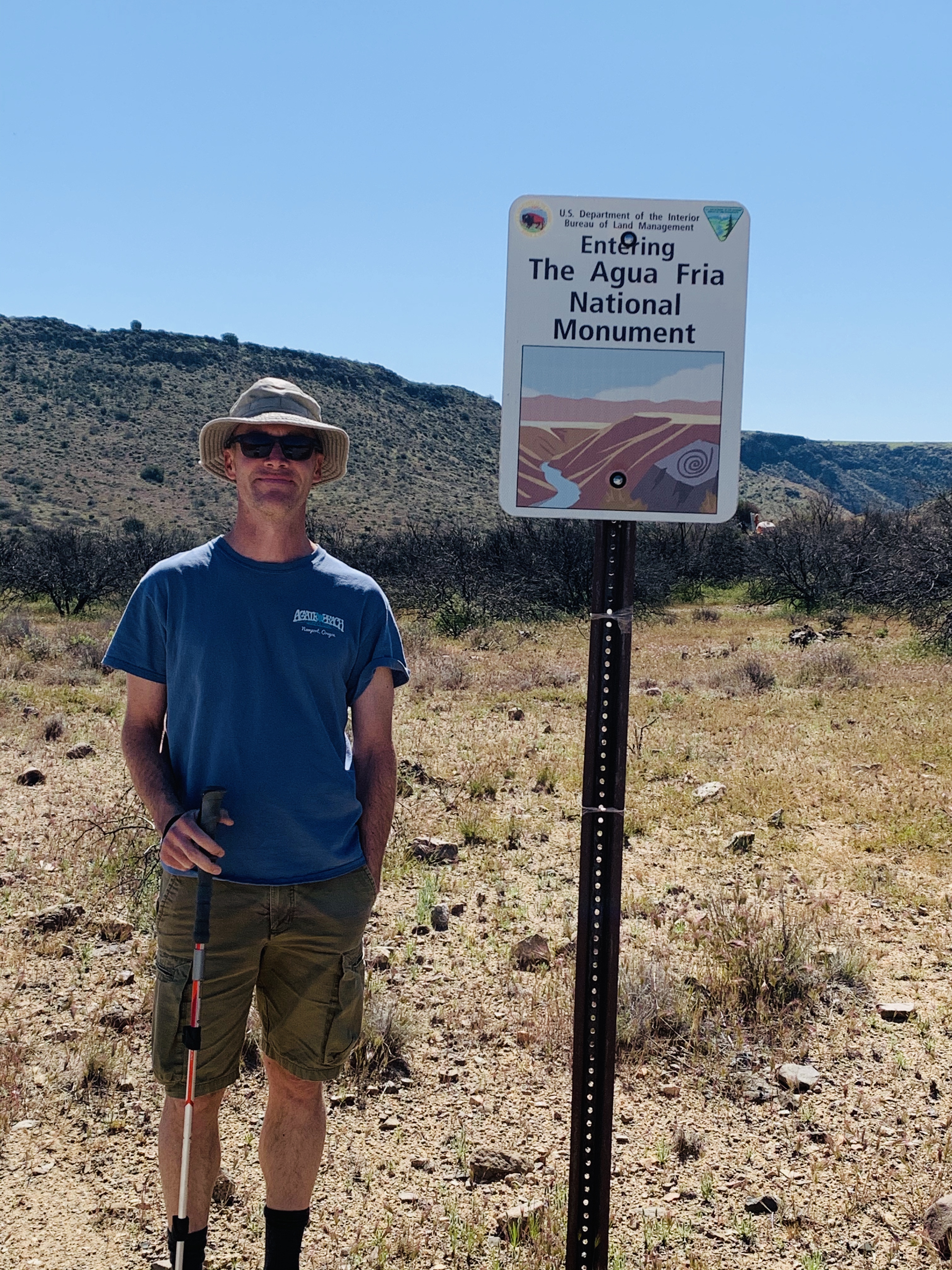
For those of you following us, who  have asked us to continue to do virtual tours of our hikes, monuments and places we see for your children’s virtual tour and online school work.  Here is our second installment.  We were at Aqua Fria National Monument in Arizona. It is 71,000 acres and about 45 miles from Phoenix.  Quoted from the BLM webpage, “The monument encompasses two mesas and the canyon of the Agua Fria River. Elevations range from 2,150 feet above sea level along the Agua Fria Canyon to about 4,600 feet in the northern hills. The diversity of vegetative communities, topographic features, and a dormant volcano decorates the landscape with a big rocky, basaltic plateau. This expansive mosaic of semi-desert area, cut by ribbons of valuable riparian forest, offers one of the most significant systems of prehistoric sites in the American Southwest.

In addition to the rich record of human history, the monument contains outstanding biological resources. The area is the home to coyotes, bobcats, antelope, mule deer, javelina, a variety of small mammals and songbirds. Eagles and other raptors may also be seen. Native fish such as the longfin dace, the Gila mountain sucker, the Gila chub, and the speckled dace, exist in the Agua Fria River and its tributaries.”

We ended-up being able to disperse camp (boondock) about 800 yards from the Badger Springs Trailhead.  The road from the freeway is a pretty rough dirt road, very rutted out, muddy in spots and most suited for a 4×4 vehicle.  The Badger Springs Trail is an easy 1.5 mile trail that really follows the Badger Springs Wash, so don’t wear running shoes like us, unless you don’t mind wet shoes and socks.  I’d suggest a good pair of hiking boots.  The trail isn’t well marked and has a lot of cactus and cheat grass growing over the trail.   I would say not very dog friendly once Summer time hits and the cheat grass has dried, tough on their little paws.  At the time we hiked it was very green and soft.  The trail ends  as Badger Springs Wash runs into the Agua Fria River Canyon, with a small waterfall through boulders and at an archaeological spot rich with a few petroglyphs.  Here is a link to our new video- enjoy!

Here is our virtual tour on the RGBAdventures YouTube Channel, don’t forget to subscribe to our channel!  We are almost to 100 subscribers, help us get over the line.  Enjoy!

IMG_4280