Surfrider Platinum Ocean Friendly Restaurant Opens in Newport, Taking Steps to Saving Our Ocean

This week, I am continuing to take a break from my traumatic brain injury series to focus on the environment and what everyday citizens can do to make a difference.  Last week, I had the opportunity to attend an entertaining event put on by the Surfrider Foundation of Newport.  If you aren’t aware of Surfrider Foundation their mission is protection and enjoyment of the world’s ocean, waves and beaches through a powerful activist network. If you are passionate about our oceans, please join or donate today!

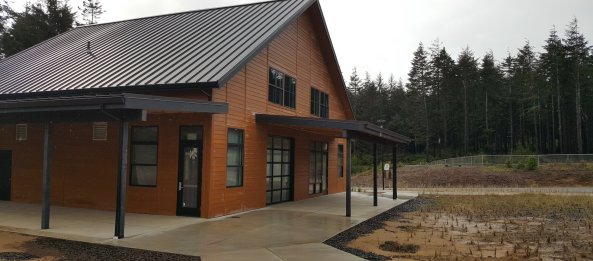
The event was a poetry reading from our new Newport Surfrider Foundation Chair, Scott Rosin, “Tell ‘Em We’re Surfing.”  Before the poetry reading began our local Oregon Field Manager, Bri Goodman talked about the location of our event, Bosque Café. (Bosque is Spanish for forest and Bosque Café is nestled in a forest near Oregon Coast Community College).   I was not aware Newport, Oregon had a restaurant that met the Platinum requirements of the Surfrider Foundation Ocean Friendly Restaurant program and a restaurant that is almost certified as zero-waste!  To be a Platinum Ocean Friendly Restaurant you have to meet the requirements below and Bosque Café goes above and beyond these requirements!

  • No expanded polystyrene use (aka Styrofoam).
  • Proper recycling practices are followed.
  • Only reusable tableware is used for onsite dining, and disposable utensils for takeout food are provided only upon request.
  • No plastic bags offered for takeout or to-go orders.
  • Straws are provided only upon request.
  • No beverages sold in plastic bottles.
  • Discount is offered for customers with reusable cup, mug, bag, etc.
  • Vegetarian/vegan food options are offered on a regular basis
  • All seafood must be a ‘Best Choice’ or ‘Good Alternative’ as defined by Seafood Watch or certified as sustainable.
  • Water conservation efforts, such as low-flow faucets and toilets, are implemented.
  • Energy efficiency efforts such as LED lighting and Energy Star appliances, are in place.

After hearing this, I had to meet the owners and understand why take this huge risk in starting a brand-new business and in such a small community, (there are only 10,000 residents in Newport.)  When I met Ed and Hidi Cortes, I was pleasantly surprised to find out that Hidi is Vietnamese and grew up in California in Orange County (just like me) and Ed is Mexican with an IT background (also like me).  I felt I had met my long-lost sister and brother.  They have lived in Newport for thirteen years and explained to me it has always been important to them to live a sustainable life, trying to buy local or grow local vegetables, fruits, meats and fish. Reducing their footprint on this earth and ensuring they had as little waste as possible.

IMG_20180913_200216

Cortes Family at the new Bosque Café

Let’s spend a little time understanding why zero waste is so important and how cool it is that Ed and Hidi are trying to execute this concept here in Newport.  According to the USDA’s Economic Research Service, households and businesses threw away 133 billion pounds and $161 billion worth of food in 2010. A 2014 study by the Food Waste Reduction Alliance found that 84.3% of unused food in American restaurants ends up being disposed of; 14.3% is recycled, and only 1.4% is donated.  Landfilled food provides ready fuel for methane gas production — the most environmentally destructive greenhouse gas linked to global warming.  In addition to food wastes, there is plastic and inedible items that don’t biodegrade and wash into our ocean and beach shores.  There has been so much discussion on what do we do about the 1.2 trillion tons of plastic trash floating in the Pacific Ocean and most scientist say the best thing is how do we reduce our dependence on plastic and stop throwing plastics away.

This is what Ed and Hidi are trying to do!  At Bosque there will be the right size of consumable portions, so you don’t have left overs you throw away.  There will not be take away drink or food containers that will be thrown away at home.  They ask you consider bringing your own if you are in a hurry and can’t enjoy their relaxing atmosphere.  In the future they will have reusable non-plastic containers for purchase.

Hidi grew up in a family that owned multiple restaurants, eating eclectic foods and combining different ethnic foods to create a new culinary fare.  For example, blending foods and spices from Mexico and Vietnam like creating an Asian version of the tortilla.   It really resonated with me, as I do this all the time and my husband looks at me with a particular look when he sees Soy Sauce going into the Bolognese Sunday Gravy Sauce.

Hidi loves to cook, has always wanted to open her own restaurant and there are zero Vietnamese Restaurants in Newport.  The Cortes family thought this was the perfect time.  In wanting to be sustainable and fresh, Vietnamese was a perfect choice since it is known for its healthy cuisine and it works well to make vegetarian and vegan options out of traditional Vietnamese favorites.  What is really exciting is Hidi wants to push her culinary creativity so each month you will see specials in other global traditions that may have a little Vietnamese influence.  I’m dying to try her take on curry that she has transformed from all the different countries that create curries, she described to me during our interview.

menu

The yummy menu.

I asked Ed why he chose his location adjacent to Oregon Coast Community College.  A restaurant like this would get a lot more traffic and be more successful in Nye Beach or on the Bay Front.  Ed is an ultra-runner and runs in the woods near Oregon Coast Community College and when he saw the opportunity to launch a restaurant and café in his favorite running area they decided to take the plunge! Also, he wants to help support the students (OCCC students get 10% discount) and bring more options to the growing community in South Beach.  Everyone will be pleasantly surprised on the nice size portions for the price!  They are in process of getting their liquor license so currently you will need to go upstairs to the Wolf Tree Brewery Taproom for those options.

They are excited to open their café and restaurant to organizations for events, like the one we just had with Surfrider.  The space is clean, bright and inviting.  Ed has lots of ideas and plans you will see in the future to bring some exciting local art and technology to the forefront, be sure to keep coming by often!  As I discussed earlier growing their own local vegetables is important to the Cortes Family; therefore, you will see a full hydroponics system in the restaurant in the near future.   They also make their own fresh soy and almond milk.   For those of you in town October 14th at 2pm, is the official Grand Opening, make sure you come by and support an amazing family, restaurant and try the scrumptious Vietnamese food!

Being Good Stewards of Our Ocean

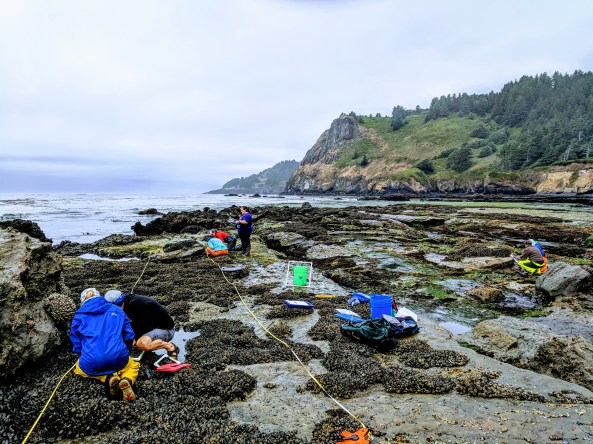
This week I will be taking a break from my blog series on traumatic brain injury to discuss possible climate change effects on our Oregon Coast and the entire West Coast.  I had the opportunity to join my friend, Dr. Lindsay Aylesworth, on a volunteer surveying activity with Oregon Department of Fish and Wildlife Marine Reserves and Oregon State University at Otter Rock Marine Reserve, Oregon.

It was the first time I woke up at 4:55AM in morning in the last four years since my brain injury.  We headed out to the Otter Rock Marine Reserve on a super low negative tide day.  It was amazing, I had never been out that far or in the marine reserve before.

First off, Doctor Sarah Gravem gave an overview of the intertidal area.  Oregon’s intertidal zone hosts 116 species of invertebrates, 71 species of algae, and 3 species of seagrass. She then explained how sea stars are the ‘great white shark’ of the intertidal zone.  They serve as the apex predator helping to maintain a balanced ecosystem.  I couldn’t believe these beautiful calm creatures were veracious eaters.

Sarah then explained the reason we were out surveying was due to a massive virus that almost made the sea stars extinct a couple years ago down the west coast and they are trying to determine how it effects the intertidal zone now.  For example, what happens to the intertidal zone if there are too many mussels because there are fewer sea stars to eat them?

otterrockreserve

The team on Otter Rock Marine Reserve surveying intertidal zone.

Not many people realize back in 2013-2014 there was a massive virus epidemic that nearly wiped out the entire sea star population from Baja Mexico to Alaska.  This wasting disease infects the sea star and causes it to develop lesions that dissolve their tissue and spread throughout their bodies.  It often kills the invertebrates within a couple of weeks or even a matter of days. When lesions appear on the sea stars’ rays (the arms of the star fish), a resilient few sea stars may shed the limb before the disease reaches their vital organs and later regrow it, but unfortunately most ended up dying. More often, the sea stars’ extremities become gnarled and deformed as the wasting syndrome takes hold, and the organisms quickly disintegrate into a white mush.

SevereStarFish

Example of sea stars with wasting disease.

No one really knows why the wasting disease occurs but some scientists hypothesize climate change had something to do with it.  From studies done in Oregon, it does not appear that the disease was triggered by climate change since it began when waters were colder than normal. However this is only for Oregon, as for Washington, California, Mexico and Alaska waters were warming. Other scientists still believe that climate change triggered the disease in those places. Additionally, after the outbreak climate change definitely played a role in the severity of the disease in Oregon.  As this warming in our oceans continue to occur we are seeing changes in marine life and their ecosystem.

Additionally, we have the huge blob of trash floating out in the Pacific Ocean that may be wreaking some type of havoc on our marine habitat.  Scientists are studying this to better determine what all this trash means to our marine habitat.  We as citizens need to do a better job of ensuring we keep trash, sewage, chemicals and plastic out of our oceans.

countingimage

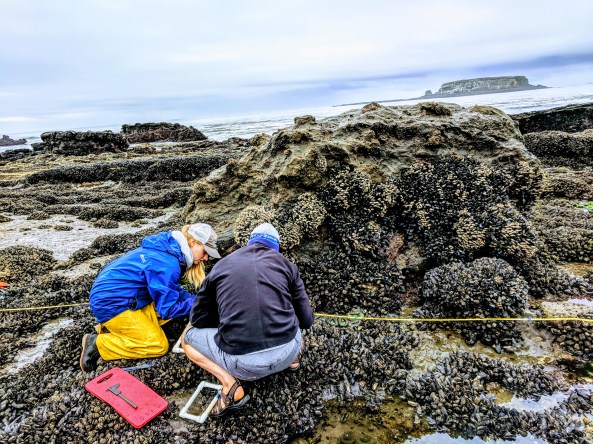
Haley and Greg counting mussels, snails and starfish.

But I digress, now back to the surveying.  Our goal was to count all the new mussels forming, the various snails and starfish that were in the intertidal zone.  We then spent the next four hours counting, photographing and documenting what we could find in one meter and ½ meter quadrants.

For those of you living near Newport or in any Oregon Coast community you can be part of citizen science.  One of ODFW’s collaborators, MARINe, uses citizen science to report where healthy and afflicted sea stars are being found. Anyone can download their datasheets, collect data, and then submit it online . If this sounds interesting, there are a few things to note before heading out to become doctors of the intertidal zone (check out full methods here).

Species identification is necessary so be familiar with the local species of sea stars. Size needs to be recorded so bring a ruler or something of known length as a reference. Review this post to familiarize with the types of sea star wasting symptoms. If you find there are diseased individuals remember to take a picture and send it to seastarwasting@googlegroups.com.

There is some good news though.  Several baby sea stars have survived the wasting disease and are beginning to reproduce.  Our hope is the population will come back.  Oregon Public Broadcasting published a good story discussing the new baby boom.

We can all be better stewards of the intertidal zone.  First, don’t pick up any creatures-feel free to touch but don’t move or remove. Second, follow the guidelines in the image below. Third, join the Newport Surfrider Chapter that does beach clean-ups, water quality checks and projects to save our ocean.  Lastly, if you want to learn more about sea stars I have listed some great resources below that were shared with me by Taylor Ely a Sea Grant Scholar.

tidepool guide.JPG

The Joy of Art, Music, Crafting and Gifting to Heal the Type A Brain

After my seventh concussion and being diagnosed with Traumatic Brain Injury, as stated in my last two blogs, I began to take my injury more seriously and knew I needed to make a change in my life.  My emotions were on a roller coaster ride.  One minute I would be happy, then next my husband would say something and I was ready to pummel him in rage and then the next I would be crying hysterically like a toddler having a temper tantrum. Not only were my emotions wreaking havoc in my life but my memory, word searching, attention span, reasoning and problem-solving skills were like a child.

Since I had been told by my neurologist to not read, go online or watch TV, I needed to do something to occupy my time and get healthy.  To go from having 15 hours scheduled by the minute to no schedule was utter maddening.  You can only spend so much of your day meditating, doing yoga, going for hikes/walks and cooking. I was still struggling to occupy my days and I wasn’t ready to see very many people other than my closest of friends.  My godfather and mother came over for a visit and she taught me to knit. I became a knitting fool.  Making scarves, hats, shawls for everyone I knew.

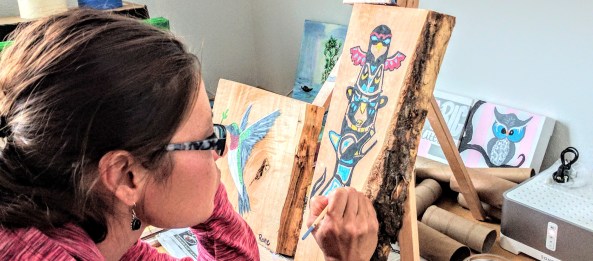
My sister-in-law gave me a nail art kit for my birthday and soon I was making everyone wood nail art deer, owls, ravens and landscape pieces.  I also thought it was time to do something with the bags and bags of wine corks I had collected and made these wooden and cork hot pot holders for dining room tables and cork boards. That Christmas everyone got a Rane original creation!  I was becoming a crafting aficionado and enjoying the smiles on people’s faces as they got something made by me.  I was getting a little over zealous with my knitting and I think I made everyone I knew something, that my husband suggested isn’t there other art therapies or maybe even music therapies I could try?

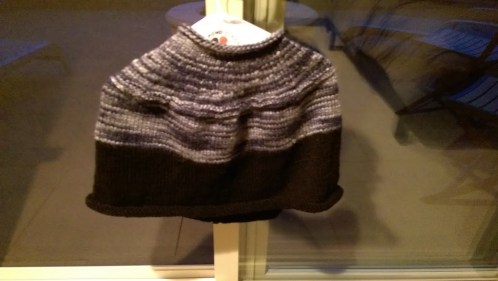
shawl

One of the many shawls I created for friends.

I then remembered with the work I was doing before I went on medical leave from Microsoft regarding helping military veterans reskill and get jobs in technology. There was research on art and music therapy helping military veterans with traumatic brain injury.  I thought if it could work for them, it may possibly work for me.  I couldn’t read the research reports to understand the details and unfortunately scholarly reviewed publications are not on digital audio yet, (perhaps, someone should really look into that.)  So, I went to my psychologist and asked what types of art and music therapy I should try. This would occupy more of my day, give my monkey mind a part-time job and hopefully start helping my cognitive impairments. He suggested I start first with the adult coloring books and listening to classical music.

Once, I was able to read again I began to learn what art and music therapy can really do for you.  In the last ten years, there has been significant progress in the study of TBI and art/music therapies.” Biomedical researchers have found that music is a highly structured auditory language involving complex perception, cognition, and motor control in the brain, and thus it can effectively be used to retrain and reeducate the injured brain.”

I also learned that listening to “polyphonic music has shown to engage neural circuits underlying multiple forms of working memory, attention, semantic processing, target detection, and motor imagery, in turn indicating that music listening engages brain areas that are involved in general functions rather than music-specific areas.”  A good example of polyphonic music is this old Sting classic, I love this YouTube rendition.

In addition to listening to music, I took it a step further and have been teaching myself to play the acoustic guitar. Through other books, I learned the importance of dancing and singing every day to my favorite song and how that help grow the strength in my vagus nerve (As my earlier blog stated, I learned my vagus nerve was having issues and was the reason for my blacking out and causing all my concussions and traumatic brain injury).

My poor husband would have to listen to me belt out at the top of my lungs ‘Dancing Queen’ by ABBA or ‘It’s a Beautiful Day’ by U2 or ‘Brown Eyed Girl by Van Morrison and the list goes on and on.  I started rubbing off on my friends and they would text me their dance out song of the day.  You should try it; your whole body get a rush of endorphins and total jubilation once your done with a grin a mile long and your spouse laughing hysterically at you.

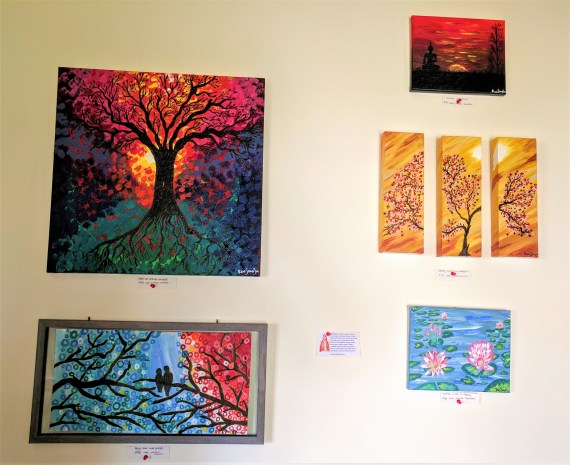
IMG_20170504_142904 (2)

My first set of paintings on display at Chow Restaurant in Bend, Oregon.

I was starting to get bored with my adult coloring books from Costco.  When I was at the Newport Visual Arts Center, looking at the latest show there was a bunch of people painting with watercolors on the second floor.  As I walked in, I found out they had received a grant that allowed them to give free art classes every day for the community and I was invited in to try.  So for the rest of the Summer, every week I attended the water color class, pottery class, pastel class, coloring pencil class, and acrylic painting class. Soon, I was able to read again, I learned through Psychology Today that art therapists, “McGuinness and Schnur worked with TBI patients and they explain the salient roles of art therapy in addressing various parts of the brain with clients in a user-friendly way.”

They also state that, “art therapy can help with organization, problem solving, and memory when the frontal lobes have been affected by TBI.”  I then started concentrating on acrylic painting as my favorite form of painting.  And thanks to my friends Lisa and Amy, who one day said, “Hey Rane, you are actually getting good- you should sell your art!”  To my utter amazement, a local restaurant wanted me to show my art and by January 2018 I had sold 12 pieces.

Filling my days with painting, listening and playing music my energy, emotions and memory were improving. The hardest part of my TBI has been moving from a super positive always happy demeanor that rarely ever got mad to this uncontrollable rage that pops up from just a little comment could set me off.  If anything can calm this new emotion, I am happy to do it.  I am lucky my husband is understanding and can deal with these moments that happen several times a month.  My days are now packed with art, music, yoga, mediation and the outdoors. I highly encourage everyone, even those who may not have traumatic brain injury the power of adding more art, music or crafting in your life.  A lot of the research highlights how it can help slow and possibly stop Alzheimer.  Here are a few of my favorite beginner Youtube videos to get you started with music, art and knitting, I hope you try-  I promise you will have fun!