Surfrider Platinum Ocean Friendly Restaurant Opens in Newport, Taking Steps to Saving Our Ocean

This week, I am continuing to take a break from my traumatic brain injury series to focus on the environment and what everyday citizens can do to make a difference.  Last week, I had the opportunity to attend an entertaining event put on by the Surfrider Foundation of Newport.  If you aren’t aware of Surfrider Foundation their mission is protection and enjoyment of the world’s ocean, waves and beaches through a powerful activist network. If you are passionate about our oceans, please join or donate today!

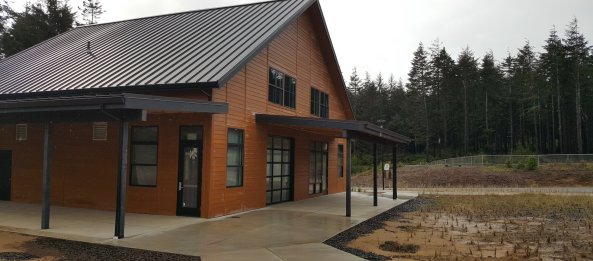
The event was a poetry reading from our new Newport Surfrider Foundation Chair, Scott Rosin, “Tell ‘Em We’re Surfing.”  Before the poetry reading began our local Oregon Field Manager, Bri Goodman talked about the location of our event, Bosque Café. (Bosque is Spanish for forest and Bosque Café is nestled in a forest near Oregon Coast Community College).   I was not aware Newport, Oregon had a restaurant that met the Platinum requirements of the Surfrider Foundation Ocean Friendly Restaurant program and a restaurant that is almost certified as zero-waste!  To be a Platinum Ocean Friendly Restaurant you have to meet the requirements below and Bosque Café goes above and beyond these requirements!

  • No expanded polystyrene use (aka Styrofoam).
  • Proper recycling practices are followed.
  • Only reusable tableware is used for onsite dining, and disposable utensils for takeout food are provided only upon request.
  • No plastic bags offered for takeout or to-go orders.
  • Straws are provided only upon request.
  • No beverages sold in plastic bottles.
  • Discount is offered for customers with reusable cup, mug, bag, etc.
  • Vegetarian/vegan food options are offered on a regular basis
  • All seafood must be a ‘Best Choice’ or ‘Good Alternative’ as defined by Seafood Watch or certified as sustainable.
  • Water conservation efforts, such as low-flow faucets and toilets, are implemented.
  • Energy efficiency efforts such as LED lighting and Energy Star appliances, are in place.

After hearing this, I had to meet the owners and understand why take this huge risk in starting a brand-new business and in such a small community, (there are only 10,000 residents in Newport.)  When I met Ed and Hidi Cortes, I was pleasantly surprised to find out that Hidi is Vietnamese and grew up in California in Orange County (just like me) and Ed is Mexican with an IT background (also like me).  I felt I had met my long-lost sister and brother.  They have lived in Newport for thirteen years and explained to me it has always been important to them to live a sustainable life, trying to buy local or grow local vegetables, fruits, meats and fish. Reducing their footprint on this earth and ensuring they had as little waste as possible.

IMG_20180913_200216

Cortes Family at the new Bosque Café

Let’s spend a little time understanding why zero waste is so important and how cool it is that Ed and Hidi are trying to execute this concept here in Newport.  According to the USDA’s Economic Research Service, households and businesses threw away 133 billion pounds and $161 billion worth of food in 2010. A 2014 study by the Food Waste Reduction Alliance found that 84.3% of unused food in American restaurants ends up being disposed of; 14.3% is recycled, and only 1.4% is donated.  Landfilled food provides ready fuel for methane gas production — the most environmentally destructive greenhouse gas linked to global warming.  In addition to food wastes, there is plastic and inedible items that don’t biodegrade and wash into our ocean and beach shores.  There has been so much discussion on what do we do about the 1.2 trillion tons of plastic trash floating in the Pacific Ocean and most scientist say the best thing is how do we reduce our dependence on plastic and stop throwing plastics away.

This is what Ed and Hidi are trying to do!  At Bosque there will be the right size of consumable portions, so you don’t have left overs you throw away.  There will not be take away drink or food containers that will be thrown away at home.  They ask you consider bringing your own if you are in a hurry and can’t enjoy their relaxing atmosphere.  In the future they will have reusable non-plastic containers for purchase.

Hidi grew up in a family that owned multiple restaurants, eating eclectic foods and combining different ethnic foods to create a new culinary fare.  For example, blending foods and spices from Mexico and Vietnam like creating an Asian version of the tortilla.   It really resonated with me, as I do this all the time and my husband looks at me with a particular look when he sees Soy Sauce going into the Bolognese Sunday Gravy Sauce.

Hidi loves to cook, has always wanted to open her own restaurant and there are zero Vietnamese Restaurants in Newport.  The Cortes family thought this was the perfect time.  In wanting to be sustainable and fresh, Vietnamese was a perfect choice since it is known for its healthy cuisine and it works well to make vegetarian and vegan options out of traditional Vietnamese favorites.  What is really exciting is Hidi wants to push her culinary creativity so each month you will see specials in other global traditions that may have a little Vietnamese influence.  I’m dying to try her take on curry that she has transformed from all the different countries that create curries, she described to me during our interview.

menu

The yummy menu.

I asked Ed why he chose his location adjacent to Oregon Coast Community College.  A restaurant like this would get a lot more traffic and be more successful in Nye Beach or on the Bay Front.  Ed is an ultra-runner and runs in the woods near Oregon Coast Community College and when he saw the opportunity to launch a restaurant and café in his favorite running area they decided to take the plunge! Also, he wants to help support the students (OCCC students get 10% discount) and bring more options to the growing community in South Beach.  Everyone will be pleasantly surprised on the nice size portions for the price!  They are in process of getting their liquor license so currently you will need to go upstairs to the Wolf Tree Brewery Taproom for those options.

They are excited to open their café and restaurant to organizations for events, like the one we just had with Surfrider.  The space is clean, bright and inviting.  Ed has lots of ideas and plans you will see in the future to bring some exciting local art and technology to the forefront, be sure to keep coming by often!  As I discussed earlier growing their own local vegetables is important to the Cortes Family; therefore, you will see a full hydroponics system in the restaurant in the near future.   They also make their own fresh soy and almond milk.   For those of you in town October 14th at 2pm, is the official Grand Opening, make sure you come by and support an amazing family, restaurant and try the scrumptious Vietnamese food!

Being Good Stewards of Our Ocean

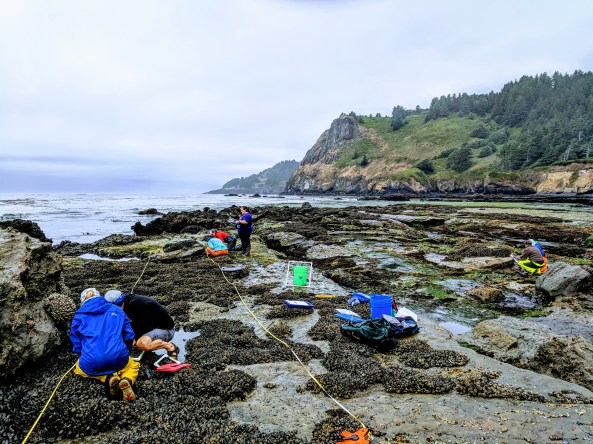
This week I will be taking a break from my blog series on traumatic brain injury to discuss possible climate change effects on our Oregon Coast and the entire West Coast.  I had the opportunity to join my friend, Dr. Lindsay Aylesworth, on a volunteer surveying activity with Oregon Department of Fish and Wildlife Marine Reserves and Oregon State University at Otter Rock Marine Reserve, Oregon.

It was the first time I woke up at 4:55AM in morning in the last four years since my brain injury.  We headed out to the Otter Rock Marine Reserve on a super low negative tide day.  It was amazing, I had never been out that far or in the marine reserve before.

First off, Doctor Sarah Gravem gave an overview of the intertidal area.  Oregon’s intertidal zone hosts 116 species of invertebrates, 71 species of algae, and 3 species of seagrass. She then explained how sea stars are the ‘great white shark’ of the intertidal zone.  They serve as the apex predator helping to maintain a balanced ecosystem.  I couldn’t believe these beautiful calm creatures were veracious eaters.

Sarah then explained the reason we were out surveying was due to a massive virus that almost made the sea stars extinct a couple years ago down the west coast and they are trying to determine how it effects the intertidal zone now.  For example, what happens to the intertidal zone if there are too many mussels because there are fewer sea stars to eat them?

otterrockreserve

The team on Otter Rock Marine Reserve surveying intertidal zone.

Not many people realize back in 2013-2014 there was a massive virus epidemic that nearly wiped out the entire sea star population from Baja Mexico to Alaska.  This wasting disease infects the sea star and causes it to develop lesions that dissolve their tissue and spread throughout their bodies.  It often kills the invertebrates within a couple of weeks or even a matter of days. When lesions appear on the sea stars’ rays (the arms of the star fish), a resilient few sea stars may shed the limb before the disease reaches their vital organs and later regrow it, but unfortunately most ended up dying. More often, the sea stars’ extremities become gnarled and deformed as the wasting syndrome takes hold, and the organisms quickly disintegrate into a white mush.

SevereStarFish

Example of sea stars with wasting disease.

No one really knows why the wasting disease occurs but some scientists hypothesize climate change had something to do with it.  From studies done in Oregon, it does not appear that the disease was triggered by climate change since it began when waters were colder than normal. However this is only for Oregon, as for Washington, California, Mexico and Alaska waters were warming. Other scientists still believe that climate change triggered the disease in those places. Additionally, after the outbreak climate change definitely played a role in the severity of the disease in Oregon.  As this warming in our oceans continue to occur we are seeing changes in marine life and their ecosystem.

Additionally, we have the huge blob of trash floating out in the Pacific Ocean that may be wreaking some type of havoc on our marine habitat.  Scientists are studying this to better determine what all this trash means to our marine habitat.  We as citizens need to do a better job of ensuring we keep trash, sewage, chemicals and plastic out of our oceans.

countingimage

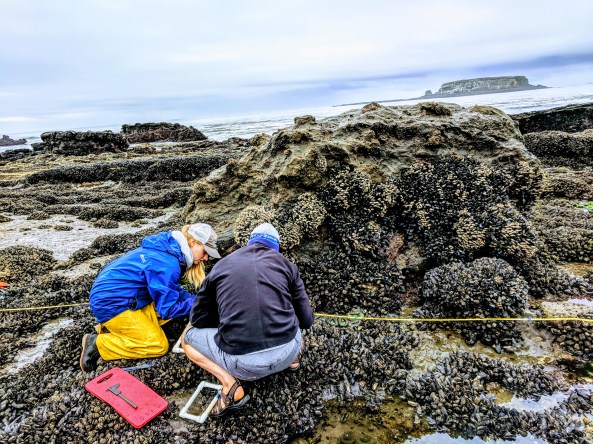
Haley and Greg counting mussels, snails and starfish.

But I digress, now back to the surveying.  Our goal was to count all the new mussels forming, the various snails and starfish that were in the intertidal zone.  We then spent the next four hours counting, photographing and documenting what we could find in one meter and ½ meter quadrants.

For those of you living near Newport or in any Oregon Coast community you can be part of citizen science.  One of ODFW’s collaborators, MARINe, uses citizen science to report where healthy and afflicted sea stars are being found. Anyone can download their datasheets, collect data, and then submit it online . If this sounds interesting, there are a few things to note before heading out to become doctors of the intertidal zone (check out full methods here).

Species identification is necessary so be familiar with the local species of sea stars. Size needs to be recorded so bring a ruler or something of known length as a reference. Review this post to familiarize with the types of sea star wasting symptoms. If you find there are diseased individuals remember to take a picture and send it to seastarwasting@googlegroups.com.

There is some good news though.  Several baby sea stars have survived the wasting disease and are beginning to reproduce.  Our hope is the population will come back.  Oregon Public Broadcasting published a good story discussing the new baby boom.

We can all be better stewards of the intertidal zone.  First, don’t pick up any creatures-feel free to touch but don’t move or remove. Second, follow the guidelines in the image below. Third, join the Newport Surfrider Chapter that does beach clean-ups, water quality checks and projects to save our ocean.  Lastly, if you want to learn more about sea stars I have listed some great resources below that were shared with me by Taylor Ely a Sea Grant Scholar.

tidepool guide.JPG

Back to Changing the World or Not?

The old saying, “If I knew then what I know now”, echoes in my mind.

I would have not gone to the Hackathon in LA back in 2013 and when my doctor said I must rest. I would have had my husband hide my cellphone, laptop and taken it easy.  Instead, for the next six months, I still went online on my phone doing emails and answering what I thought were crucial emails and calling colleagues on how to execute important projects.

Of-course looking back none of it was more crucial than my health, I wasn’t saving lives, things could have waited.  Others within Microsoft would’ve taken the slack.  However, my ego was hard to reign in.  I thought what I was doing was so critical and no one else had the expertise and needed my coaching for things to be completed exactly the way I thopught they needed to be done.

Many of us think we can just ‘tough it out’ and work through cold, illness, etc.  What ‘toughing it out’ did do was postpone my recovery. Failure to heed my body’s warning signs caused dizziness, migraines, memory loss, executive function and slowed my multi-tasking abilities.  I now had to do eye therapy and my ability to focus  (switching from looking close and away) diminished to the ability of an eight-year-old and required me to relearn my focus and get glasses for the first time in my life.

So, after six months of eye therapy, no driving (Five years later, I still lack the confidence to drive and am only slowly adding in daytime driving for short distances.  But last month I did do my first long 200 mile drive from Bend to Newport, Oregon ), no television, no computer, no reading, no alcohol, no caffeine, no high intensity exercise, constant migraine headaches, dizziness, nausea, word searching, memory loss, six more black out concussions and lack of balance.  Then one day I awoke with a clearing in my head I had not felt in 6 months.  I went to the neurologist, she did some tests and said I think you are okay to go back to work but you must take it slow!  Do not jump fully in and do not take too much on you have been resting your brain for 6 months you need a slow transition back to work.

I did not realize her definition of slow was very different from mine.  Compared to the way I used to work, 12-18 hour days, I was only working 10 now.  Instead of traveling 3 weeks a month, I started with just a few days a month.  But as the months drove on, I was feeling more and more like myself again.

There was so much work to be done in diversity in computer science, combating human trafficking, committees for the White House Office of Technology Policy on computer science education for underrepresented groups and technology implications of human trafficking, hackathons, hacks for good, conferences, keynotes, panels, guest lectures, publications, projects with UN Women, NCWIT, ABI, CRA-W, ACM-W and the making of Dream Big (movie featuring young women in computer science changing the world), that I started back to my 16 hour days, and my crazy travel of three weeks a month.

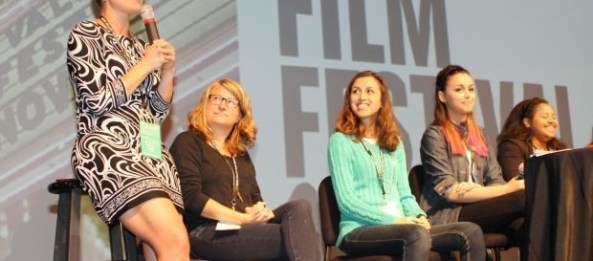
Rane moderating Big Dream Panel at the Napa Valley Film Festival

Taking on diversity and Computer Science efforts at top universities around the country heading to India, Korea, UK, Brazil, Singapore, and across the United States.  In a previous blog post, you saw our film was featured at the Napa Valley Film Festival and was being shown all over the world.  I was so excited about the progress!  Also, the fact that Microsoft and Microsoft Research’s efforts were highlighted in many of the top publications (i.e. Slate, NPR, Huffington Post), I couldn’t but help agreeing to serve on nonprofit boards needing our help and expertise, at one point I was on thirteen boards.  My hubris and type A drive which had carried me so far was a hindrance to my healing.

At every free moment, I was working on some project with one of the many non-profits (as you know I am a get shit done person and not just a sit and advise type person).  In my spare time, I was at home trying to transform my local community (Bend, Oregon) by supporting more STEM efforts, starting a scholarship for under-represented groups in computer science and engineering at OSU-Cascades, helping entrepreneurs, volunteering with the tech community and local youth, mentoring and teaching a course called ‘Ethics and Computer Science’ at OSU-Cascades. I could feel the exhaustion coming on but I thought to myself “just one more conference and then I will take two weeks off and be fine.”

I am here to tell you, we are not robots and you can continue to ignore the signs your body gives off but if you don’t listen it will force you to listen.  As Type A workaholics, passionate and ready to take on the world are bodies are resilient but not that resilient!  You cannot ‘tough it out’ you must pause when your body needs a pause even if it is just a mental health day from work.

So, on May 23, 2015, while attending a conference on behalf of Microsoft I had just finished several sessions and presentations at Day one of the NCWIT Conference in Hilton Head.  I had a dinner meeting with Mayim Bialik (Big Bang Theory-that was so cool!) discussing our film and her possible support and how Microsoft could possibly support a new Girls in STEM TV series she was going to kick off.  We returned to the hotel and I saw several of the researchers I was working with on a number of projects at the bar talking asking me to come join them.

After discussing theories, projects, new opportunities and changing the world of computer science it was reaching midnight and time for me to head for bed.  I was tired and started to feel a pain in my side (later I would figure out that would be a sign that I would blackout soon) but I ignored it and kept on.  As I walked away from the bar area to the elevators, the next minute I know I awoke in someone’s arms, with so many people surrounding me, all dazed and confused as I try to get up.  There was shouting, “Rane don’t move you’re bleeding and bleeding a  lot.”

Suddenly, EMTs are walking briskly toward me as my eye sight slowly comes back from a fog of gray and blurs.  “Ma’am you blacked out and hit your head, you have a good side gash on your head, can you just lay back we are going to put you in a neck brace and start an IV?” said the nice EMT gentleman.  One of my research friends from Harvey Mudd University began telling the EMT what had happened and he had her and a staffer from NCWIT follow the ambulance to the Emergency Room (thanks Catherine & Colleen).

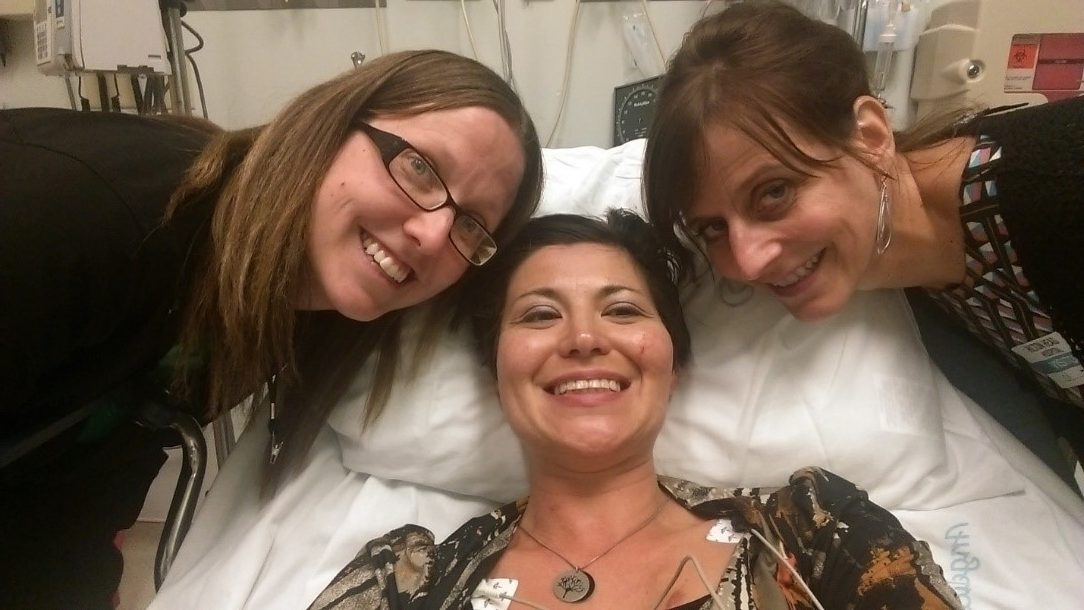
Rane in emergency room sending selfie to her husband to calm him down, trying to make it look not so bad.

I had thrown up a few times in the ambulance (sorry Mr. EMT guy- all over him) and still could not comprehend what was going on. While waiting for the doctor, my colleagues called my husband and tried not to scare him with me being in the emergency room again and blacking out after hitting my head.  Once they were done, then I was taken for MRI, CT Scan, stitches and forced to stay awake for a few hours to ensure I wasn’t going to go to sleep and never wake up again.  I finally got back to the hotel at 4AM looking like a semi-truck hit me, it took me an hour to wash all the coagulated blood out of my hair. I went to sleep and at 10am I awoke to call the airline and get a flight back to Bend, Oregon to go to my neurologist.  I flew out with frustration, here we go again.  With a horrible migraine, nausea and dizziness, I headed to the airport to what would be a multi leg eight-hour (the take offs and landings were excruciating with another concussion) flight before I finally got back to Bend and into the arms of my husband. It was also so humiliating for an extremely independent person to be whisked on and off the planes on a wheel chair as people looked at me like oh that poor young woman. Talk about a humbling experience.  I was beaten down.

This resulted in the next several years of trying to figure out why I was blacking out, thirteen more concussions resulting in me having traumatic brain injury and fighting the insurance company for my long-term disability.  Who would know the benefit you pay into hoping you will never have to use would be so difficult to obtain.  Once you need this benefit, how difficult it is to get it, even harder to keep it and then battling their doctors, lawyers, appeals and lawsuits to get the money and benefits you need, deserve and have earned. No one explains how you need to fill out all these forms and one little error can make your benefits never happen.  Having to go on unpaid medical leave due to this (I will have an entire blog dedicated to this subject later in my blog series to help those dealing with long-term and short-term disability claims, so you know what to do to get the benefits you deserve).  I would move from one doctor visit a year with my primary care for annual physical and flu shot to multiple visits a week with the following healthcare providers: Neurologist, Vasovagal Specialist, Optometrist, Vestibular Therapist, Occupational Therapist, Neurofeedback Psychologist, Psychologist, Acupuncturist and Chiropractor.

I didn’t realize how life threatening it could be for you if you tried to just push through the pain.  I plead with you if you have a concussion to please take the needed time off and screen time off! I learned the hard way and trust me you don’t want to go through this.  During this process, I had to get character letters from friends and colleagues about the Rane before and the Rane after all these concussions for the lawyers and it was painful to read the new person I had become.  As I researched what was wrong with me, I realized we still don’t know much about the brain and especially concussions. I read and listened to everything I could on TBI and concussions.   I will spare you with the peer review scholarly research publications (they are quite dry, interesting but will put you to sleep) but here are my top three books for you to read if you or a family member is dealing with this issue.  Next week, my blog will be on lessons learned on how  Type A’s can rest your brain.

  1. Super Better by Jane McGonigal
  2. Mindstorms: The Complete Guide for Families Living with Traumatic Brain Injury by John W Cassidy
  3. Coping with Concussion and Mild Traumatic Brain Injury: A Guide to Living with the Challenges Associated with Post Concussion Syndrome and Brain Trauma by Barbara Albers Hill and Diane Roberts Stoler