Innovating for the future: second annual International Women’s Hackathon

Well, here it is: I am pleased to announce that our second annual International Women’s Hackathon will take place on university campuses around the globe from April 24 to 27, 2014. Last year’s event spanned 14 campuses in seven countries, with more than 600 university women participating. We’re anticipating even bigger numbers this year!

Women in computing matters—International Women's Hackathon

We launched the International Women’s Hackathon to encourage, support, and retain women pursuing the computer sciences at the university level. This event, largely promoted by word-of-mouth, empowers young women to become leaders in computer science, informatics, and electrical engineering. By providing a fun and safe environment in which to explore computing, the hackathon encourages and supports young university women around the world, preparing them to create technology innovations that will help meet worldwide challenges in such areas as improving healthcare, protecting the environment, and upgrading manufacturing.
The presence of women in technology is essential to innovation. When confronted with a problem, we each encode our perspectives and then apply our particular heuristics to explore new and better resolutions. Diverse teams often outperform homogeneous teams (even those composed of high-achieving individuals), because diversity of perspective and problem-solving approach trumps individual ability. Research has identified the diversity of work teams as one of the key influences in the innovation process—and without question, a diverse team needs women.
As I travel around campuses, I hear the same concerns repeatedly from women in computer science courses:

  • Male classmates underestimate their technical abilities and relegate them to project management roles in group projects.
  • There is a lack of women on the computer science faculty, which leaves them feeling that they have no good role models.
  • They question whether they can fulfill their desire to solve big challenges by working in a field that seems to discount their talents.

This is why the International Women’s Hackathon is so important. It provides an opportunity for female students to demonstrate their technical chops and unique problem-solving approaches. To ensure that this year’s hackathon meets the needs of university women, we have enlisted the help of recent winners of the NCWIT Award for Aspirations in Computing. These gifted young women have helped us organize the challenges, reassess the rules and regulations, and upgrade the toolkit. So here’s a big thank you to the leads and planning committee members:
Leads:

  • Halie Murray-Davis, Franklin W. Olin College of Engineering
  • Jinisha Patel, New Jersey Institute of Technology
  • Safia Abdalla, Northside College Preparatory High School

Committee members:

  • Ashika Ganesh, West Windsor Plainsboro High School North
  • Aishwarya Borkar, San Jose State University
  • Diem-Nhi Tran, University of Texas at Dallas
  • Heather Huynh, University of Georgia
  • Kylie Moden, Trinity University
  • Nishtha Oberai, University of Colorado at Boulder
  • Veronica Wharton, Rochester Institute of Technology

The hackathon provides an opportunity for female students to demonstrate their technical chops and unique problem-solving approaches. The hackathon provides an opportunity for female students to demonstrate their technical chops and unique problem-solving approaches.

We are excited to have this year’s challenges sponsored by the following nonprofits: UN Women, Hindsight Group, Boys and Girls Clubs of Calgary, and Teens Against Distracted Driving. Hackathon participants will design a software application that meets one of two challenges: (1) increase women’s participation in STEM (science, technology, engineering, and math) majors, or (2) put a halt to texting while driving.
I am also pleased to announce our partnership with the USA Science and Engineering Festival in Washington, DC. We will be front and center during the festival, with women students from local universities hacking live on stage while we connect via Skype to the hackathon events taking place on university campuses all over the world.
I will announce more information about the hackathon in January, including details on special speakers and unique events, so stay tuned. In the meantime, I hope that many of you will take advantage of this opportunity: you can organize teams and register for the event now.
Rane Johnson-Stempson, Director, Education and Scholarly Communication, Microsoft Research Connections
Learn more
World Kindness Day- Practice Random Acts of Kindness This Week

“I’ve learned that people will forget what you said, people will forget what you did, but people will never forget how you made them feel.” – Maya Angelo

Today is World Kindness Day.   It was introduced in 1998 by the World Kindness Movement, a group of nation kindness NGOs.   Many countries like Canada, Japan, Australia, Nigeria, UK, India, Italy, United Arab Emirates and Singapore officially observe the day.   On this day, there are many events celebrated like: THE BIG HUG, handing out Kindness Cards, Global Flashmob, which was coordinated by Orly Wahba from USA which was held in 15 countries and 33 cities with its images of the event making the big screens in New York City.  Even though we don’t officially observe the day in the United States, I wanted to take the time for us to pause and think about kindness.

Maya Angelo has my favorite quote that I usually kick off every presentation I do  and daily I try to make sure every person I come in to contact with feels valued, important, cared about and their opinion matters.   Sometimes the grind of everyday life we forget the importance so slowing down and saying hello to our neighbor, our cubical mate next door or how the last conversation made the person you were interacting with feel. With all you hear on the news is the world today is full of dysfunction, conflict, and disasters its hard to stay positive or think there is any kindness left.  But what we can count on is inherently we are kind people and there is a lot of kindness in the world.  The Giving USA 2013 report was released in July. The good news is that the total contributions in 2012 increased to $316.23 billion. According to the report, the specific increases are:

  • 3.5% increase in total estimated U.S. charitable giving
  • 3.9% increase in giving by individuals
  • 4.4% increase in giving by foundations
  • 12.2% increase in giving by corporations

As a country we are one of the most giving people when it comes to people’s time, talent and money.  I was honored to participate in our Microsoft Annual Giving Campaign where employees supported over 18,000 organizations and raised over $94 million and by the end of the calendar year should reach $108 million.  Kindness is not just about giving money and time to organizations but its also about how we make each other feel.  Research has shown that if you feel appreciated, valued, kindness from your boss and fellow peers you will be more productive and happy.  Check out this great Ted Talk by Shawn Achor- http://www.ted.com/talks/shawn_achor_the_happy_secret_to_better_work.html to get you in the mood to be more kind today.

FN5A1506

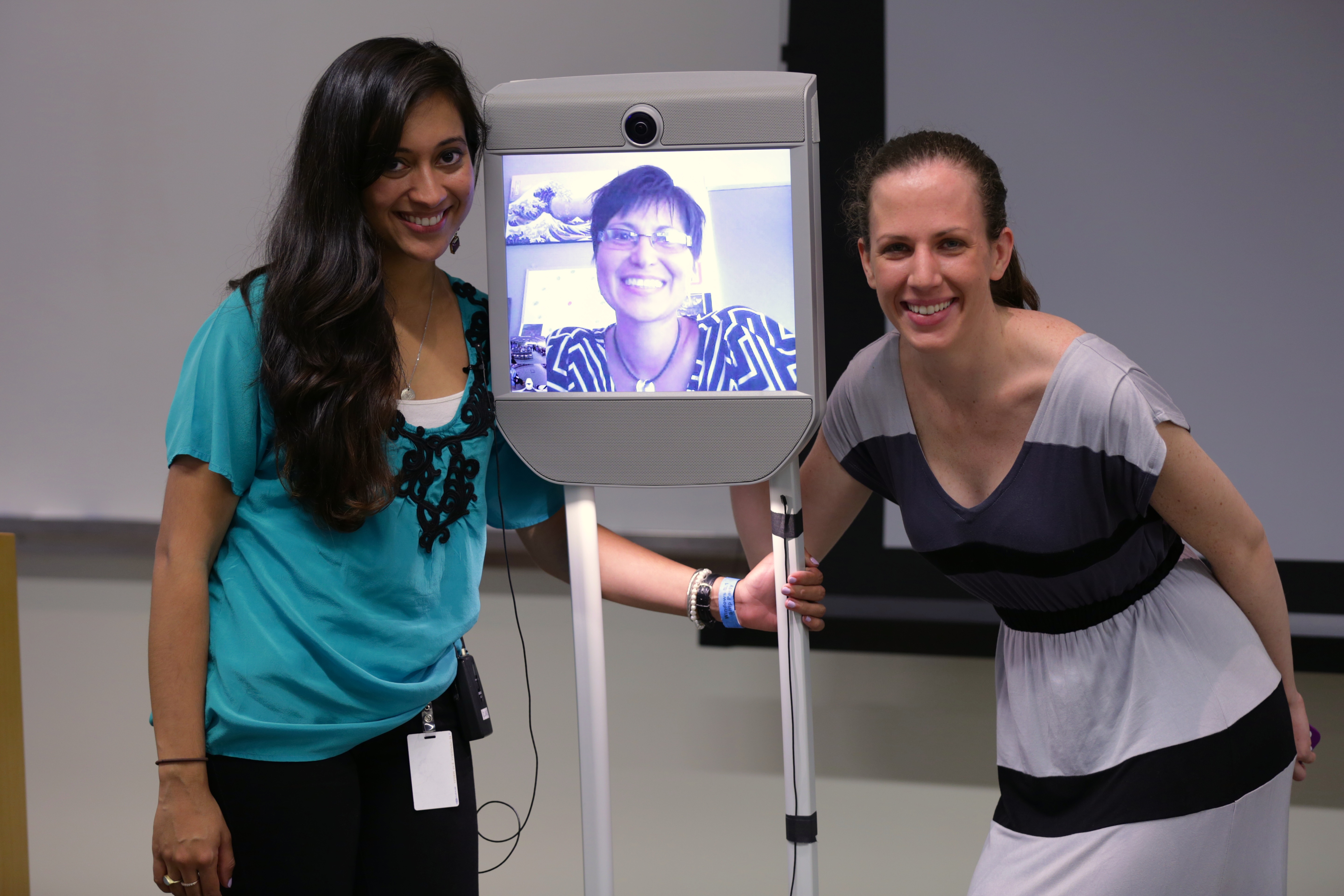
You can still have a virtual hug!  Continue to be kind.

Working for a technology company,  having the ability to work remotely and taking advantage of the latest gadgets is fantastic.  But it also requires us to think about our personal in-person interactions even more, since they are so few.  Today, we are constantly online and engaged in virtual conversations. We tend to feel more comfortable sending an email than walking down the corridor to talk to a colleague or pick up the phone. I don’t know how many times I have been in a restaurant and seeing couples and children with their parents texting each other than talking.  As wonderful as Facebook, Skype and Twitter keep us in touch and up to date on the latest happenings in life, they also take away from that personal engagement and that feeling of appreciation and love we have for each other.  Nothing beats a conversation with an old friend that you haven’t talked to in a longtime or when you meet a person for the first time in a coffee shop and strike up a great conversation and feel that instant connection.

One of the things I love to do each week is just one random act of kindness like buying a cup of coffee for the next person in line, getting a meal for a homeless person, or volunteering to help grade papers for a teacher at the local school.  Too many times we over think and make doing something nice too much work to include in our busy lives.  One of the website I love that can give you great ideas: http://www.randomactsofkindness.org/. Check it out and try something.  Also, another  great Ted Talk to get you in the mood today and this week: http://www.ted.com/talks/jonathan_zittrain_the_web_is_a_random_act_of_kindness.html.

Lastly, I want to leave you with 10 things you can do today to participate in World Kindness Day:

  • Show someone you know gratitude- send him/her a quick email to thank him/her or pick up the phone and call him/her or better yet get him/her a coffee and tell him/her why you are grateful to know him/her
  • Replace judgment, no one likes to be judged
  • Walk in someone else’s shoes and try to understand where they are coming from
  • Hold back criticism and try encouragement
  • Recall how someone made you feel really good and what can you do in return
  • Surprise someone you know with a kind note
  • Turn off your devices tonight and have a conversation with your significant other or children
  • Write down 10 things you are thankful about and if you listed any person, let him/her know
  • Do one random act of kindness for someone you don’t know today
  • Give yourself a break and be kinder to yourself, we are our worse critic.  Appreciate the great work you do.

Have a wonderful World Kindness Day and Pay it Forward!

Hopeful for the Future for Women in Computing

Sitting on a plane heading back to the Pacific Northwest, I’m reflecting on the week I just spent in Minneapolis—a week of inspiration and impact at the Grace Hopper Celebration (GHC) of Women in Computing. I’m thinking about the pertinence of this year’s GHC theme, “Think Big, Drive Forward,” and how our 260-strong contingent of Microsoft employees carried that message forward. Wearing t-shirts emblazoned with the word “Innovator,” my fellow Softies and I strove to support and inspire the next generation of women computer scientists.

Aspirations in Computing Dinner Celebration at Grace Hopper. Aspirations in Computing Dinner Celebration at Grace Hopper.

It was invigorating to hear from Microsoft leaders Julie Larson-Green and Jacky Wright, as they, along with Maria Klawe, a Microsoft board member and president of Harvey Mudd College, informed conference attendees about career paths, technical leadership, and the future of women at Microsoft. Seeing young professionals’ eyes light up upon hearing that women comprise 29 percent of our senior leadership team, I could sense a renewed interest in careers at Microsoft.

Microsoft’s senior technical women and executives also held closed-door sessions for the company’s GHC attendees, encouraging them to drive their careers forward and be the new spirit of our company. This message took on even greater resonance, among both the Microsoft and general attendees, when it was announced that Microsoft had just been named the most inspiring American company by Forbes magazine.

While such accolades are great, we know that for our company to continue to lead technological innovations and succeed in our transformative vision of “One Microsoft,” we will need more gender diversity on our research teams. Moreover, we can build those diverse teams only if the female talent is available, which means that we need to increase the number of women who are pursuing advanced degrees in computer science. We need to take direct action, like that of my fellow researchers—A. J. Brush, Jaeyeon Jung, Jaime Teevan, and Kathryn McKinley—who spent the conference helping PhD attendees prepare their poster presentations, find their dream jobs, publish their research, and pursue career opportunities.

But attracting more women to computing is an enormous task, one that is beyond the capabilities of any one company alone. Fortunately, the country’s top computer science institutions have banned together in the National Center for Women & Information Technology Academic Alliance (NCWIT AA), a broad partnership that includes academic, nonprofit, government, and industry members. These institutions will help us truly grow the pipeline of women innovators, which is why Microsoft Research is pleased to offer them project start-up assistance through the MSR NCWIT AA Seed Fund. The seed funds are designated for initiatives that recruit and retain women in computing and IT.

My favorite part of the conference is spending time with the winners of the NCWIT Aspirations in Computing Award. This award recognizes female high school students who have the potential to become amazing computer scientists. These young women run summer camps to excite middle school girls about computer science through Aspire IT. We were excited to support this year’s camp leaders with Surface devices and Kodu Touch, which exposed young women to game development. On Wednesday we hosted a special session with past winners and Microsoft executives, and on Friday night we honored 60 winners across the United States at meet-up sessions in 12 of our Microsoft retail stores.

Pictured from left to right: Kinect aspiration winner Rochelle Willard from USC, Rane Johnson and Rico Malvar from Microsoft Research.Pictured from left to right: Kinect aspiration winner Rochelle Willard from USC with Rane Johnson-Stempson and Rico Malvar from Microsoft Research.

On Saturday, we ended the conference by challenging attendees to “think big and drive forward” change in disaster response during the Grace Hopper Open Source Day. Free and open source software (FOSS) usage is becoming widespread, but learning how to contribute to an existing FOSS project or to release a new open source application can be daunting. Open Source Day enabled participants to spend time coding for an existing FOSS project or to get help starting their own community-developed software project. Our Microsoft Disaster Response Team led a group of young women working to create open source applications for disaster response.

This year’s GHC inspired not only me, but 4,600 other attendees, exciting us all to change the future of technology and women in computing. If every attendee would encourage and mentor just one budding female computer scientist, we could almost double the number women studying computer science today at US universities. I am extremely optimistic we will make a difference, and I can’t wait to see the technology innovations that women will drive.

Rane Johnson-Stempson, Director, Education and Scholarly Communication, Microsoft Research Connections

Learn more