Site Preparation for a Yurt

The process of building a yurt can be long and complicated, with many hurdles to overcome along the way. In this blog, I discuss our journey as we try to build our yurt on a piece of land in Sandpoint, Idaho. We had to navigate complex regulations and permitting processes, find reliable contractors, and deal with soaring wood prices during a time of high demand. Despite the challenges, we persevered, were ultimately able to complete our project and hope this helps you not make the same mistakes we made.

Once we ordered our yurt on June 28, 2021 we had until August 28th to get our property ready. The first thing we did was apply for an address with the county and the US Postal Service, as an address is required for many aspects of property development. Next, we visited the local library to research permits, regulations, and costs associated with developing an off-the-grid property. We looked into well-drilling, solar panels, grey water systems, platforms, and composting toilets. We researched the best composting toilets that did not require plastic bags since we wanted to maintain our eco-friendly lifestyle.

To our surprise, we learned that preparing non-developed land for development requires a lot of work, and it is not as easy as we initially thought. We assumed that there would be very few permits needed in Idaho, especially since our property was outside city limits and not subject to CCRs or HOAs. However, it seems that Idaho requires just as many permits as just about any town on the West coast. The advantage of living in a small town is that you can obtain the permits much faster than big cities if you take the time to meet with everyone in person and you live on your property full-time during development.

One of the biggest challenges we faced was drilling a well. We learned that the average cost of drilling a well was between $15,000 to $35,000, depending on the depth. After speaking with neighbors in the area, we found out that we would spend a minimum of $25,000 on drilling a well. We contacted several well contractors, but they were booked out for 18 months. Moreover, locals warned us about issues they faced with their wells, such as drying up due to new development and needing to be redrilled, with additional costs of $5,000 to $10,000. We decided to connect to the local Syringa Water District instead, which would cost us about $6,000. We filled out the necessary permit requirements and attended a local board meeting to request that three adjacent neighbors get water on our property on the North Idaho version of fast track. The board was understanding and promised to get us connected in the next 2-3 weeks, just in time for our Labor Day weekend yurt-raising. 

We also discovered that due to the long, grey winters in Idaho, we would not generate enough solar energy to power all of our electrical needs. The better option was to connect to the local electricity grid and send energy back to the grid during summer months when there is a surplus of power. This is referred to as a net metering system.  Therefore, we decided to connect to the local electricity grid and natural gas line, as I love cooking with gas and we might get a gas fireplace in the future. This required more permits and applications with the local utility company (AVISTA). Fortunately, AVISTA was understanding and worked with us to meet our short deadline so that we could get all utilities in, concrete poured, and set before September 1.  Don’t forget the solar permit is a different permit from your electrical and before AVISTA will turn-on your net meter, they need the approval from the state inspector.  You need to find an electrician who will dig your trenches (if you don’t want to), lay all electrical cables, meter install and transformer.  There are forms your electrician must submit to AVISTA on your behalf.

To obtain a site building permit, driveway permit, water, electrical, solar, and gas permits, we needed a detailed site plan. Fortunately, I had taken architectural and technical drafting in high school, so I was able to create one. We measured everything precisely, ensuring that we were 25 feet from the property line and had a 7.5-foot utility easement. We measured the length of our road, the distance between each corner of the property lines and our yurt, and the dimensions of our patio, which we put on the permit.  We learned that it is important where temporary property line markers are to put up metal property line markers (you can purchase at Home Depot, we bought the 6 footers and used a stake driver to place them in the ground).  You don’t want to have to pay for a surveyor when wildlife, trees or snow knock them down.  (Note: You will modify this many times, do it in pencil, and be ready to modify it with contractors and inspectors onsite and you can take a picture and send it immediately while they are onsite.)

I had initially planned to install a Sun Mar composting toilet in our yurt and had found a cabin-on-wheels company in Spirit Lake, Idaho that sold them. However, due to the state’s regulations, we were not allowed to have a composting toilet and direct city water in the same dwelling. Instead, we were required to install a grey water system, which was a large concrete tank with a pump that filters the grey water and only allows us to use the water to water trees. After researching various solutions, I found Hydra-Loop, which had innovative technology to filter our grey water so that it could be reused for watering trees, gardens, and even for washing clothes. However, we were told that Hydra-Loop wasn’t eligible by Idaho DEQ standards and we would need to contact the company to get approved before we could use what I was suggesting. The company was willing to go through the application process, but it would take over a year, which was too long for our 3-month deadline. Therefore, we opted to give up on our composting toilet and grey water system and instead applied for a traditional septic system, which would cost us almost the same amount.

Oh well, best laid plans!

While researching all the regulations and permits required, we were also trying to find a contractor to build our yurt deck platform, make our driveway, and do all the necessary trenches. We had to consider various factors such as the distance between the water, electric, and gas trenches and the most logical spot to put them to make it easy to dig up in the future if there were any issues. (Note: Water, gas and electrical lines can’t be in the same trench). We also had to consider the opportunity to share costs with our neighbors who were also putting in their water, gas, and electricity. After multiple revisions to our site plan, we finally found a solar guy who was an electrician and could do our electrical trench, put in our electrical meter, and do all the yurt electrical. We also managed to secure a plumber and someone to do a gravel pad for our shed and driveway, but it was a challenge due to the high demand and escalating costs for contractors.

During this time, we were living full-time on our property in our truck camper, which made it easier and more convenient for all the inspectors and contractors to stop by. We were working tirelessly in the hot summer to limb up all the trees in the area of where the yurt would be built. Our five acres had been previously logged, and there were dead limbs everywhere, so we had to create six huge burn piles of dead limbs over the next three months. It was exhausting work, but we were making progress. One day, while taking a beer break, one of the driveway contractors drove by and asked if we needed a gravel pad. He was about to finish a job and said he could come over in 15 minutes to give us an estimate. After talking with him, we were able to secure his services, and things were finally falling into place.

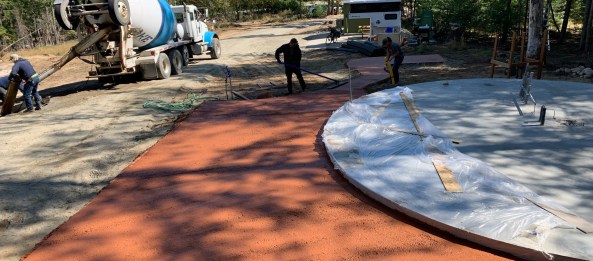
As mid-July approached and trenches were being dug for water, gas, and electrical lines, we knew we needed to make a decision on our yurt platform. We searched online for platform plans but ultimately decided to do it ourselves, calculating the costs of timber, cement bases, and various materials needed. We also began obtaining quotes from septic contractors. Fortunately, my childhood best friend’s dad, who owned one of the other 5-acre parcels near us, had already researched septic costs and feasibility before purchasing the property. We contacted several contractors, one was available and provided us with a bid for all the necessary work, including trenches, septic installation, and driveway construction. After some discussion, we agreed to have a simple cement pad for the yurt and a cement patio, which would be less expensive and lower maintenance than wood. The contractor went to work prepping our property.

It is important to note that before purchasing a property that requires a septic system, a perc test should be conducted to evaluate soil drainage. The perc test helps determine the best location and size of the septic tank and drain or leach field, which distribute treated wastewater into the soil. If the property fails the perc test, a septic system cannot be installed. It is also important to build your home/yurt above this spot to take advantage of gravity and avoid the need for a pump house.

As someone who loves to cook, a real kitchen was important to me. We ordered all the necessary appliances (stove, refrigerator, washer/dryer combo) cabinets, countertops, bathroom sink, kitchen sink, toilet/bidet combo (saves on toilet paper), shower, hot water heater from Home Depot and Selkirk Glass and Cabinets.  It takes around six weeks to receive all the necessary components, so it is crucial to give yourself ample time to have everything ready for installation.  We were able to store most items in our shed until the yurt was built.

By August 25th, we had completed all necessary preparations and were ready for our yurt materials to be delivered on September 2nd, with our crew of friends and neighbors scheduled to arrive the following day for the yurt raising. In our next blog, we will discuss how to organize a yurt raising party and what it takes to raise a Weatherport 24’ yurt. But first, some lessons learned.

Lessons Learned:

  1. Be nice but persistent! If you live in a small community, take the time to meet all of the permitting officials in person, be super friendly, and do everything they want on the spot. Several times, officials made changes to our plans while on-site, and we made sure they were happy before sending the changes with them or via email. Being nice is critical, as you are the one with deadlines, not them. Being rude or mean will not help you, as they can ignore you and move on to the next person. Many officials expressed their appreciation for working with us because we were organized, had everything filled out properly, were nice, available, listened, made necessary modifications, and tried to make their jobs easier. When a permit was taking longer than expected, we gave a friendly nudge via voicemail or email.
  2. Live on-site! With so many people building right now, many are doing everything remotely. Officials and contractors appreciate your presence, as they can show you issues, and together you can make the necessary modifications and understand their concerns.
  3. Keep it simple! In the end, the simplest solution was often the best. Concrete was easier and less expensive than wood. However, it is crucial to remember that all plumbing, electrical, and gas lines must be laid before the concrete is poured. It is permanent and cannot be moved, so ensure that everything is in the correct place. Also, make sure your contractors are measuring from the same spot and clearly mark all your spots to avoid confusion. Have a detailed drawing indicating where sinks, toilets, showers, drains, and supply lines are being placed with exact dimensions.

Why a Yurt?

Good morning RGB fans!  Sorry we have been out of communication for four months, but we have been focused on building our yurt.  The next series of blogs will tell you the good and bad, hard and easy in developing 5 acres and building a yurt.  What we thought would be pretty easy became very complicated quickly. We hope this will help you in not making the same mistakes we made. 

The yurt building blog series will be the following, so you don’t have a book on your hands:

  • Why a yurt and selecting a company
  • Getting your property ready, pulling permits, finding contractors, wood platform or cement foundation
  • How to build a Weatherport 24’ yurt with a loft and getting a good yurt building team
  • The inside planning and execution
  • Lessons learned and what we would do differently

Why a Yurt?

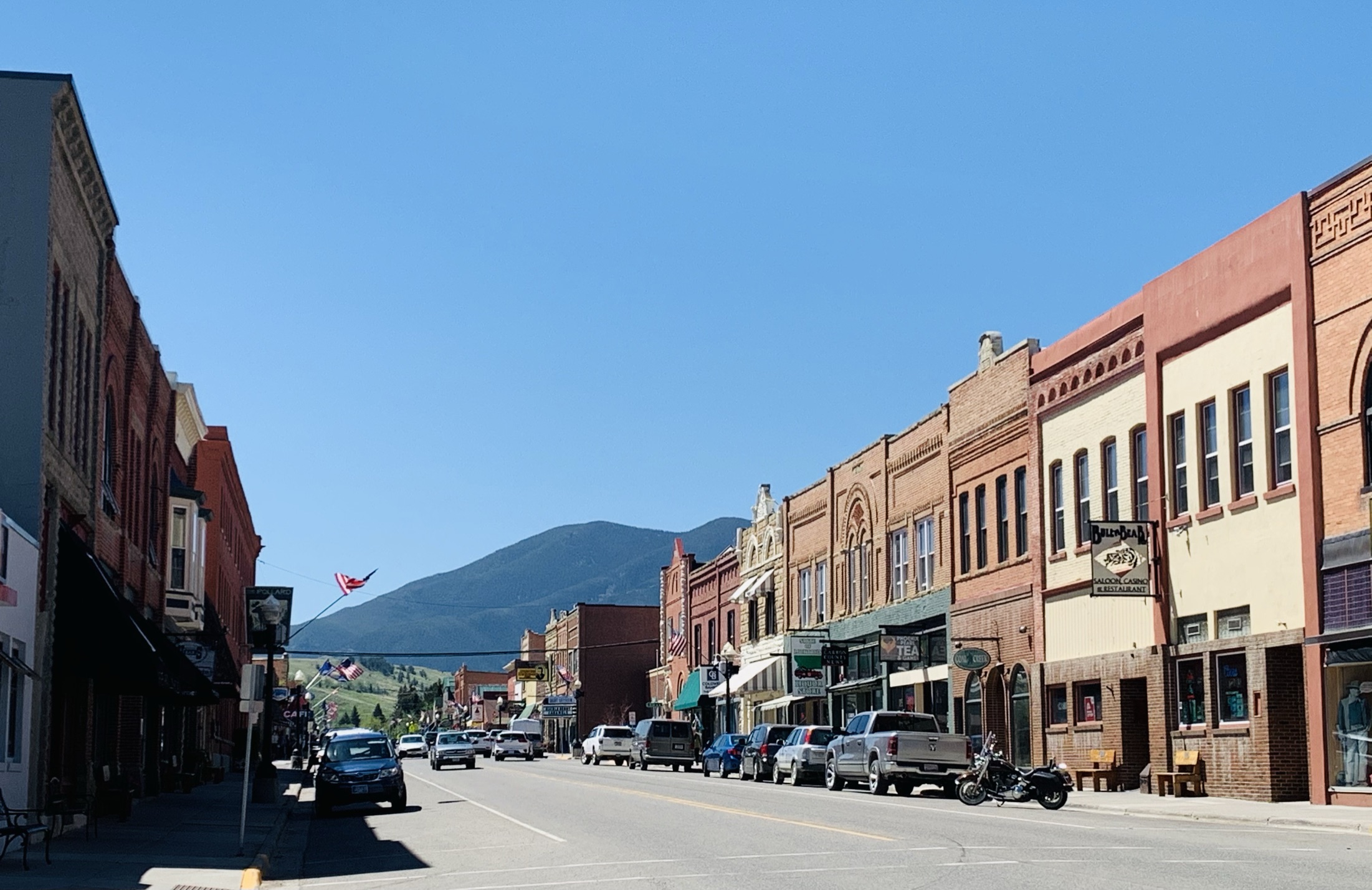
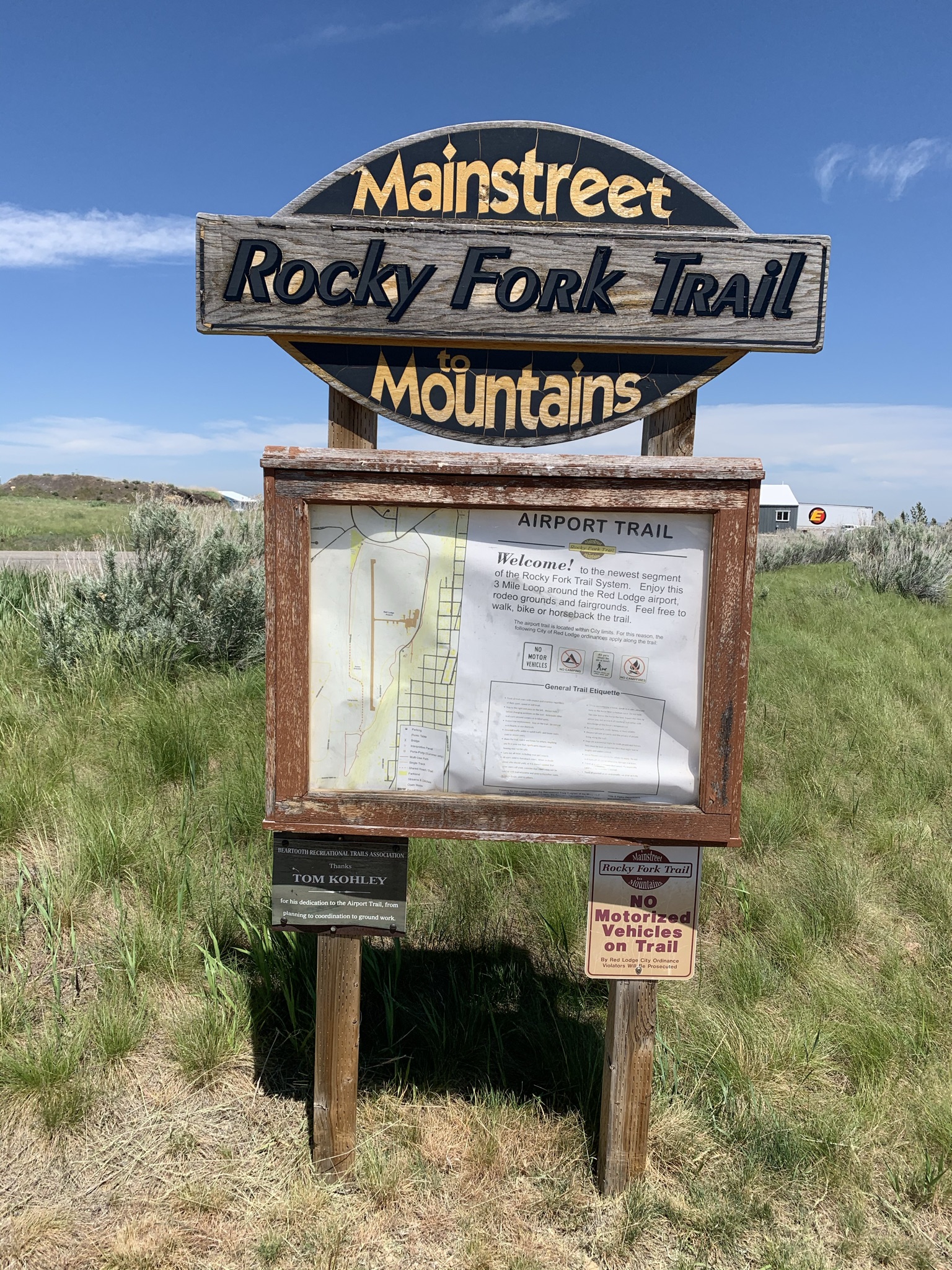
As you all know, we sold our home in Bend back in April and had spent the last year and a half exploring the west trying to find the next mountain town we would call home.  In June, we were exploring Montana and were in Red Lodge enjoying the beautiful area and considering moving to there when we got a text from our real estate agent in Sandpoint, Idaho.  She let us know that the property we were looking at could be ours, before it went on the market, if we put in a full price offer that day.   We had thought we were getting priced out of Sandpoint with the crazy sales in a couple hours site unseen and decided at a minimum this would be a good investment. 

We were very excited that afternoon we had an accepted offer and would close on June 28, 2021.  This amazing 5-acre parcel was 1.5 miles out of city limits, next to a great mountain bike and cross-country ski area called Pine Street Woods, Sherwood Forest and Syringa Trails.  We could bike 1.5 miles to the library, 1.5 miles to the grocery store, 2 miles to downtown and the lake.  When we arrived, we did not realize all the down trees and the abundance of dead trees and limbing that needed to be done before we could put anything on the property.  It was the driest and hottest summer in Sandpoint history so we were worried about a fire starting on the property and we had no water or other utilities. 

We headed to Home Depot and got hand saws, loppers, pole saws, clippers and got to work on cleaning up the property and building massive slash piles to burn after the first snow and rainy Fall.

Prior to buying our Sandpoint property we had been talking with the agent for 8 months at possible properties.  We had learned that all the good builders were booked 2 years out and there were several big developments in progress that had most builders and contractors booked solid.  Greg and I always loved staying at yurts in campgrounds in the Pacific Northwest and thought it would be fun to live in a round home.  It just seems more environmentally friendly to have a smaller footprint.  We wanted to live in the minimum amount of square footage and enjoy more trees and wildlife on our property.  After living in less than 25 square feet for 18 months, 650 square feet sounded like a mansion!  After selling almost all our possessions in Bend, we really wanted to have a small footprint and own the minimum to be comfortable.  With Bode gone, it is just the two of us and after living with so little we had a good idea of what we really need to be happy.  So I began my research on yurt companies and the most durable yurts that last the longest in cold and snowy regions.  I joined several Facebook Yurt communities (these groups are awesome and people are super helpful, we even got to tour several yurts I n Sandpoint from the group communications) and in the end Pacific Yurts in Cottage Grove, Oregon and Shelter Design in Missoula, Montana came back as the most popular and satisfied customers.  The Mongolian Yurts looked really cool but the only person selling them was a lady in Portland and reports in the Facebook communities said it was months to get one.  The big issue in the Summer of 2021 was the crazy wood costs, shipping issues and both Pacific and Shelter yurt companies were in such a big demand they could not deliver a yurt to us until January or March 2022 and the costs of the yurt changed weekly due to the cost of wood (prices constantly going up!).  Building a yurt in Sandpoint, ID in the months of January, February or March is a big NO-NO with snow and freezing temperatures, we needed to have our yurt up by October. 

I went back to the drawing board.  I found a company in Delta, Colorado that made their yurts from steel beams and no lattice!  This company had been in business for 30 years!  These yurts could handle extreme wind and snowloads from all parts of Alaska, were Artic Research Yurts and ski resorts across Oregon and Colorado had successfully been used in harsh conditions.  They highlight being that many of their yurts in Alaska have been up 25 years before any vinyl being replaced.  The yurts even had insulation of R-20 (a regular home is R-19)!  I called the company and even got a customer to call and get their satisfaction of their yurt in winter conditions.  I was excited that this yurt could survive Sandpoint, Idaho.  Even better, they customize and build to your specifications and can delivered in around 8 weeks!  Strangely, steel was more affordable than wood.  Later on, I will discuss questions I should have asked but did not think to that would later become issues we will need to resolve. 

We went with Weatherport and decided to get all the bells and whistles.  We got a 24’ yurt with a loft and 8 real windows (later we will discuss why that many windows may not be a good idea).  We wanted it to blend in with the property so we got a green yurt with a grey roof.  With a signed contract and their team working on a design it was time for us to get to work prepping the property and getting all the utilizes, designing the platform, get the permits and get everything ready for an end of August delivery. 

In our next blog, I will discuss the complexities of preparing a property.  To be on or off the grid and why we made our choices.  All the permits and research you need to do and the benefits of living in a smaller community!

Here are links to recommended yurt companies and Facebook groups:

Importance of Meditation for Everyone

On the road daily, Greg and I take time to mediate each morning after breakfast. We read the book from Wim Hof , “Activate Your Full Human Potential.” The power of the Wim Hof Method is the combination of the three pillars. A committed, consistent practice including the breathing/mediation technique and cold exposure can help you unlock a host of benefits including: increased energy, better sleep, reduce stress levels, increase will power, stronger immune system. For those who struggle with mediation this 11 minute practice really is easy and great start for your day. I also like the sleep mediations you can get from your FitBit Premium membership if you are a FitBut user (I love my FitBit for this and for monitoring my sleep). Whenever I am at an amazing view, I take the time to center myself and mediate for at least 5 minutes. We can all take 5 minutes to enjoy the view, take time to calm our minds and mediate on our beautiful landscape. Just a mere 5 minutes can impact your day and positively effect your energy level! Whenever we get a little too busy and forget to center ourselves, I like to come back to this blog to remind me of different techniques and importance to have mediation in my life. I hope it is helpful for you.

Through this ordeal, I have learned a lot about concussions and traumatic brain injury. Every time I stress out and continue to blackout and hit my head, I could cause major neurologic and psychological problems. I finally took this seriously and decided I could not power on through.  In the next few paragraphs, I will give you a summary about stress, concussions and brain injury.  It’s a little dry taken from Mayo Clinic and a few other scientific publications but its helpful in your understanding why mediation is so important for those of us who are workaholics or survivors of traumatic brain injury.

Every year, 1.5 million Americans sustain traumatic brain injuries.  In a concussion, your neural cells are damaged and your brain must recover to rebuild these cells.  If you are always stressed your levels of cortisol will be high and the brain will take even more time to recover.  Cortisol is a corticosteroid hormone that is released by your adrenal gland during stressful situations. When your highly stressed then a large amount of cortisol remains in your brain. It generates more overproduction of myelin-producing cells and fewer neurons than normal. This can result in adverse effects that can impair important cognitive structures in your brain, like damage to your hippocampus (responsible for the processing and storage of short-term memory).  In addition, it affects the differences in the volume of gray matter versus white matter (creating more white matter and increasing atrophy in the white matter), as well as the and size and connectivity of the amygdala (is the integrative center for emotions, emotional behavior, and motivation).  The “gray matter” of the brain is densely packed with nerve cell bodies and is responsible for the brain’s higher functions, such as thinking, computing, and decision-making.

Multiple concussions reduce the amount of gray matter and decreases the number of stem cells that mature into neurons affecting learning, memory, decision making, multi-tasking and concentration. In post-concussion syndrome you can have symptoms like fatigue, sleep difficulties, irritability, balance and coordination problems, agitation, nausea, vomiting, dizziness, altered consciousness and difficulty processing information. I was suffering from all of these!  Studies and research have shown that Mindfulness meditation helps to reduce the symptoms and distress on the brain and helps increase gray matter in the insula, frontal cortex and sensory regions.  Researchers found that the frontal regions, anterior cingulate, limbic system and parietal lobes were affected during meditation and that there were different patterns of cerebral blood flow between the two meditation states i.e.“focused-based” practice and a “breath-based” practice.

Meditation increases regional cerebral blood flow (rCBF) in the prefrontal cortex.  As reported by researchers the cerebral blood flow of long-term meditators was significantly higher compared to non-meditators in the prefrontal cortex, parietal cortex, thalamus, putamen, caudate, and midbrain. In brief body-scans of meditators show meditation practice improves somatosensory perceptual decision making.  Meditation enhances cortical remapping and brain functions while it also helps to uplift mental health and causes healthy changes in the brain. It was time to take my meditation practice seriously!

So, for ten years I was trying to learn how to meditate but never had truly made a practice.  I had read a number of books on meditation, mindfulness and how to radiate calmness.  I even went to mediation workshops but I never stuck to it.  Now I had to or I may never get better.  In the beginning, trying to calm my monkey mind was impossible.  I would start focusing on my breath and then the next minute I would be thinking about what I would knit next, go back to my breath and then think about a new recipe to try.  I could never sit there for more than 5 minutes without having to twitch or move or scratch.

If you are a crazy Type A person, whose mind is always thinking and nerving on something.  The best way to get into a mediation practice is to start with guided meditation for sleep, called Yoga Nidra.  I started with this one and then later I downloaded the Insight Timer App from the Google Store, it is amazing and I highly recommend it. My first few weeks I focused on mediating for 15 minutes lying down in bed before sleep during my afternoon nap and right before bed. Your brain can much more easily focus on the voice.   Like what my favorite Tibetan Buddhist Meditation master: Yongey Mingyur Rinpoche says, “You must give your monkey mind a part-time job to be able to meditate.”  As I did these guided meditations, I began to really focus on breathing meditation.

So, a couple times a week before I got up to start my day, I would switch off my audiobook and focus on my breath.   I would chant in my mind rising and falling with the rise and fall of my breath.  When my mind would wonder to something I could hear I would chant hearing, hearing.  Then when it would calm I would go back to my breath and chanting rising and falling.  When I would feel my mind wandering and want to scratch or move my leg, I would start chanting feeling and I would then not need to move and then go back to focusing on my breath.  Soon I was building mindfulness and awareness.  Once again, I was only doing this for 10-15 minutes.  I could feel my energy increase, my twitching and constant need to move to slow.

I am also now enjoying chanting mediation called Om mani padme hum.  I took this from the Tibetan Culture website “Om mani padme hum, which is an ancient mantra that is related to the bodhisattva of compassion, Avalokiteshvara.  Every Tibetan child is taught the mantra by their parents, and they all use it very commonly in daily life, and especially if they make a prayer walk (kora) or go to the temple, or pray using a rosary (mala).  Basically, any mantra is “a sound, syllable, word, or group of words that is considered capable of ‘creating transformation.’”  There are great examples and guides on the Insight Timer App.

I then re-read all my meditation books, I highly recommend the following:

·         The Joy of Living: Unlocking the Secret and Science of Happiness, By Yongey Mingyur Rinpoche with Eric Swanson, Daniel Goleman

·         Joyful Wisdom: Embracing Change and Finding Freedom, By Yongey Mingyur Rinpoche with Eric Swanson

·         Turning Confusion into Clarity: A Guide to the Foundation Practices of Tibetan Buddhism, By Yongey Mingyur Rinpoche with Helen Tworkov, Matthieu Ricard      ranemediating

Rane mediating at our Beach House in Newport, Oregon

They now began to make more sense to me.  I now tried walking mediation when I went on my walks in Shevlin Park and around the golf course.  Trust me it’s not easy, I would have good weeks and have weeks in which I did no mediation and forgot about my practice.  But I wanted my brain to heal so I would then make sure even if it was only 5 minutes I did some type of mediation each day.  Then my friend Maribel taught me Hong Sau Mediation, which I love and can do for 30 minutes a day now.  I highly suggest this for beginners, here is a link to a great guide.

Today, I am focused on loving kindness and mindfulness mediation called Metta Bhavana.  In this practice, you start focusing on yourself and feelings of peace and calmness and then nurture your state of mind into strength and confidence while chanting ‘may I be well, may I be happy, may I be healthy and may I be free from suffering’ and cultivate the love within your heart.  The next stage you focus on a close friend.  Think about your connections, why you love this person, why you are encouraged by this person and begin chanting ‘may he/she be well and happy’ as you feel the love in your heart for that person grow.  Think of a person you are neutral with and have neither strong love or dislike for and think about this person’s humanity, what actions this person can make you feel encouraged and could make you love this person.  Begin chanting ‘may he/she be well and happy.’ Now think of someone you really dislike and have ill feelings toward (an enemy) and don’t concentrate on their negative actions but think about their positive actions, how can you think about the good intent he/she may have, how could you grow to love this person, how can you encourage this person and have good will towards this person.  Now chant ‘may he/she be well and happy.’ Lastly, in this practice you will think about all four people in positive light, now extend those thoughts to all the people you know, all the people in your neighborhood, all the people in your town, all the people in your region, all the people in your country, all the people and beings on earth.  Feel the love, encouragement, kindness you have for all these people.  Begin chanting ‘may all the people on earth be well and happy.  Slowly focus back on your heart and the love and kindness you are feeling and then step away from your practice.  This has grown into a 45-minute practice for me now.  Some great guides come from the buddhist centre.

My aspiration is for my experiences through mediation to help you in your desire to grow your meditation practice.  My greatest wish is this helps other Type A’s who feel: I really want to meditate but I just don’t have time or patience or the ability to focus their brain that way.  I am here to tell you, you can’t afford not to!  If you are a stress junkie like myself, you must start mediating ASAP you really want to repair the damage you are doing to your brain.   I am hopeful that this is helping my brain and in turn yours.  I am on twenty months of no blackouts and my migraines are diminishing.  I believe my memory is getting better.  I am also working much more on the right side of my brain with art, crafts, playing music but that was last week’s blog post.  Till next week, I hope you try a few of the practices above.