Site Preparation for a Yurt

The process of building a yurt can be long and complicated, with many hurdles to overcome along the way. In this blog, I discuss our journey as we try to build our yurt on a piece of land in Sandpoint, Idaho. We had to navigate complex regulations and permitting processes, find reliable contractors, and deal with soaring wood prices during a time of high demand. Despite the challenges, we persevered, were ultimately able to complete our project and hope this helps you not make the same mistakes we made.

Once we ordered our yurt on June 28, 2021 we had until August 28th to get our property ready. The first thing we did was apply for an address with the county and the US Postal Service, as an address is required for many aspects of property development. Next, we visited the local library to research permits, regulations, and costs associated with developing an off-the-grid property. We looked into well-drilling, solar panels, grey water systems, platforms, and composting toilets. We researched the best composting toilets that did not require plastic bags since we wanted to maintain our eco-friendly lifestyle.

To our surprise, we learned that preparing non-developed land for development requires a lot of work, and it is not as easy as we initially thought. We assumed that there would be very few permits needed in Idaho, especially since our property was outside city limits and not subject to CCRs or HOAs. However, it seems that Idaho requires just as many permits as just about any town on the West coast. The advantage of living in a small town is that you can obtain the permits much faster than big cities if you take the time to meet with everyone in person and you live on your property full-time during development.

One of the biggest challenges we faced was drilling a well. We learned that the average cost of drilling a well was between $15,000 to $35,000, depending on the depth. After speaking with neighbors in the area, we found out that we would spend a minimum of $25,000 on drilling a well. We contacted several well contractors, but they were booked out for 18 months. Moreover, locals warned us about issues they faced with their wells, such as drying up due to new development and needing to be redrilled, with additional costs of $5,000 to $10,000. We decided to connect to the local Syringa Water District instead, which would cost us about $6,000. We filled out the necessary permit requirements and attended a local board meeting to request that three adjacent neighbors get water on our property on the North Idaho version of fast track. The board was understanding and promised to get us connected in the next 2-3 weeks, just in time for our Labor Day weekend yurt-raising. 

We also discovered that due to the long, grey winters in Idaho, we would not generate enough solar energy to power all of our electrical needs. The better option was to connect to the local electricity grid and send energy back to the grid during summer months when there is a surplus of power. This is referred to as a net metering system.  Therefore, we decided to connect to the local electricity grid and natural gas line, as I love cooking with gas and we might get a gas fireplace in the future. This required more permits and applications with the local utility company (AVISTA). Fortunately, AVISTA was understanding and worked with us to meet our short deadline so that we could get all utilities in, concrete poured, and set before September 1.  Don’t forget the solar permit is a different permit from your electrical and before AVISTA will turn-on your net meter, they need the approval from the state inspector.  You need to find an electrician who will dig your trenches (if you don’t want to), lay all electrical cables, meter install and transformer.  There are forms your electrician must submit to AVISTA on your behalf.

To obtain a site building permit, driveway permit, water, electrical, solar, and gas permits, we needed a detailed site plan. Fortunately, I had taken architectural and technical drafting in high school, so I was able to create one. We measured everything precisely, ensuring that we were 25 feet from the property line and had a 7.5-foot utility easement. We measured the length of our road, the distance between each corner of the property lines and our yurt, and the dimensions of our patio, which we put on the permit.  We learned that it is important where temporary property line markers are to put up metal property line markers (you can purchase at Home Depot, we bought the 6 footers and used a stake driver to place them in the ground).  You don’t want to have to pay for a surveyor when wildlife, trees or snow knock them down.  (Note: You will modify this many times, do it in pencil, and be ready to modify it with contractors and inspectors onsite and you can take a picture and send it immediately while they are onsite.)

I had initially planned to install a Sun Mar composting toilet in our yurt and had found a cabin-on-wheels company in Spirit Lake, Idaho that sold them. However, due to the state’s regulations, we were not allowed to have a composting toilet and direct city water in the same dwelling. Instead, we were required to install a grey water system, which was a large concrete tank with a pump that filters the grey water and only allows us to use the water to water trees. After researching various solutions, I found Hydra-Loop, which had innovative technology to filter our grey water so that it could be reused for watering trees, gardens, and even for washing clothes. However, we were told that Hydra-Loop wasn’t eligible by Idaho DEQ standards and we would need to contact the company to get approved before we could use what I was suggesting. The company was willing to go through the application process, but it would take over a year, which was too long for our 3-month deadline. Therefore, we opted to give up on our composting toilet and grey water system and instead applied for a traditional septic system, which would cost us almost the same amount.

Oh well, best laid plans!

While researching all the regulations and permits required, we were also trying to find a contractor to build our yurt deck platform, make our driveway, and do all the necessary trenches. We had to consider various factors such as the distance between the water, electric, and gas trenches and the most logical spot to put them to make it easy to dig up in the future if there were any issues. (Note: Water, gas and electrical lines can’t be in the same trench). We also had to consider the opportunity to share costs with our neighbors who were also putting in their water, gas, and electricity. After multiple revisions to our site plan, we finally found a solar guy who was an electrician and could do our electrical trench, put in our electrical meter, and do all the yurt electrical. We also managed to secure a plumber and someone to do a gravel pad for our shed and driveway, but it was a challenge due to the high demand and escalating costs for contractors.

During this time, we were living full-time on our property in our truck camper, which made it easier and more convenient for all the inspectors and contractors to stop by. We were working tirelessly in the hot summer to limb up all the trees in the area of where the yurt would be built. Our five acres had been previously logged, and there were dead limbs everywhere, so we had to create six huge burn piles of dead limbs over the next three months. It was exhausting work, but we were making progress. One day, while taking a beer break, one of the driveway contractors drove by and asked if we needed a gravel pad. He was about to finish a job and said he could come over in 15 minutes to give us an estimate. After talking with him, we were able to secure his services, and things were finally falling into place.

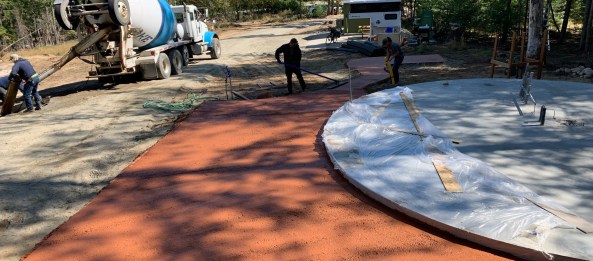
As mid-July approached and trenches were being dug for water, gas, and electrical lines, we knew we needed to make a decision on our yurt platform. We searched online for platform plans but ultimately decided to do it ourselves, calculating the costs of timber, cement bases, and various materials needed. We also began obtaining quotes from septic contractors. Fortunately, my childhood best friend’s dad, who owned one of the other 5-acre parcels near us, had already researched septic costs and feasibility before purchasing the property. We contacted several contractors, one was available and provided us with a bid for all the necessary work, including trenches, septic installation, and driveway construction. After some discussion, we agreed to have a simple cement pad for the yurt and a cement patio, which would be less expensive and lower maintenance than wood. The contractor went to work prepping our property.

It is important to note that before purchasing a property that requires a septic system, a perc test should be conducted to evaluate soil drainage. The perc test helps determine the best location and size of the septic tank and drain or leach field, which distribute treated wastewater into the soil. If the property fails the perc test, a septic system cannot be installed. It is also important to build your home/yurt above this spot to take advantage of gravity and avoid the need for a pump house.

As someone who loves to cook, a real kitchen was important to me. We ordered all the necessary appliances (stove, refrigerator, washer/dryer combo) cabinets, countertops, bathroom sink, kitchen sink, toilet/bidet combo (saves on toilet paper), shower, hot water heater from Home Depot and Selkirk Glass and Cabinets.  It takes around six weeks to receive all the necessary components, so it is crucial to give yourself ample time to have everything ready for installation.  We were able to store most items in our shed until the yurt was built.

By August 25th, we had completed all necessary preparations and were ready for our yurt materials to be delivered on September 2nd, with our crew of friends and neighbors scheduled to arrive the following day for the yurt raising. In our next blog, we will discuss how to organize a yurt raising party and what it takes to raise a Weatherport 24’ yurt. But first, some lessons learned.

Lessons Learned:

  1. Be nice but persistent! If you live in a small community, take the time to meet all of the permitting officials in person, be super friendly, and do everything they want on the spot. Several times, officials made changes to our plans while on-site, and we made sure they were happy before sending the changes with them or via email. Being nice is critical, as you are the one with deadlines, not them. Being rude or mean will not help you, as they can ignore you and move on to the next person. Many officials expressed their appreciation for working with us because we were organized, had everything filled out properly, were nice, available, listened, made necessary modifications, and tried to make their jobs easier. When a permit was taking longer than expected, we gave a friendly nudge via voicemail or email.
  2. Live on-site! With so many people building right now, many are doing everything remotely. Officials and contractors appreciate your presence, as they can show you issues, and together you can make the necessary modifications and understand their concerns.
  3. Keep it simple! In the end, the simplest solution was often the best. Concrete was easier and less expensive than wood. However, it is crucial to remember that all plumbing, electrical, and gas lines must be laid before the concrete is poured. It is permanent and cannot be moved, so ensure that everything is in the correct place. Also, make sure your contractors are measuring from the same spot and clearly mark all your spots to avoid confusion. Have a detailed drawing indicating where sinks, toilets, showers, drains, and supply lines are being placed with exact dimensions.

Packing for Overlanding Adventures

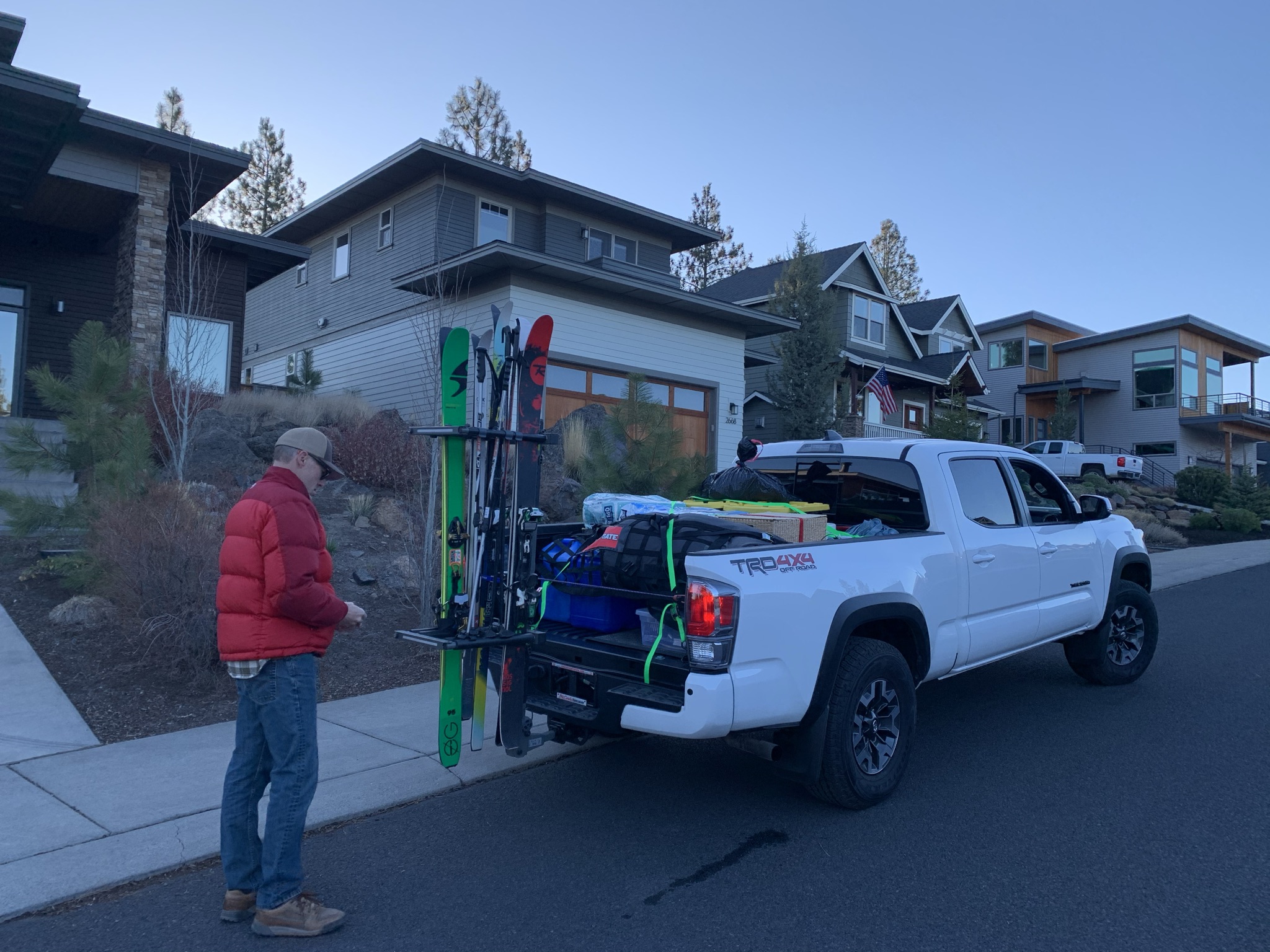
So many of my friends ask how to do know what to pack and how much to pack when living full-time tent camping? Then how to figure out what’s needed once you move from a van to a little truck camper. So this post is dedicated on how to pack, what to pack and how to downsize! I have learned, we typically pack more than needed to be comfortable. Here are my tips and tricks for packing and keeping it as minimalistic as possible! First, you need good weatherproof storage bins. I found these at home depot to be great and perfect for stacking and not too heavy if you pack them fully. You can also get them at Costco and Amazon. Four to Six should be plenty for two people, I suggest don’t go over four if you are trying to not have too many items to fit in your mid size truck camper. There is very little storage! Here is what we have decided to take with us to live for the next year.
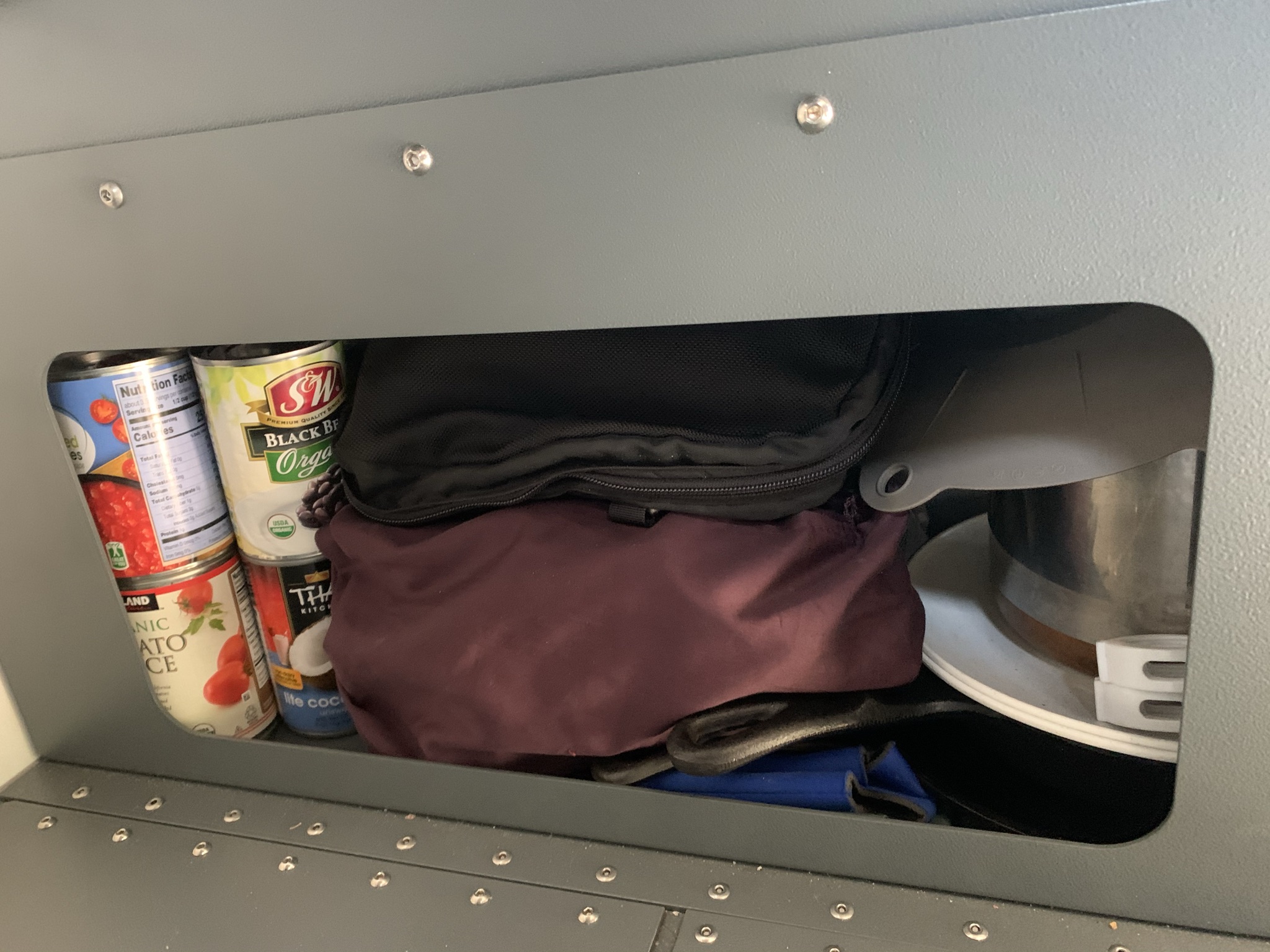
We used two bins for food garlic, onions, potatoes, sweet potatoes, shallots (I put all these in a plastic bag with holes I got from a farmers market potatoes bag-I have reused this for 15 months and it is still going strong), storage spices (I buy spices in bulk and use little ziplock bags for each spice and one large ziplock to hold all of them makes it easy for storage in small space), tin foil, one pot and two cast iron pans, 6 cup espresso maker, coffee beans holder and grinder, collapsible Tupperware, utensils, plates, bowls, cups, canned foods (coconut milk, tomato sauce, diced tomatoes, cream of mushroom, artichoke hearts, canned tuna, pastas, noodles and rice. One bin for camp chairs, hammock, backpacks, yoga mat, headlamps, walkie talkies, duct tape, first aid kit, hiking poles, bug spray, bear spray and candles. The last bin is full of our clothes packed in compression bags. I suggest using these from Amazon and REI . Do not pack too many clothes you really will only wear a couple of shorts, 2-3 t-shirts, 1-2 tanks, 2 long sleeve shirts, one nice pair of pants, convertible hiking pants, a capri leggings and a long leggings, swim suit, couple of underwear, 1 set of long underwear and one nice set of clothes to go out on the town (I have a nice sun dress and Greg has a nice short and long sleeve button down shirt to wear with shorts or jeans). We have a couple of sleeping bags, sleeping pads and pillows that all fit in this great REI duffle bag. Reusing old duvet and sheet bags to store your shoes, sandals, hiking boots and extra jackets (we have puffy down jacket, rain shell, a fleece, beanie hat and gloves). We also use an old sheets bag for games like travel scrabble, Farkle (aka 10,000 a fun dice game), chess, and rummy. These bags are great to ensure things stay clean, organized easy to find and compact!
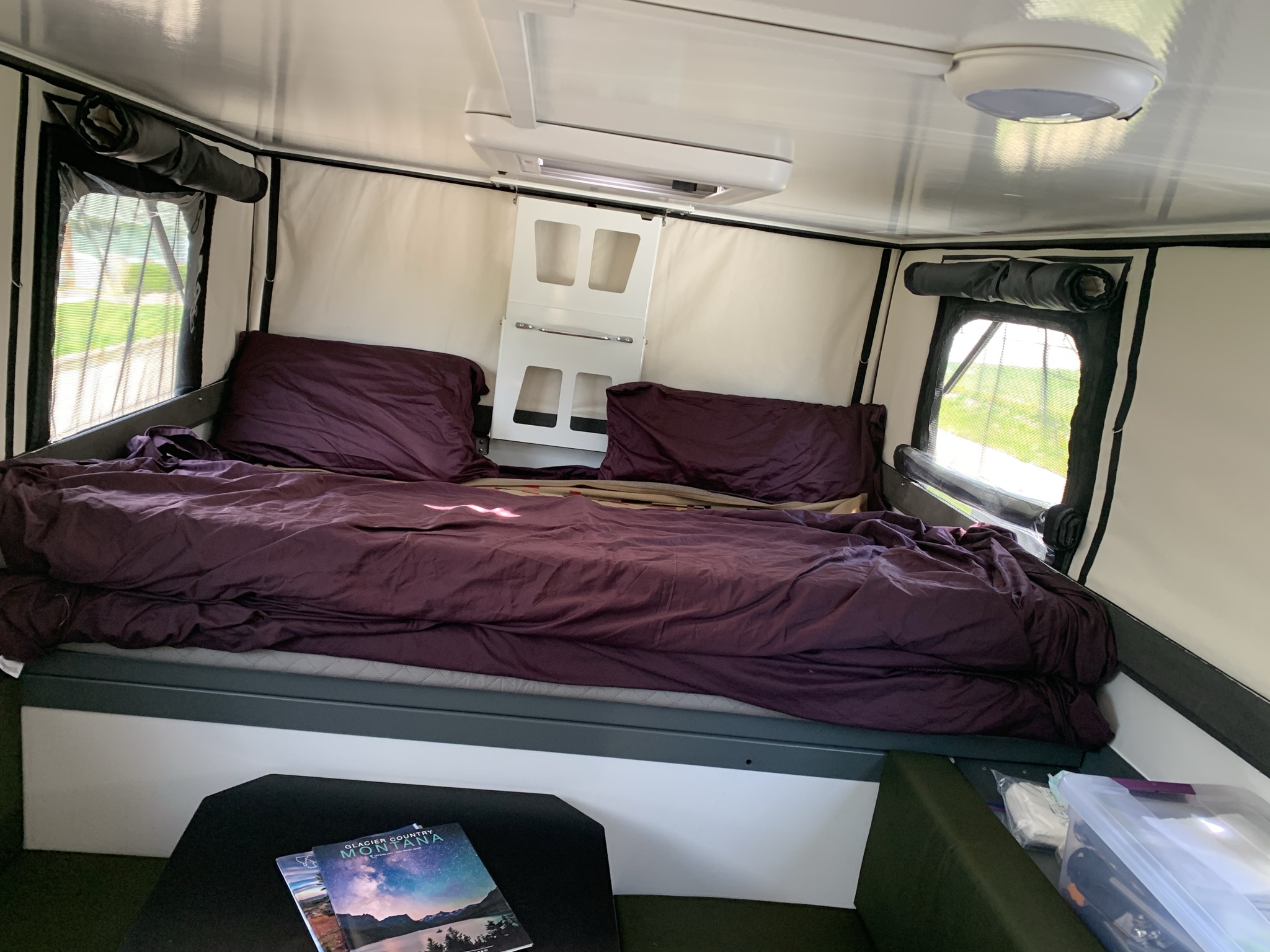
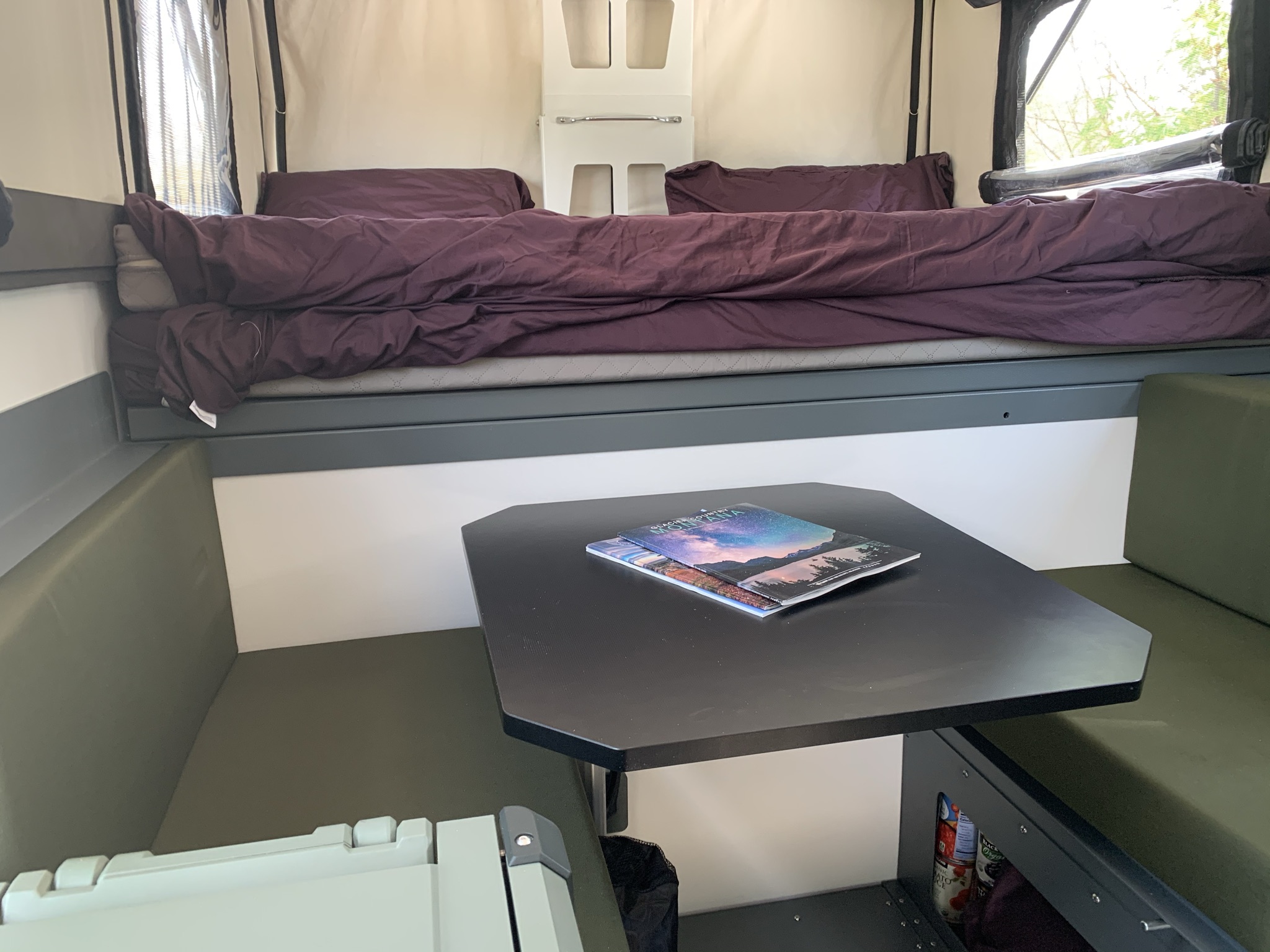
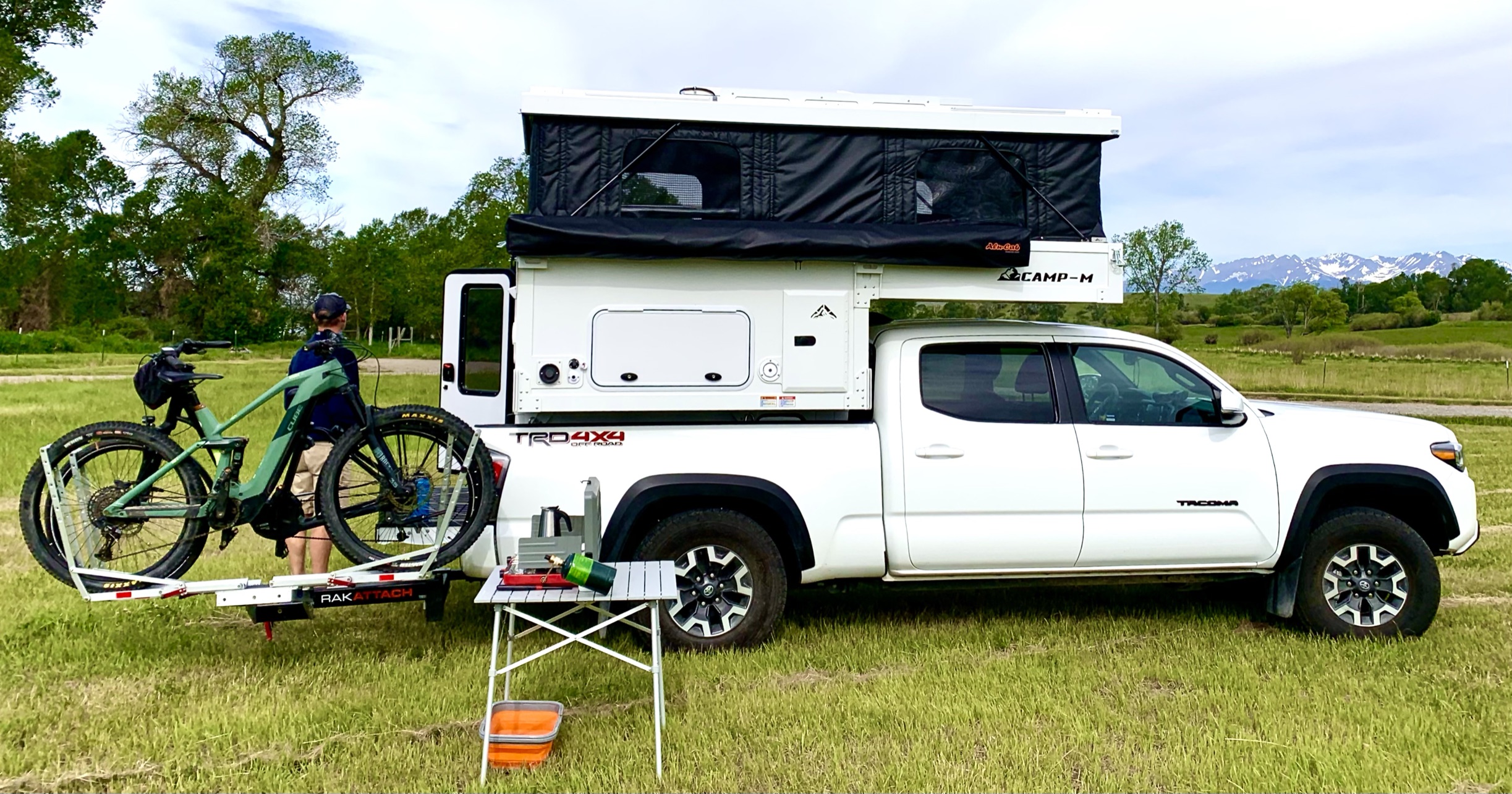
When living in a very tight space, organization is critical. When we got our new Overland Explorer Camp M and started unpacking our items and repacking, we learned we needed to get rid of our big plastic bins that could fit in the truck bed to small plastic organizers that could fit in the small storage spaces. Don’t forget to bring a small pack with sundry items, (I cut our hair so we have an electric razor), we use Dr. Bronner’s for shampoo, body wash, hand wash, clothes wash and washing dishes as it is biodegradable and doesn’t hurt the environment and won’t make you sick if you eat on accident from not rinsing off your plates well enough. This way we could stack and have dry items, canned items in one area, snacks in another, breakfast items in another, cooking utensils in another. Below is our new organization.

People ask what items are your favorite must haves, here are our top 5:

  1. Berkey Water System (this is great when you are boondocking and have a near-by stream to get water or to ensure you always have good water out of your water tank).
  2. Having a nice durable outdoor rug to sit on, exercise, save your camp spot, or take a shower when its dirt all around you. This mat has lasted more than 1.5 years for us so far.
  3. Comfortable, collapsible and easy to store camp chairs and camp table.
  4. Small portable axe, shovel, bucket and always have extra water containers we like these rotopax that can be added to our molle carrier.
  5. Weboost cell booster, we find this increases our coverage by 50%.
  6. Okay, I’m adding a six item- we do laundry everyday or other day and just a few items then we don’t have to go to the laundromat. We love the scrubba, works great and really helps to pack less clothes!

We hope this is helpful. Next blog, we will discuss our new Overland Explorer Camp M truck camper and our experiences with it so far in Montana visiting Bozeman, Red Lodge, the Beartooth Highway and Northeast and Northwest Yellowstone.

Disclaimer: We are Amazon Associates and earn from qualifying purchases.

Western Arizona RV Trip

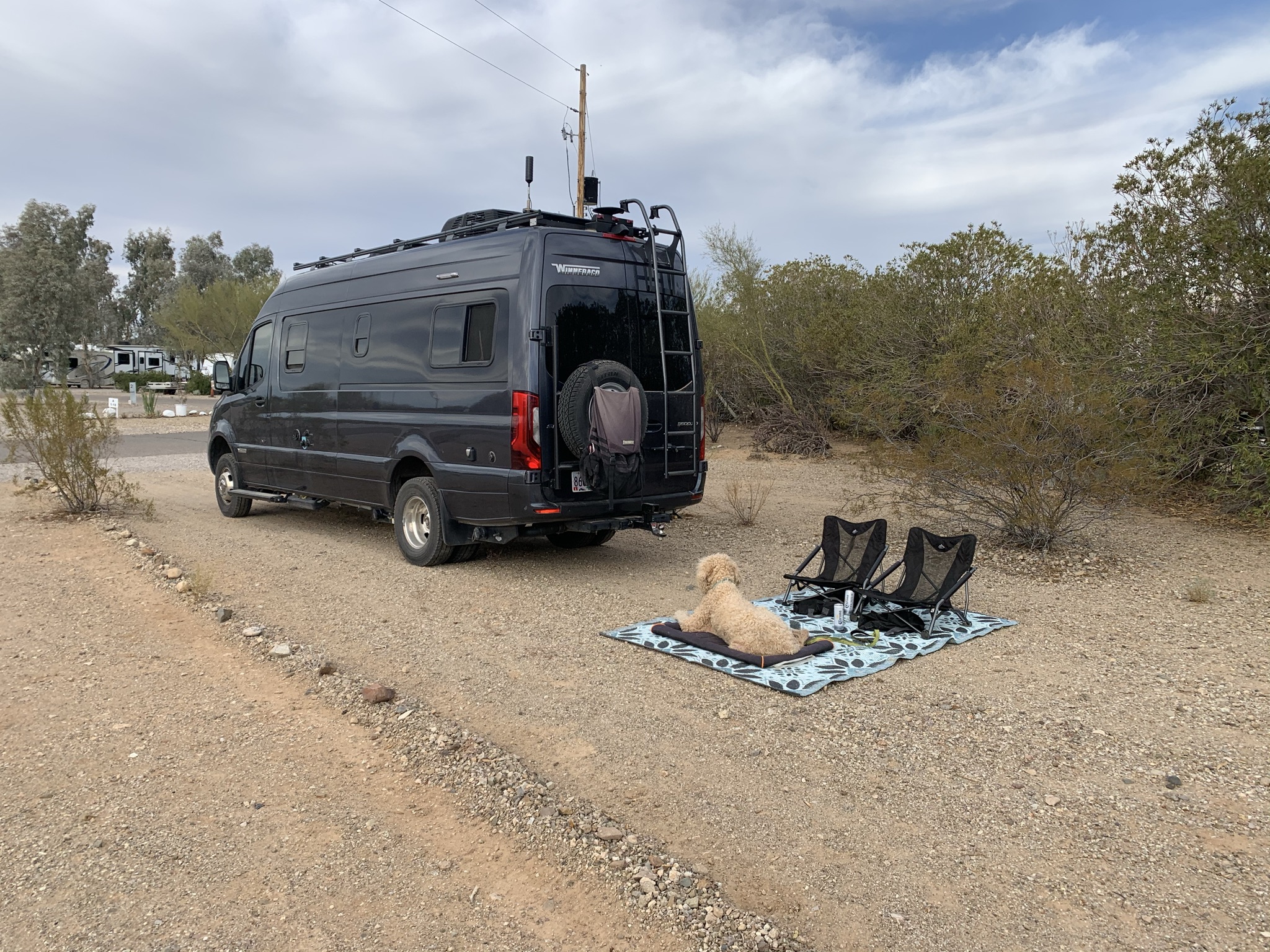
For the month of November, we explored Arizona and had several amazing trips!  This week I am going to share our Western Arizona Route and great places to boondock or camp that are affordable and fun! 

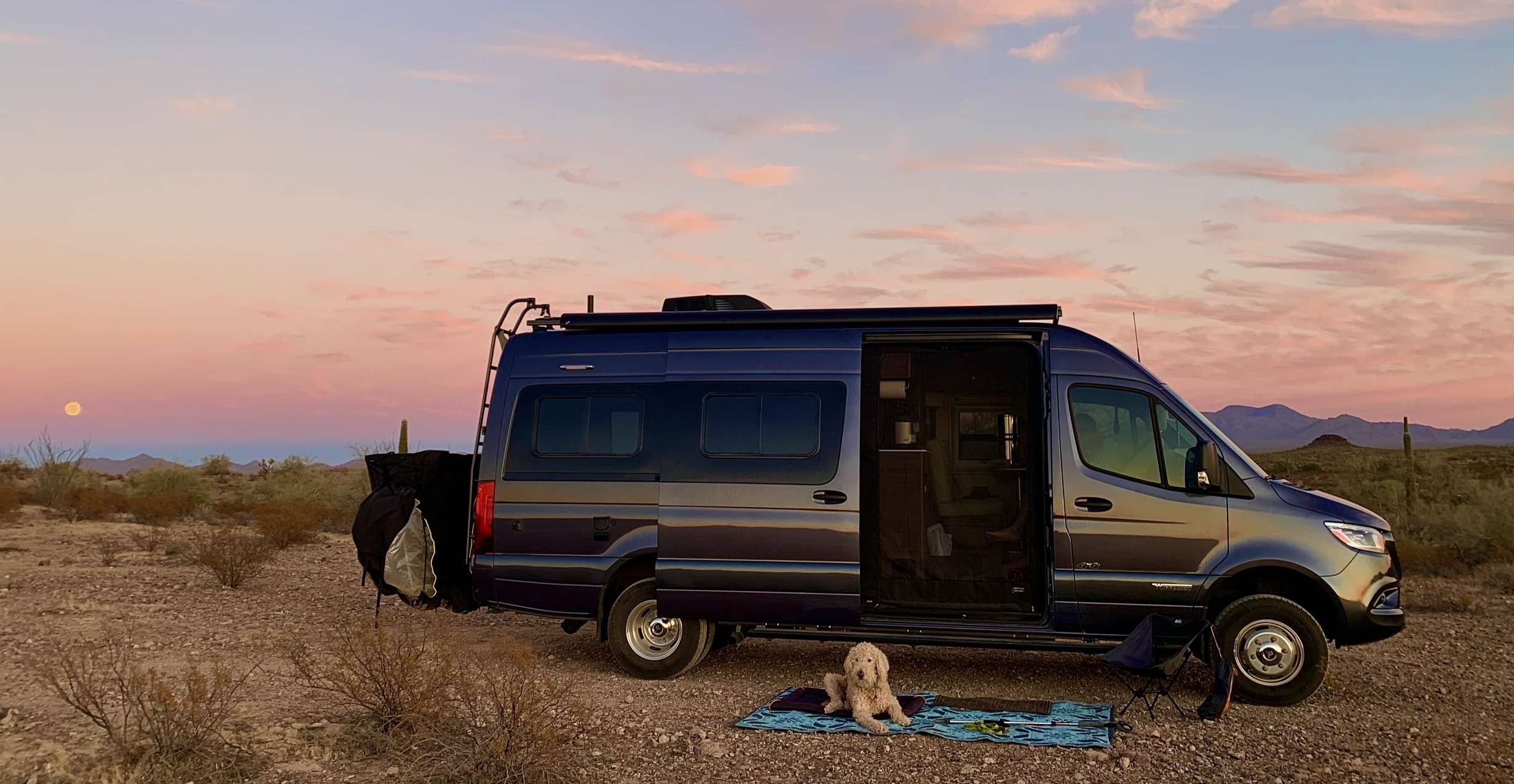
One question we get is living in a van how do you manage all your toys of all the different seasons?  We purchased a 6×12 cargo trailer that we leave in Tucson, AZ (Greg’s parents live in Tucson so we can visit them while we drop off or pick-up items).  The name of the RV Park that we store it at is Diamond J’s, its very affordable and located next to some great hiking and mountain biking at the Tucson Mountain Park.  We store all of our gear so we can transition from Summer and Fall activities to Winter and Spring.

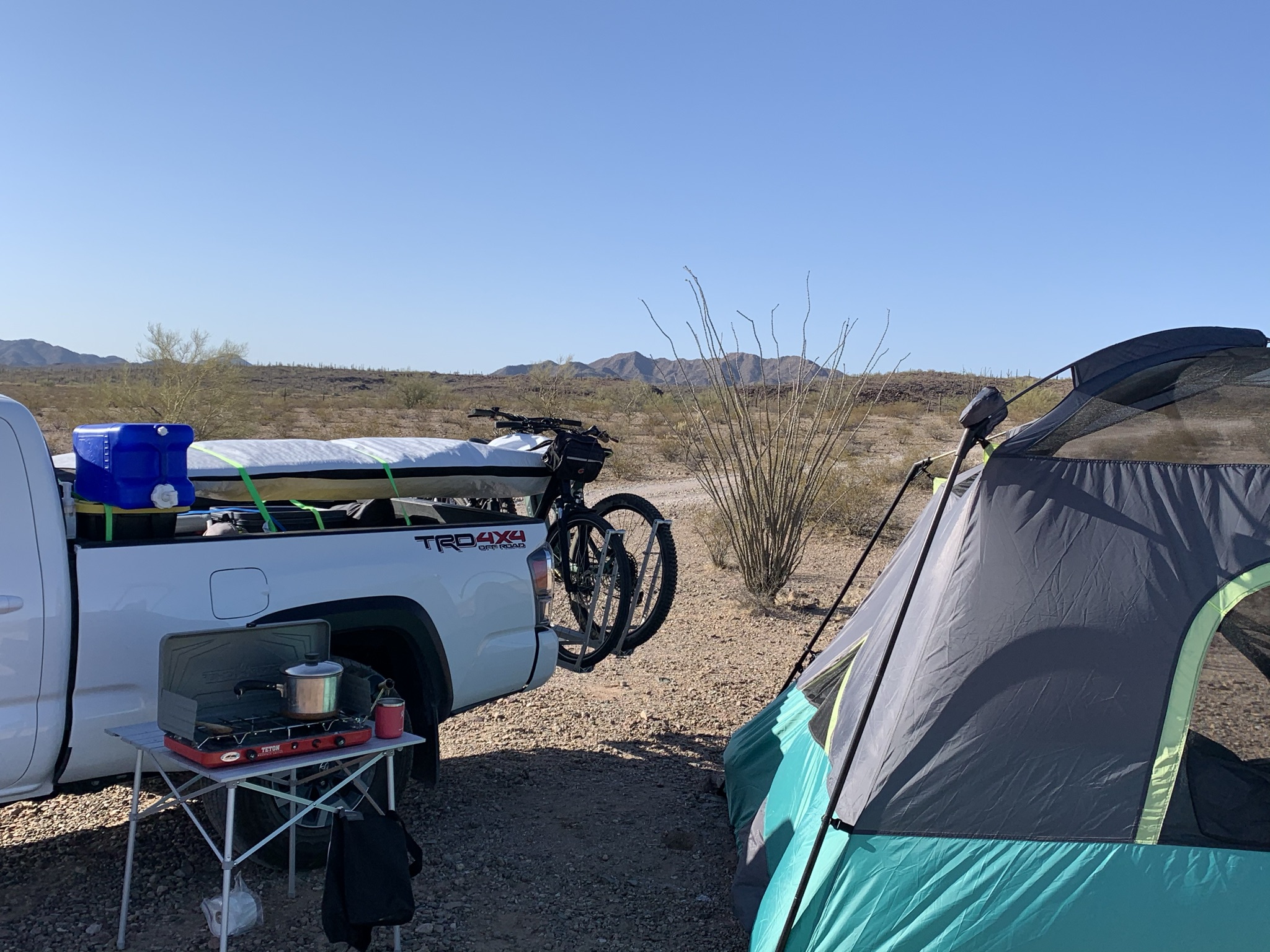
For our Western Arizona trip, we wanted to paddleboard, bike, hike and run as we adventured to different areas.  November was a very pleasant temperature, with lows in the 50s and highs in the 80s.  We like to travel about 100-175 miles a day or every few days.  Here is our last trip- the good and bad of each location and if we would go back.  

  1. Picacho Peak Campground ($30- no water)
  2. Lost Horse Tank BLM Sonoran Desert National Monument (free 14 days)
  3. Painted Rocks Petroglyphs BLM Campground ($8/$4 w/Access Pass)
  4. Dome Rock Mountain, Quartzsite (free 14 days) recommend Cholla Road instead
  5. Buckskin Mountain Campground ($35 electrical)
  6. Craggy Wash Lake Havasu (free 14 days)
  7. Katherine Landing ($20/$10)
  8. Temple Bar ($20/$10)
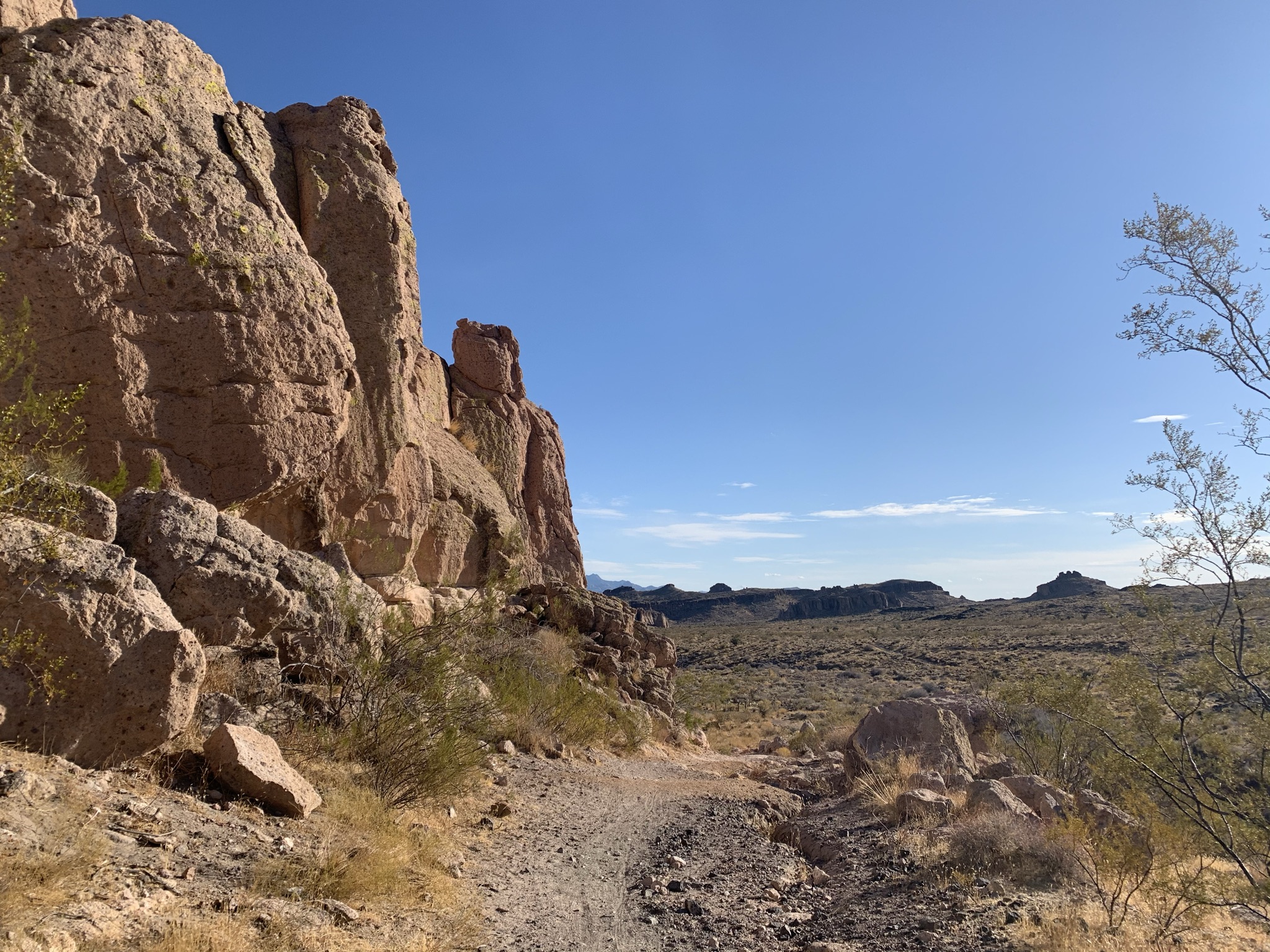
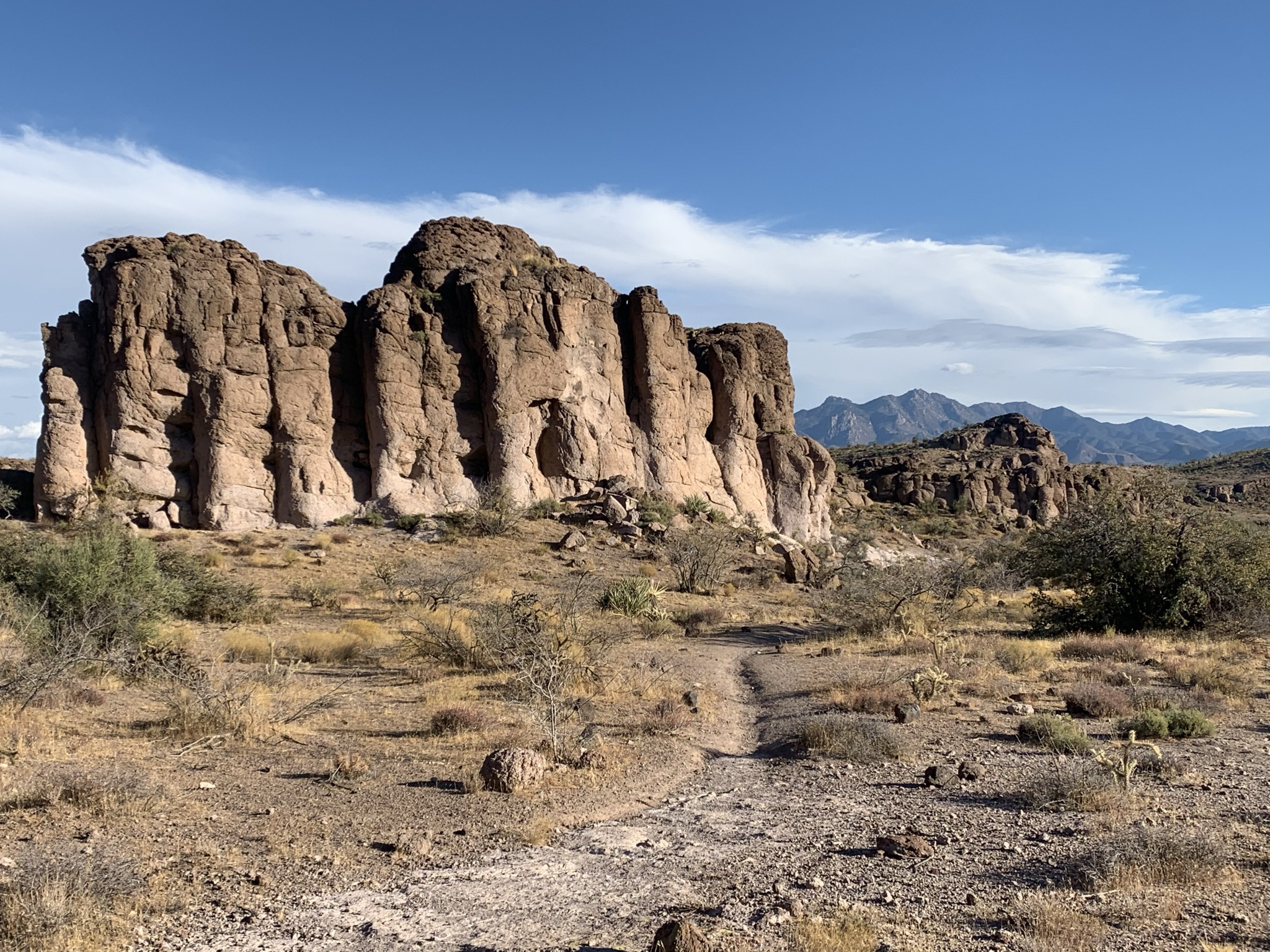
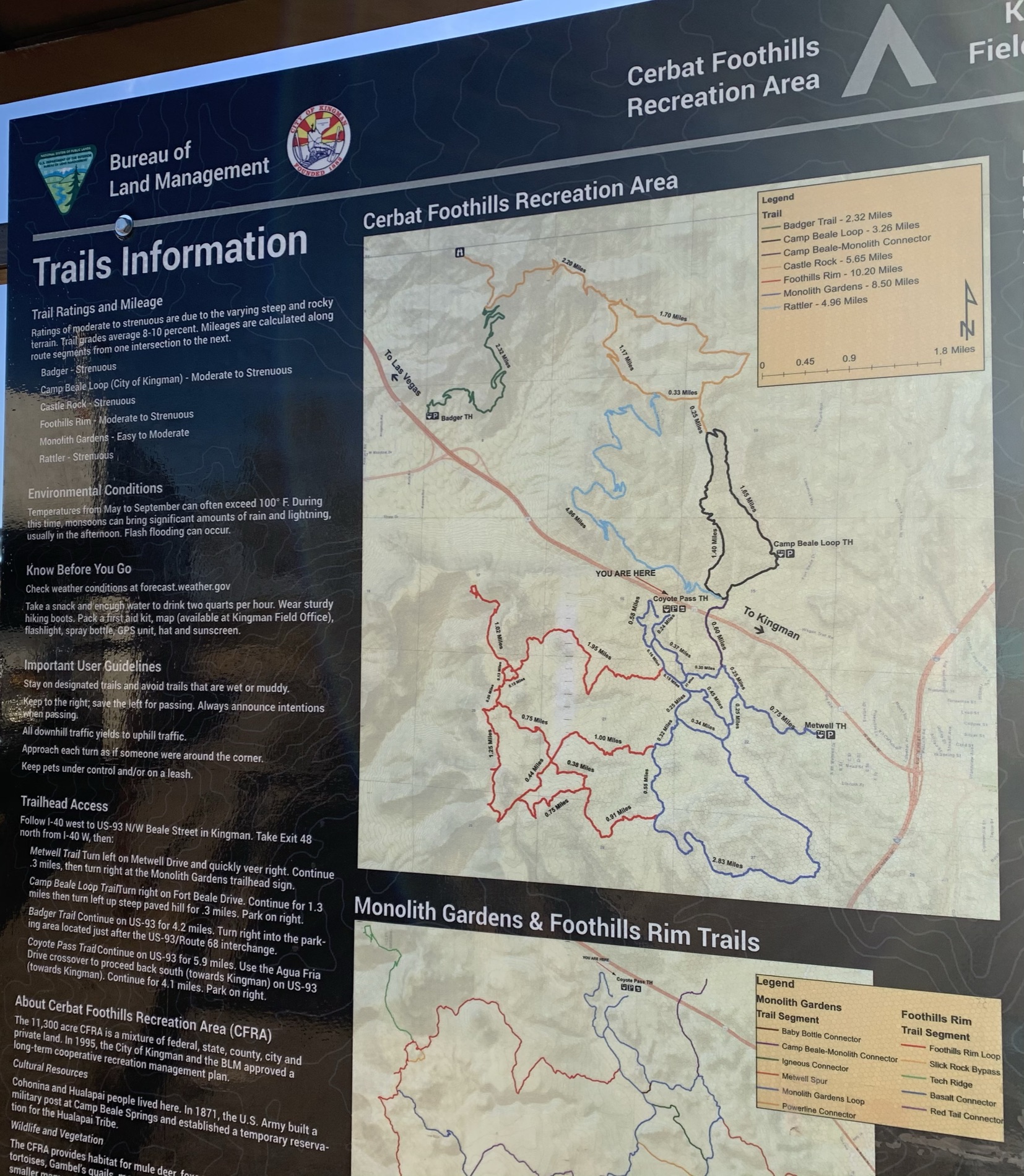
  9. Cerbat Foothillls Recreational Area (free 14 days)
  10. Burro Creek Campground ($14/$7)
  11. Chandler Cracker Barrel (free)
  12. Gilbert Ray Campground Tucson Mountain Park, Tucson, AZ ($20)

Picacho Peak State Park is about 49 miles west of Tucson.  Be aware there is no water in the park even though there is electrical spots and water for showers.  You need to bring your water or fill your 5-gallon water jug with a 64 oz water bottle in the ‘wash your dishes sink’ and do gravity fill.  For $30 a night, we feel it’s a little over priced and suggest just do a day trip to do Sunset Vista and Hunter Trails.  I really enjoyed the hikes make sure you bring walking sticks, gloves and wear hiking shoes as it gets rocky and steep and you will use a steel cable to climb up a rocky steep area.  There is an RV dump here, no potable water.  We were under whelmed and won’t be coming back for the price.

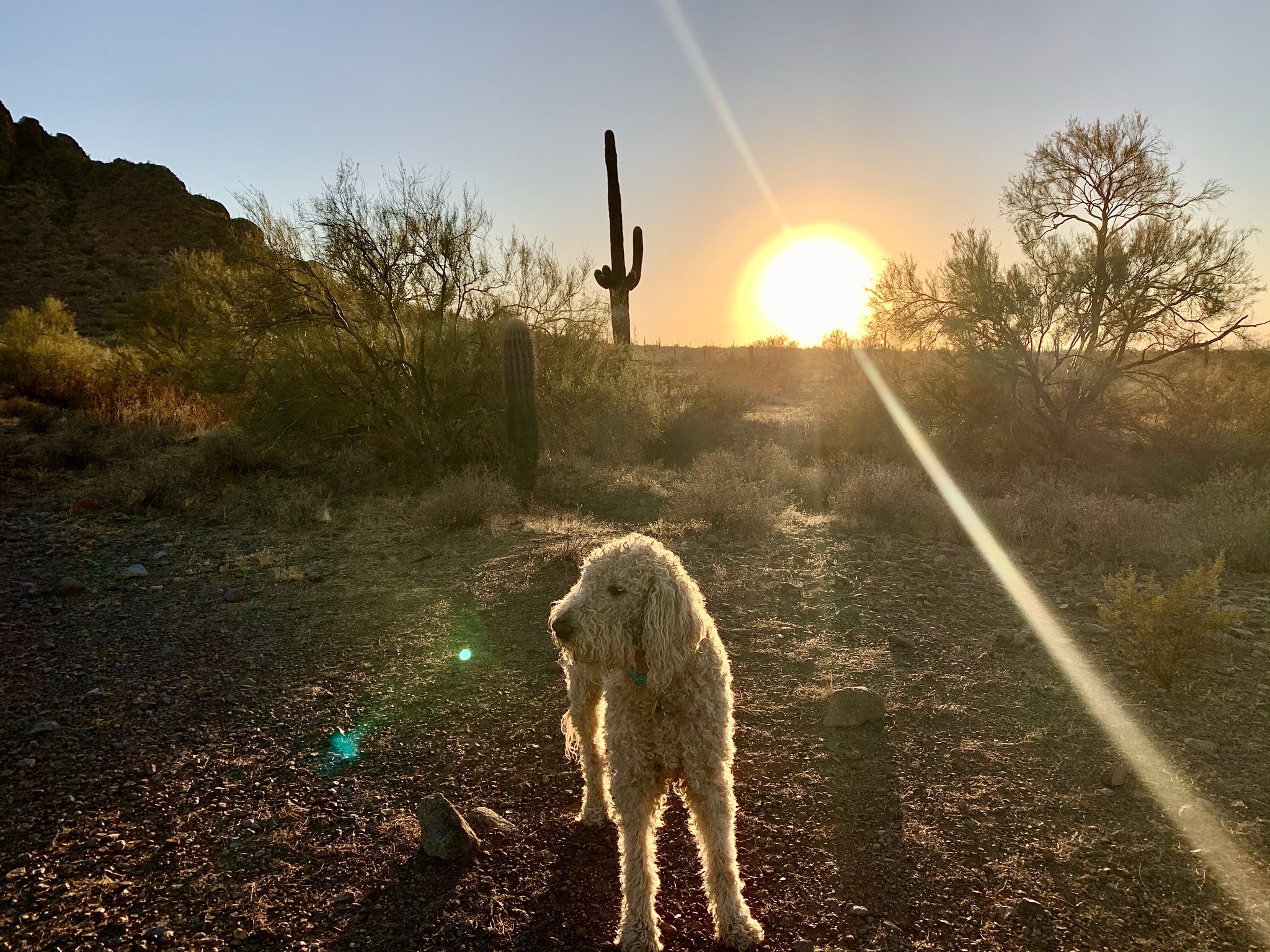
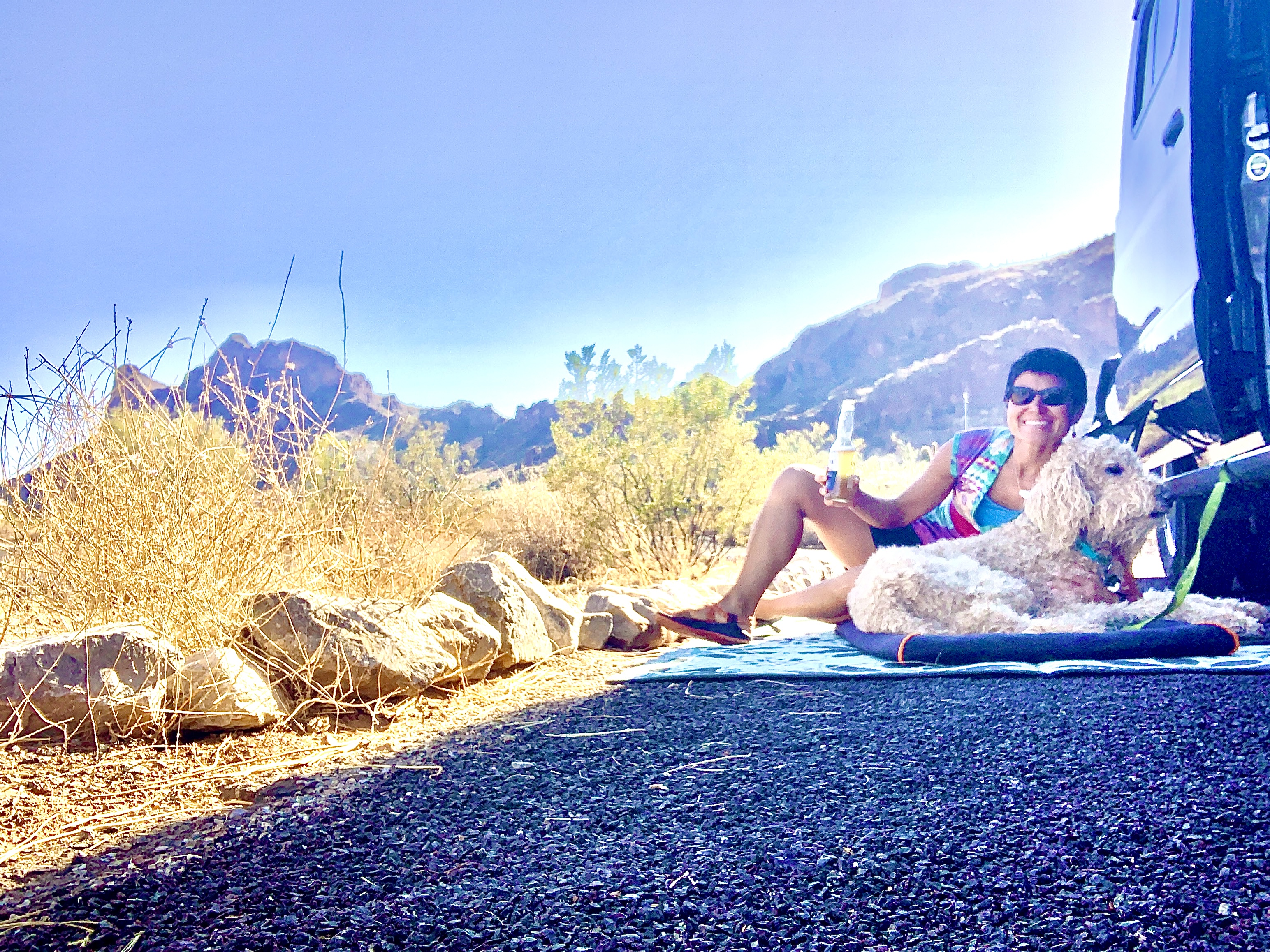
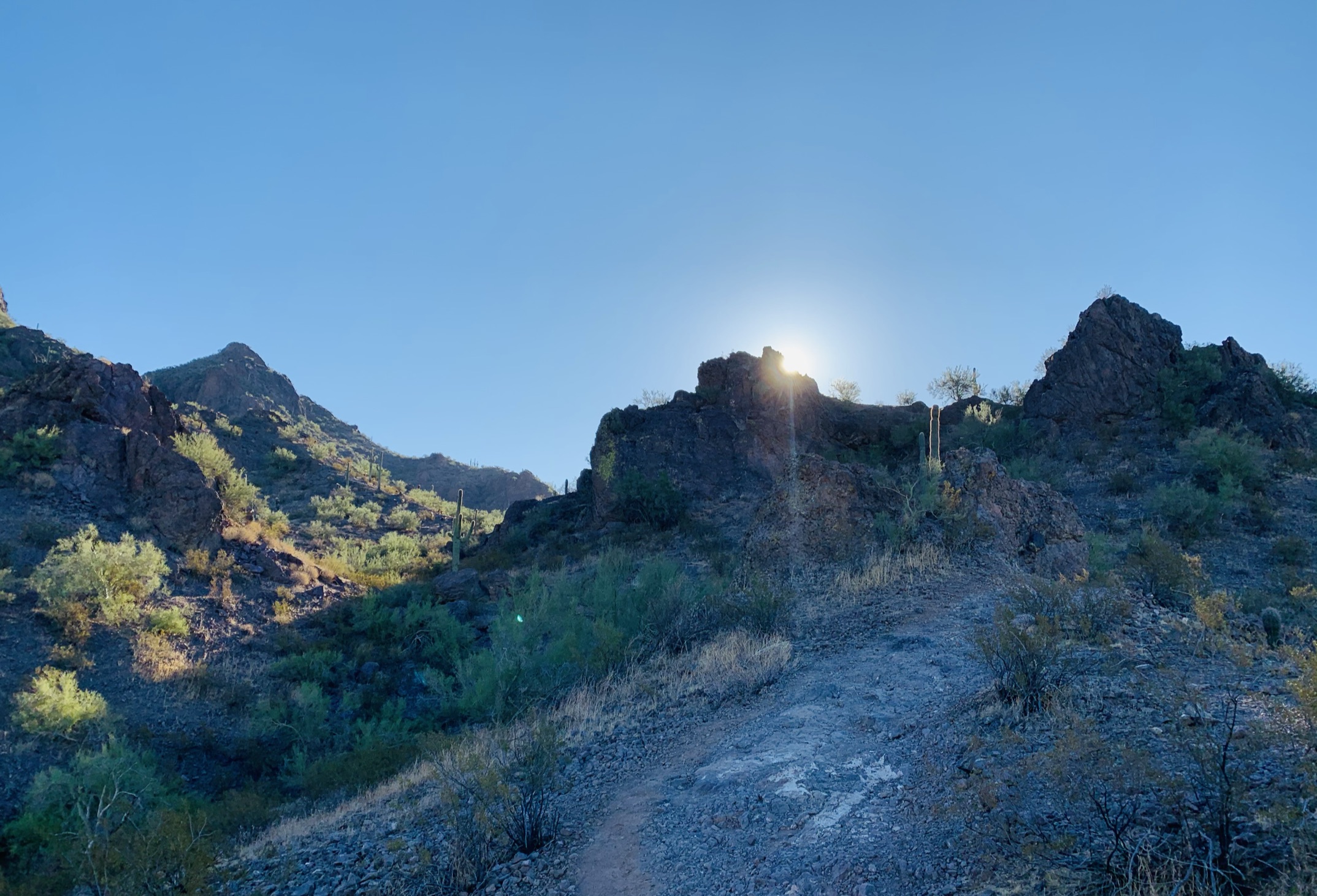
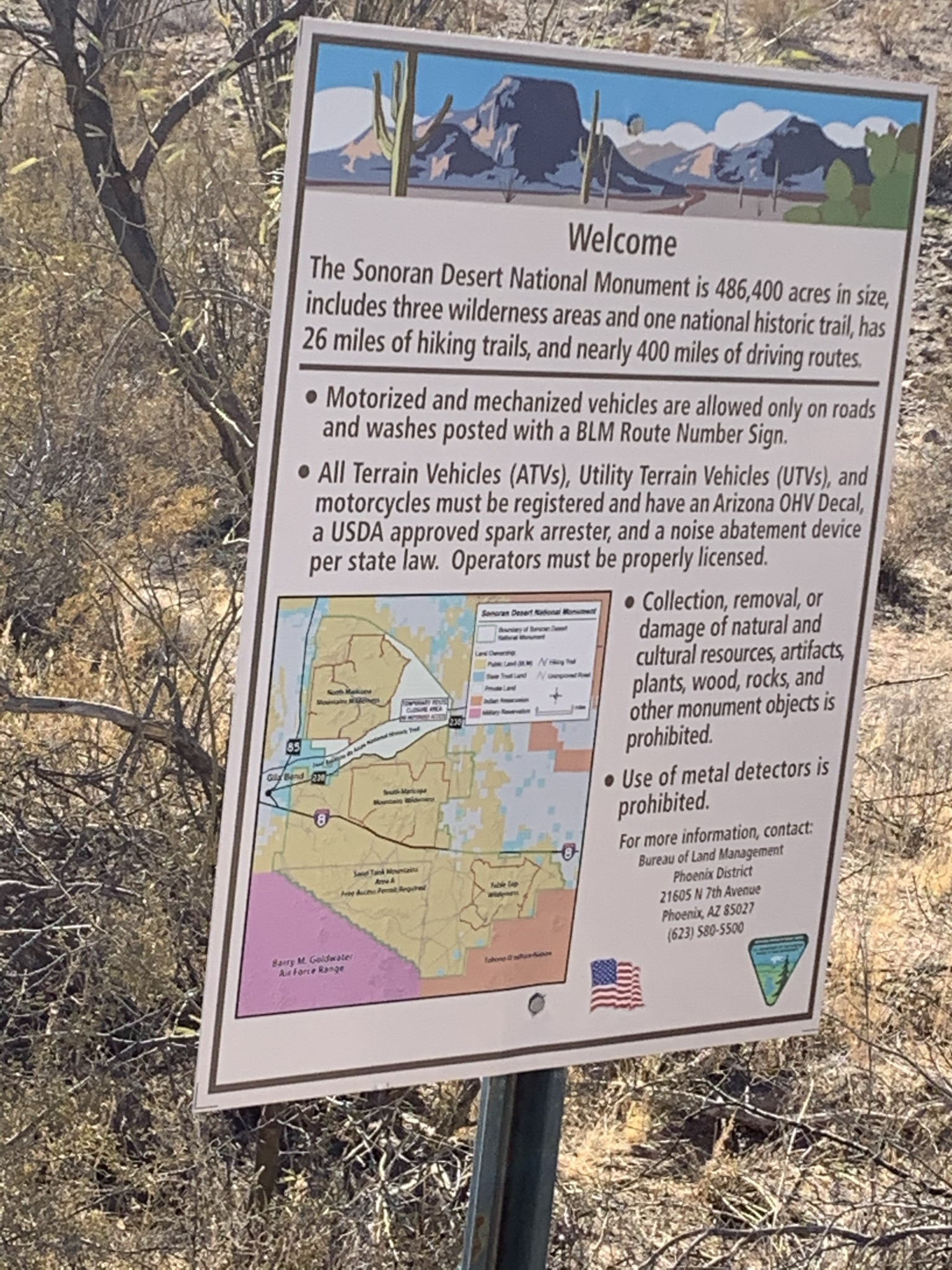
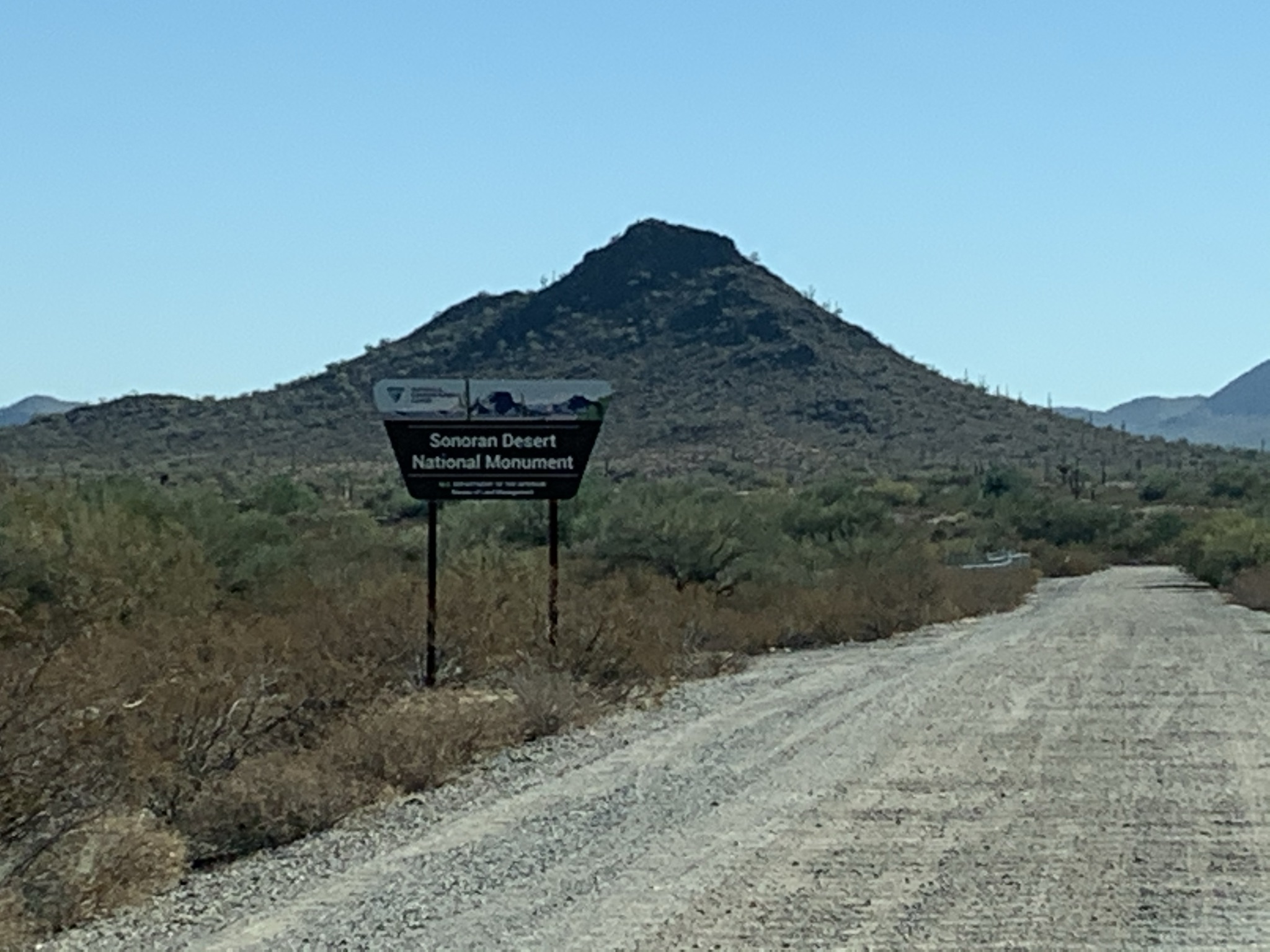
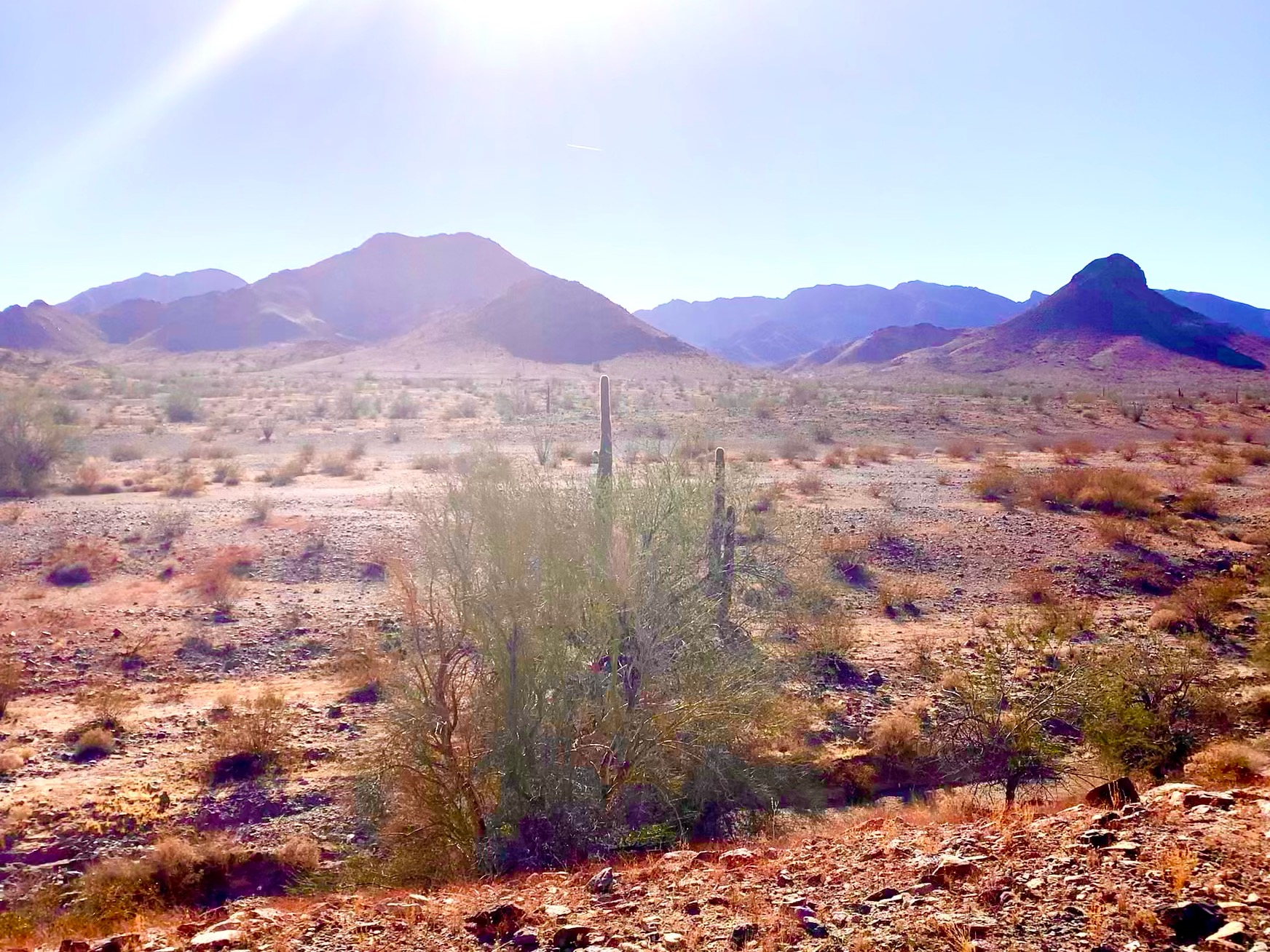
Our next stop off old Highway 84, about 60 miles from Picacho, is Lost Horse Tank BLM area (GPS 32.8411, -112.3244) that is in the Sonoran Desert National Monument. There is decent Verizon cell coverage between 2 to 3 bars. You need to be careful where you camp if you go too far South you are in the drug and human trafficking route.  Don’t stay right at the entrance of the area as several people came there to shoot guns, we recommend going down the road and to the right.  We found a great spot away from the freeway and away from the trafficking route with no nearby neighbors.  You can stay here for free for 14 days, were stayed here two days and did a few bike rides and runs through the desert.

From here, you have 51 miles to Painted Rock Petroglyphs (GPS 33.02437, -113.04543).  Since I have an Access pass this is an awesome stop for $4.  They have fire rings, picnic tables, trash cans and ancient petroglyphs.   There are good trails for mountain biking and trail running.  No water, no hook-ups, no RV dump but it’s a great spot.  We love this spot, so few people its like having a campground to yourself.  We have returned to this spot 4 times now.

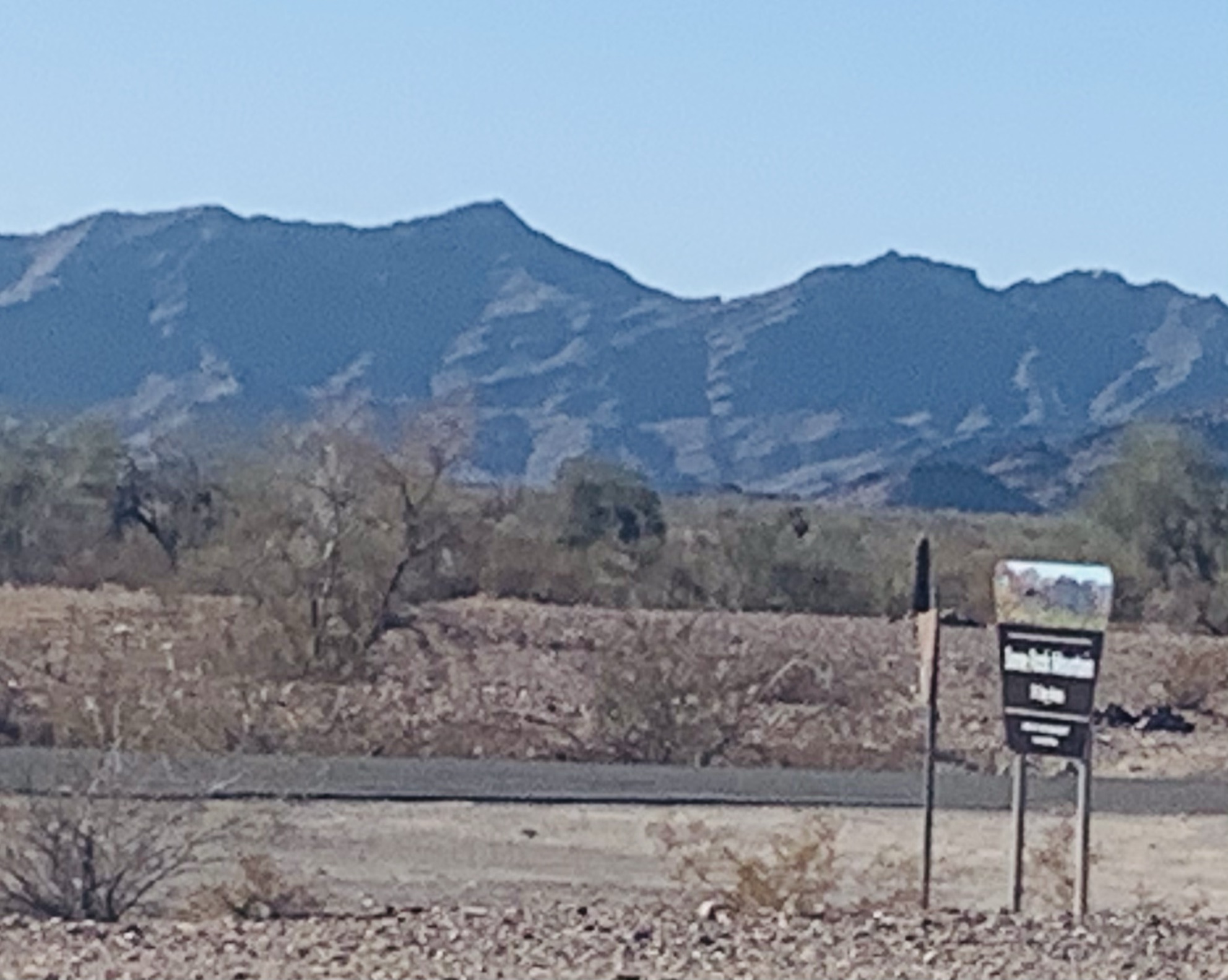
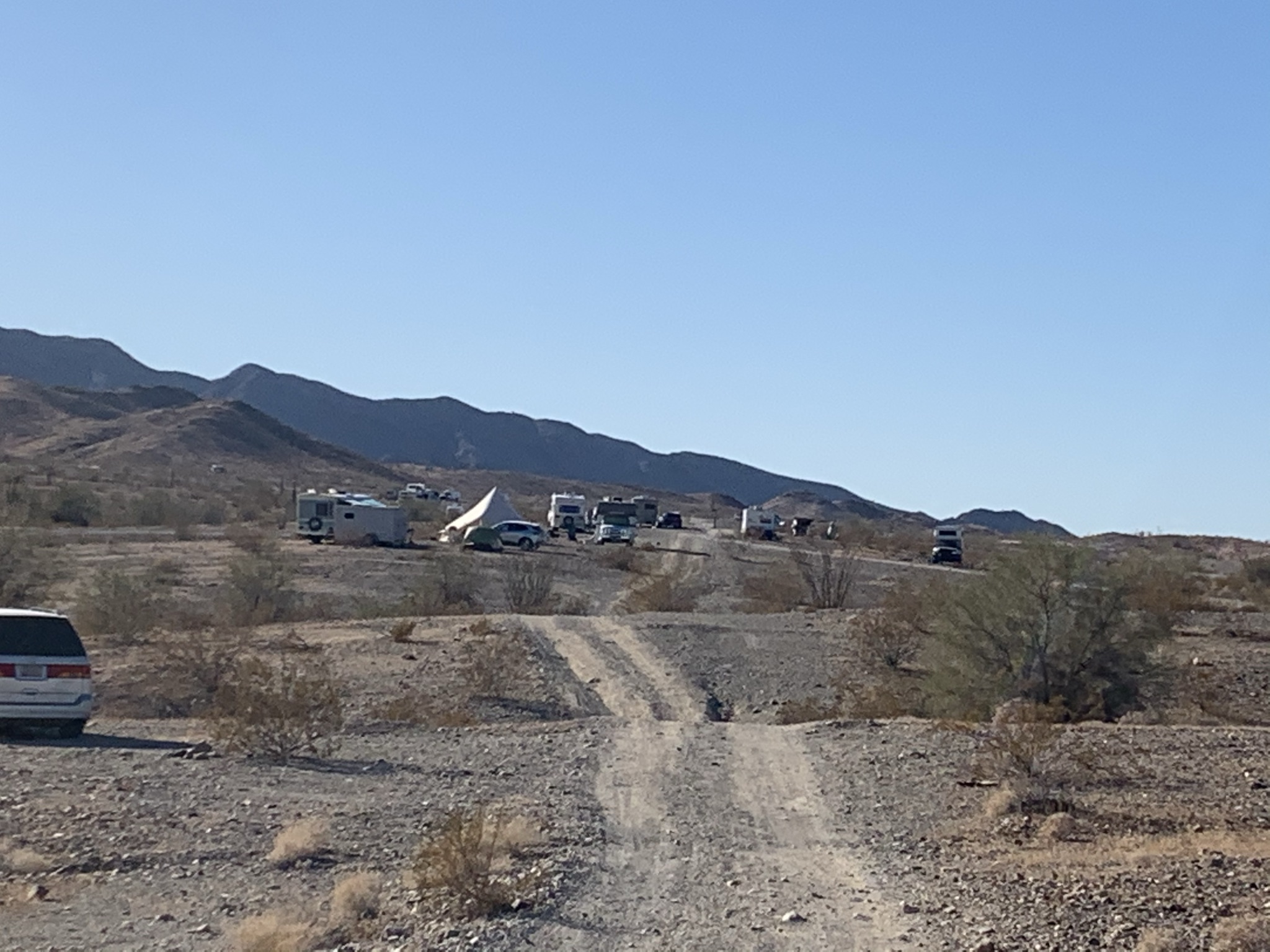
Next, we headed about 158 miles to the famous Quartzsite.   You need to check in with the Dome Rock Campground host at the entrance to get your 14-day free permit on Dome Rock Road, then head to Cholla Road GPS: 33.6493, -114.28, there are a lot less people staying off Cholla Road.  You head around the bend and you will see dirt road to the right.  I suggest staying away from the wash area so you don’t get stuck.  It was great in November, there were very few people the camp host said they get busy in January. We did several mountain bike rides, and trail runs, there are so many trails everywhere.  There is Verizon 3 bars on Dome Rock but the cell coverage is pretty limited on Cholla Road.  For us it was worth it to get away from people and generators and we just biked or ran to more cell coverage couple times during the day.  If you want to stay longer than 14 days you can head over to RoadRunner and stay there for a few days then head back to Dome Mountain (we haven’t stayed here but drove by it.  It didn’t look bad and we would consider staying there.  We stayed here for 3 days.  We will be back in off-season.

From Quartszite, we headed fifty miles to Lake Havasu and stopped at Buckskin Mountain Campground to fill up with water and to dump.  There is free WiFi and good cell coverage here.   It’s a beautiful location and great stop for paddle boarding and great hikes and trail runs right from the campground. There are 68 campsites, 30 with electric, all with picnic tables and fire pit/grills and you must reserve online ahead of time. We really liked this spot and will come back, it is spendy at $35 but coming from Quartzsite you need to dump and refill water and it is a good middle point before Lake Havasu and less people than the state park in Lake Havasu.  You will also find since there is a drought there are no free water fill areas in Lake Havasu, many of the grocery stores have the water fill stations you pay for potable filtered water but will need to fill 5–6-gallon containers and do gravity fill. We stayed here one night and would be willing to come back here.  Since we prefer non-campgrounds that is why we only stayed 1 night. 

Next, we traveled 36 miles to Craggy Wash (GPS: 34.5863, -114.364586) in Lake Havasu.  There are several areas you can boondock for 14 days.  Craggy Wash used to be one of our favorite free spots but it has become over run with homeless and people pretty down and out.  Depending on the time of year there is great trail running and mountain biking but in November it is pretty deep sand making mountain biking difficult.  Also, with a lot of the homeless, mentally ill, not the most-friendly dogs off leash and folks sporting side arms on their hips as a woman I did not feel too comfortable running by myself.  We used to love this spot but I don’t think we will be back, we only stayed 2 days. 

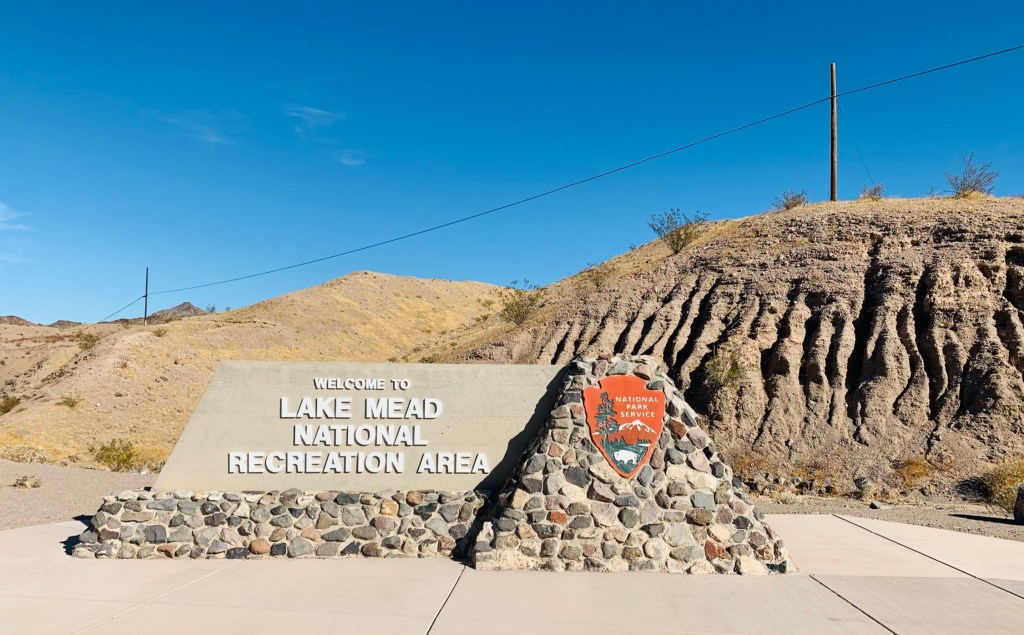
We were excited to explore the Lake Mead National Recreational Area, our first stop was Katherine Landing which is about 66 miles from Craggy Wash.  There is WiFi and cell coverage and with an Access Pass it was only $10 a night.  There is first come first serve spots and only two of the loops are open during COVIOD19 and winter.  Each spot has a picnic table and firepit.  There is water and a RV dump no electrical. There are several hikes and you can head down to the marina to paddleboard or rent water equipment like kayaks, paddleboards fishing boats, etc.  When we were there it was way too windy, we just did a few hikes.  We spent 2 days here and will come back. 

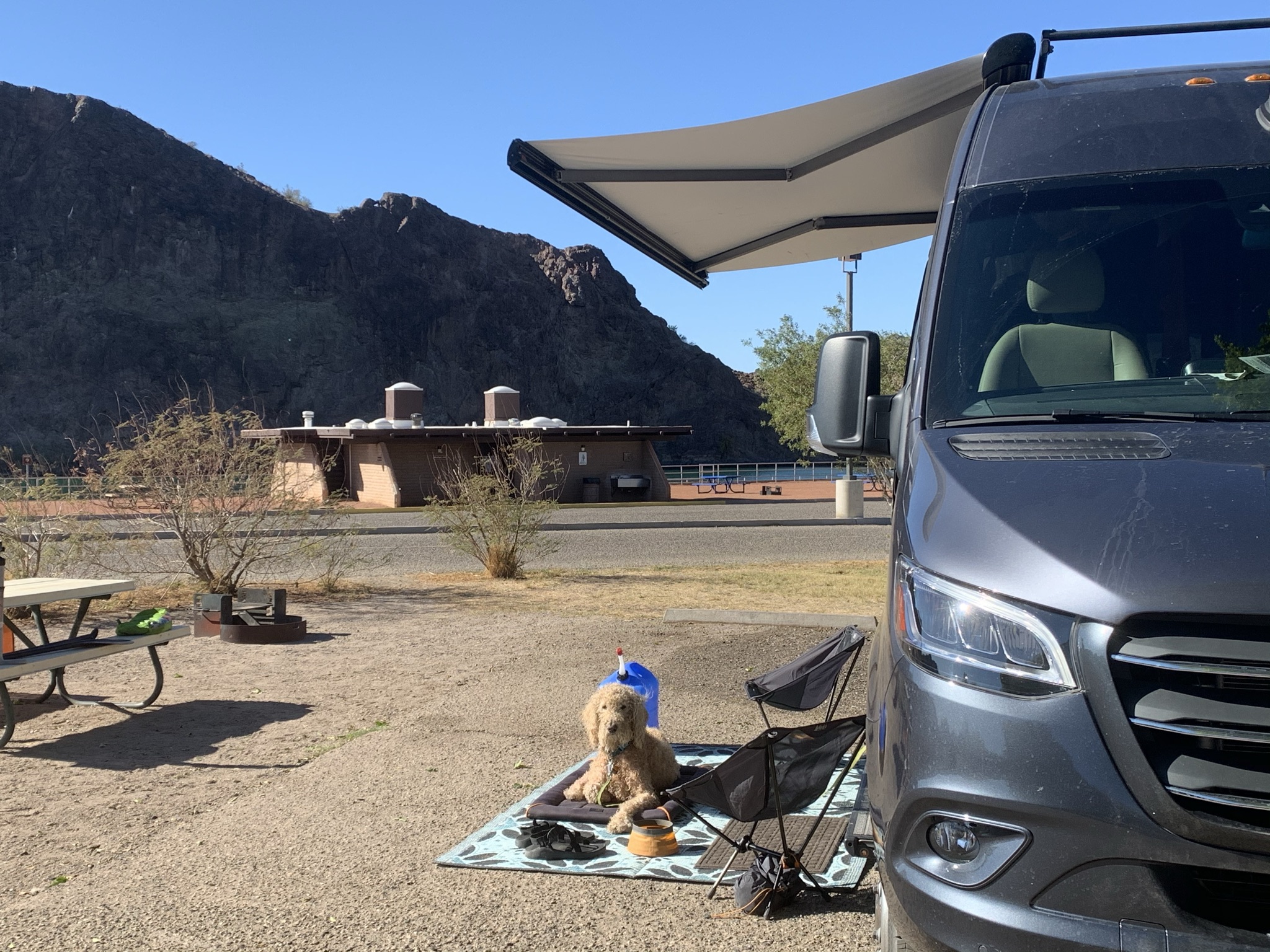
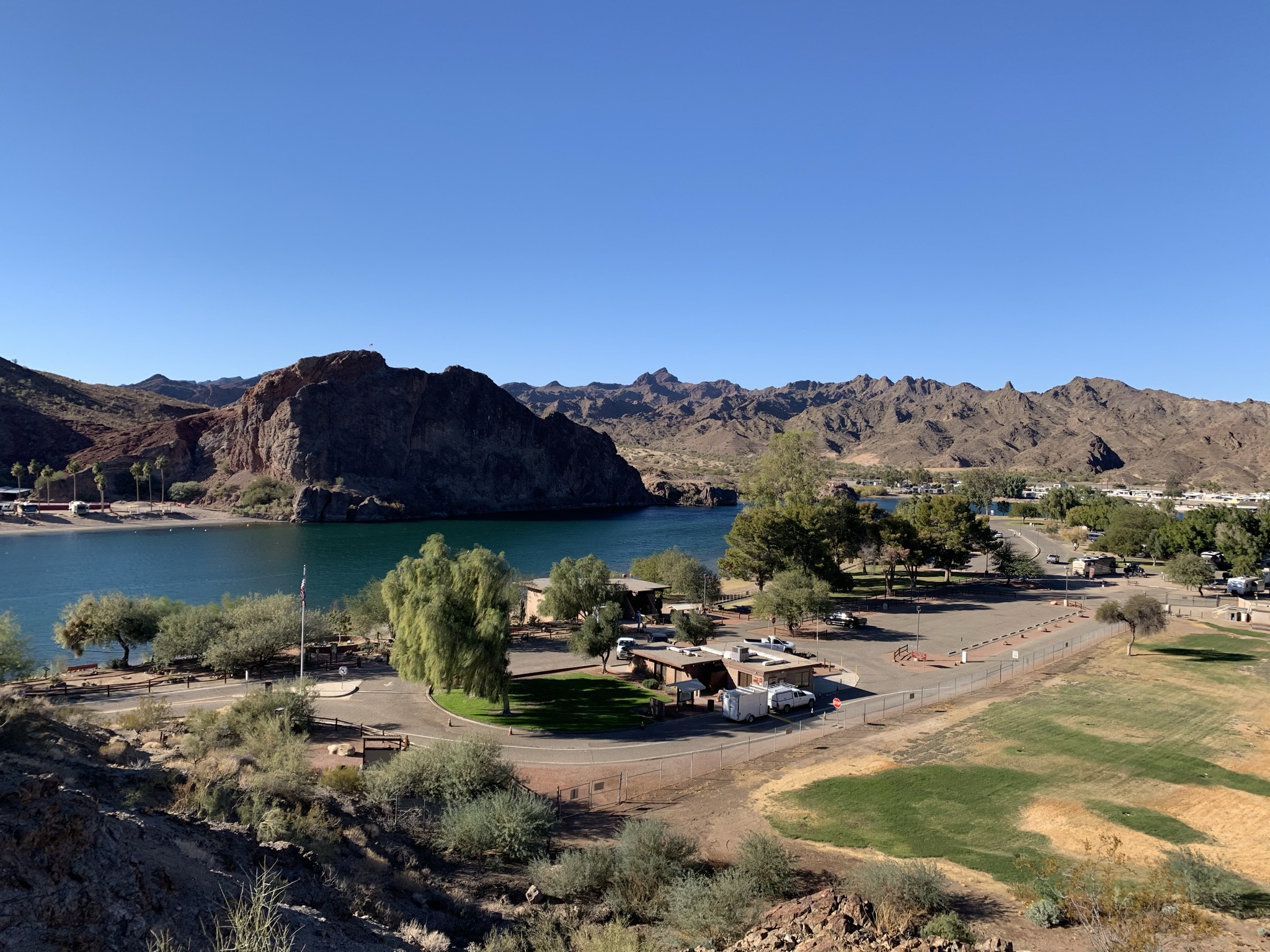
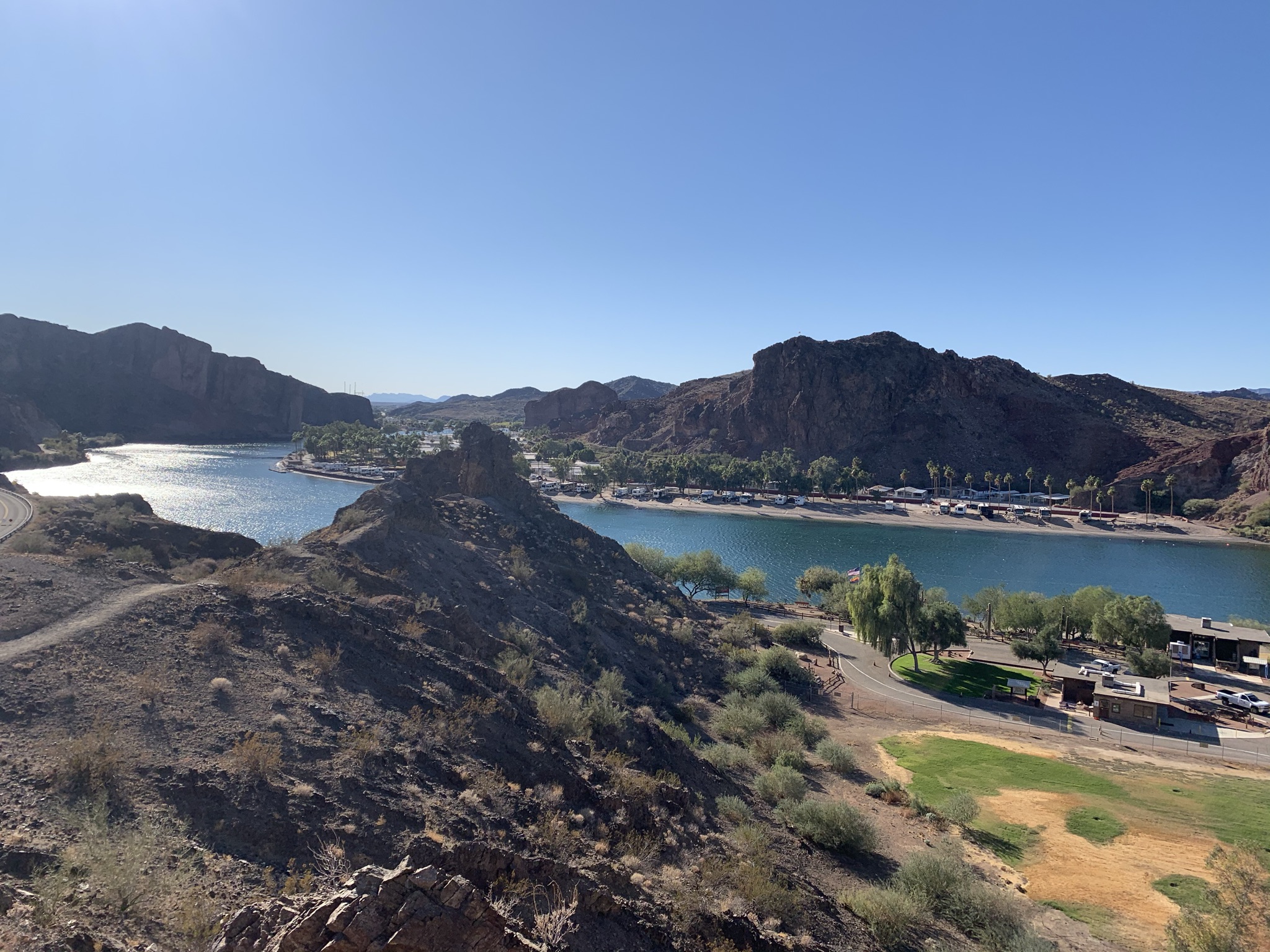
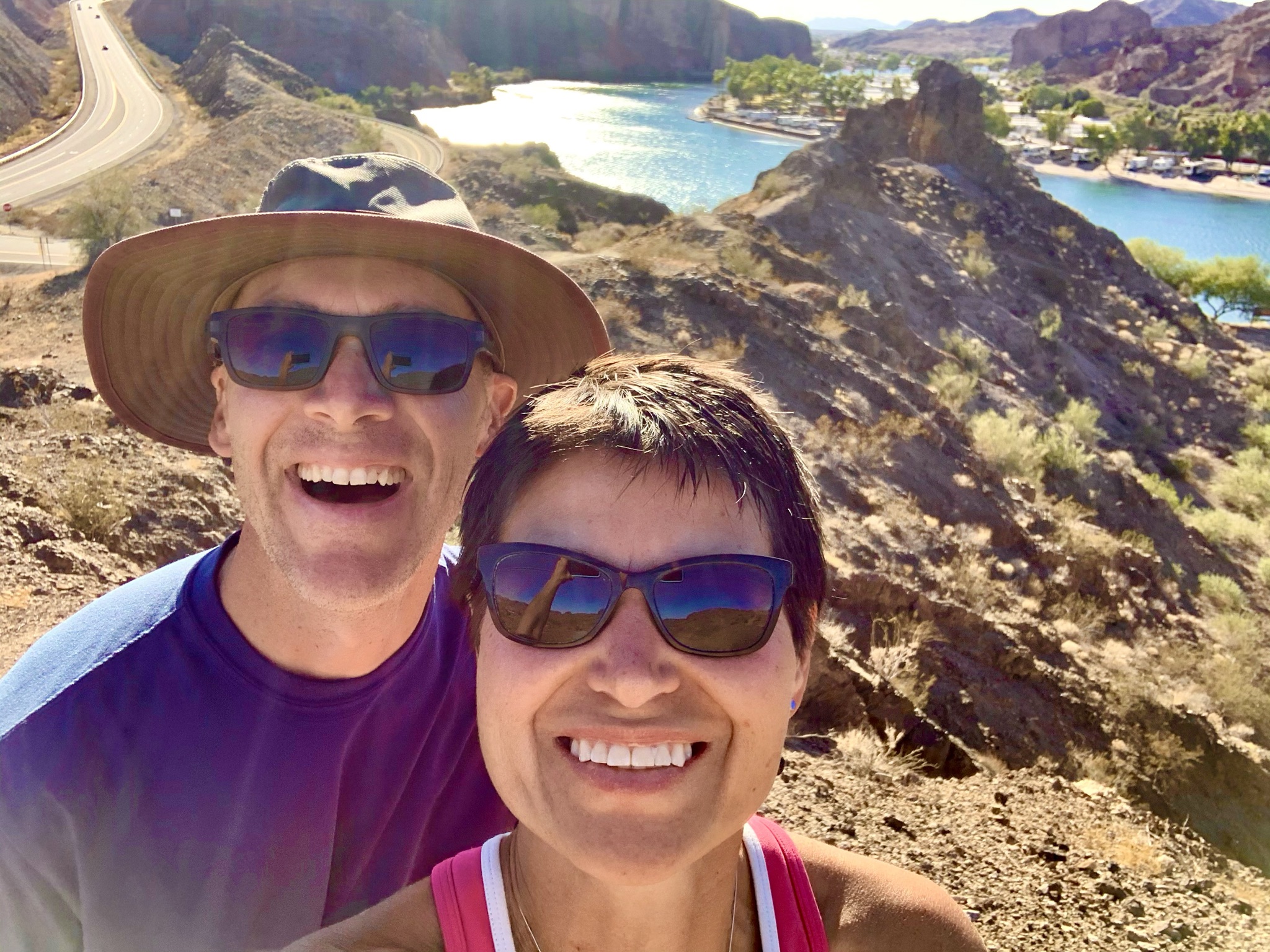
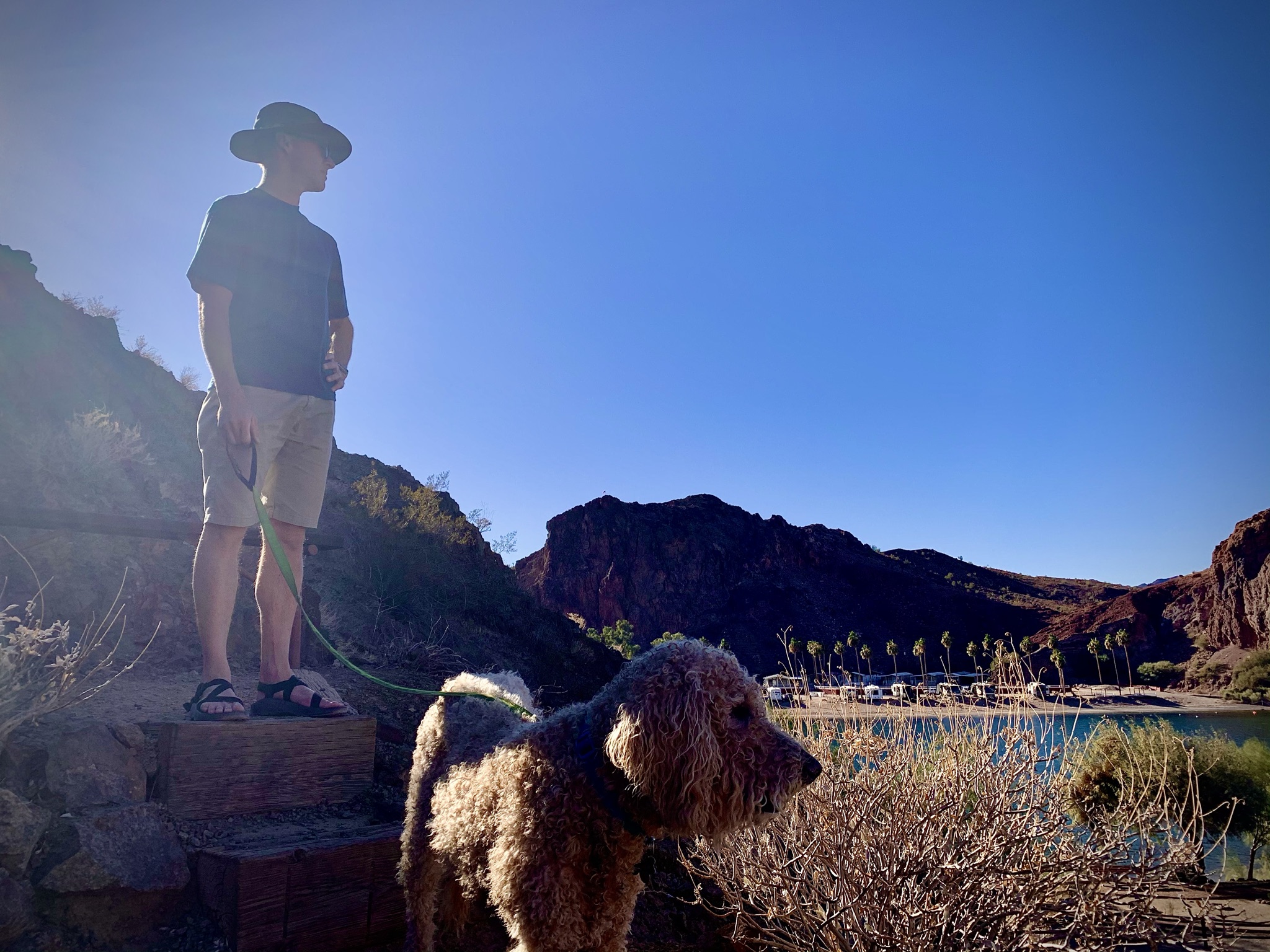
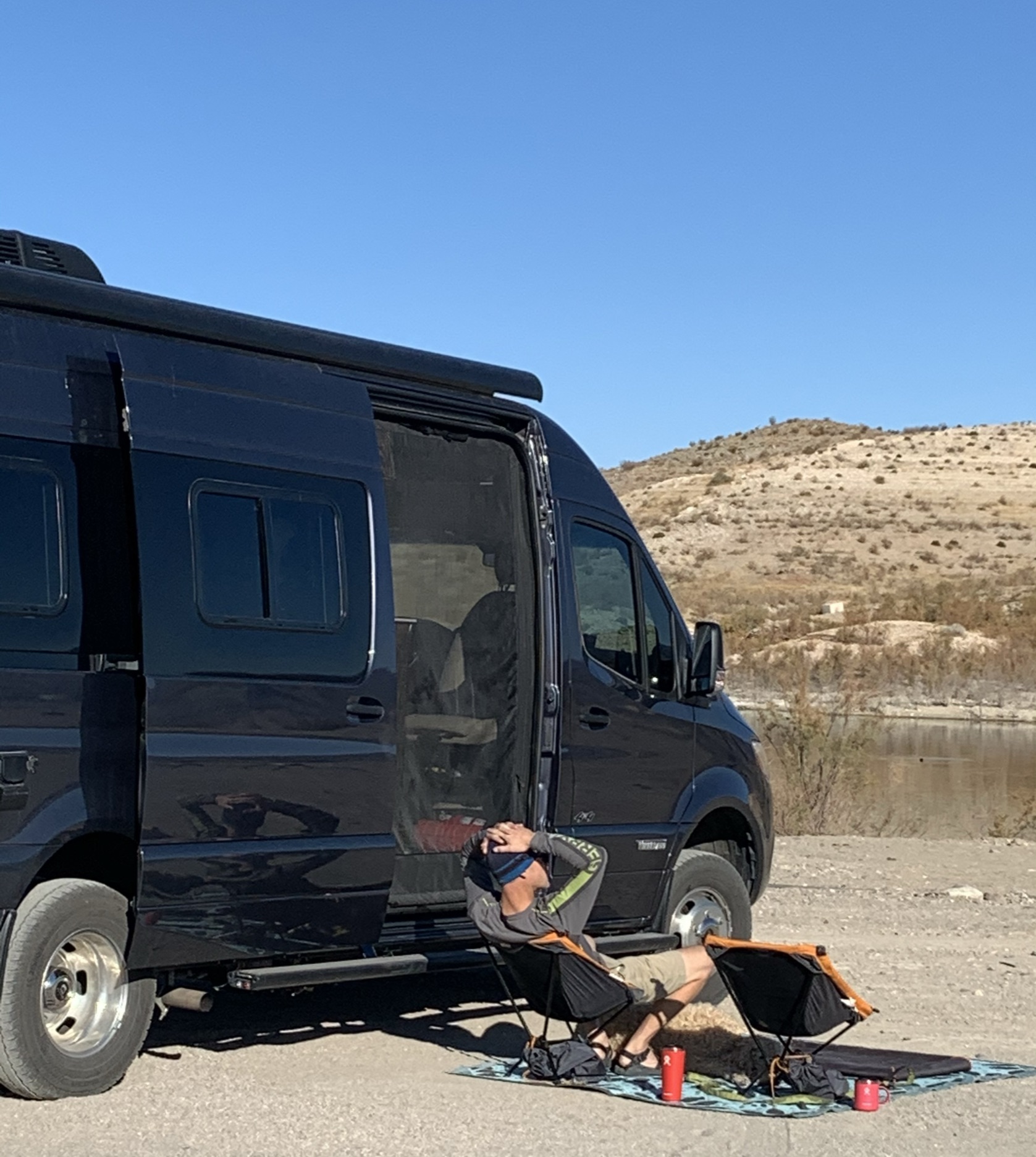
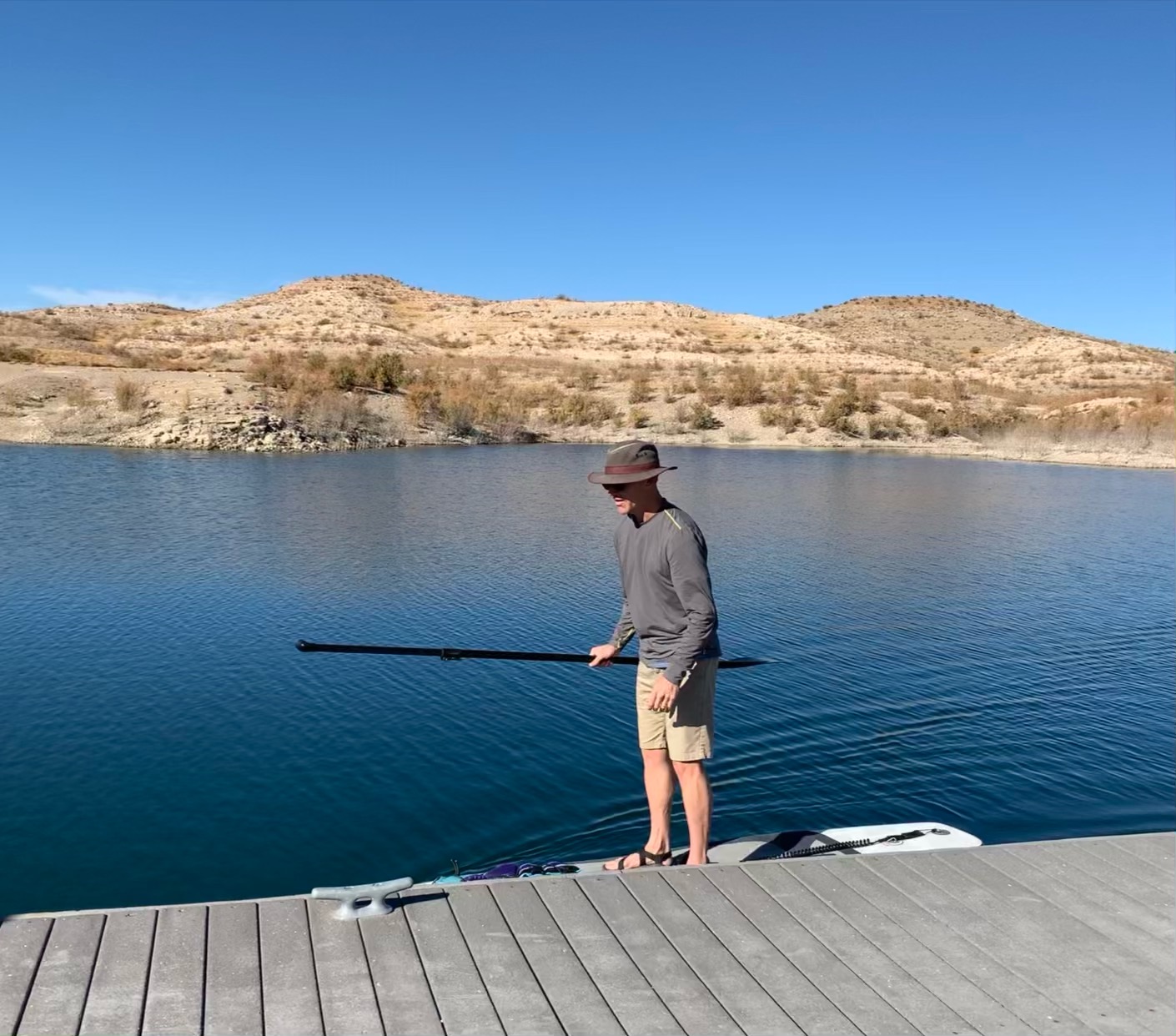
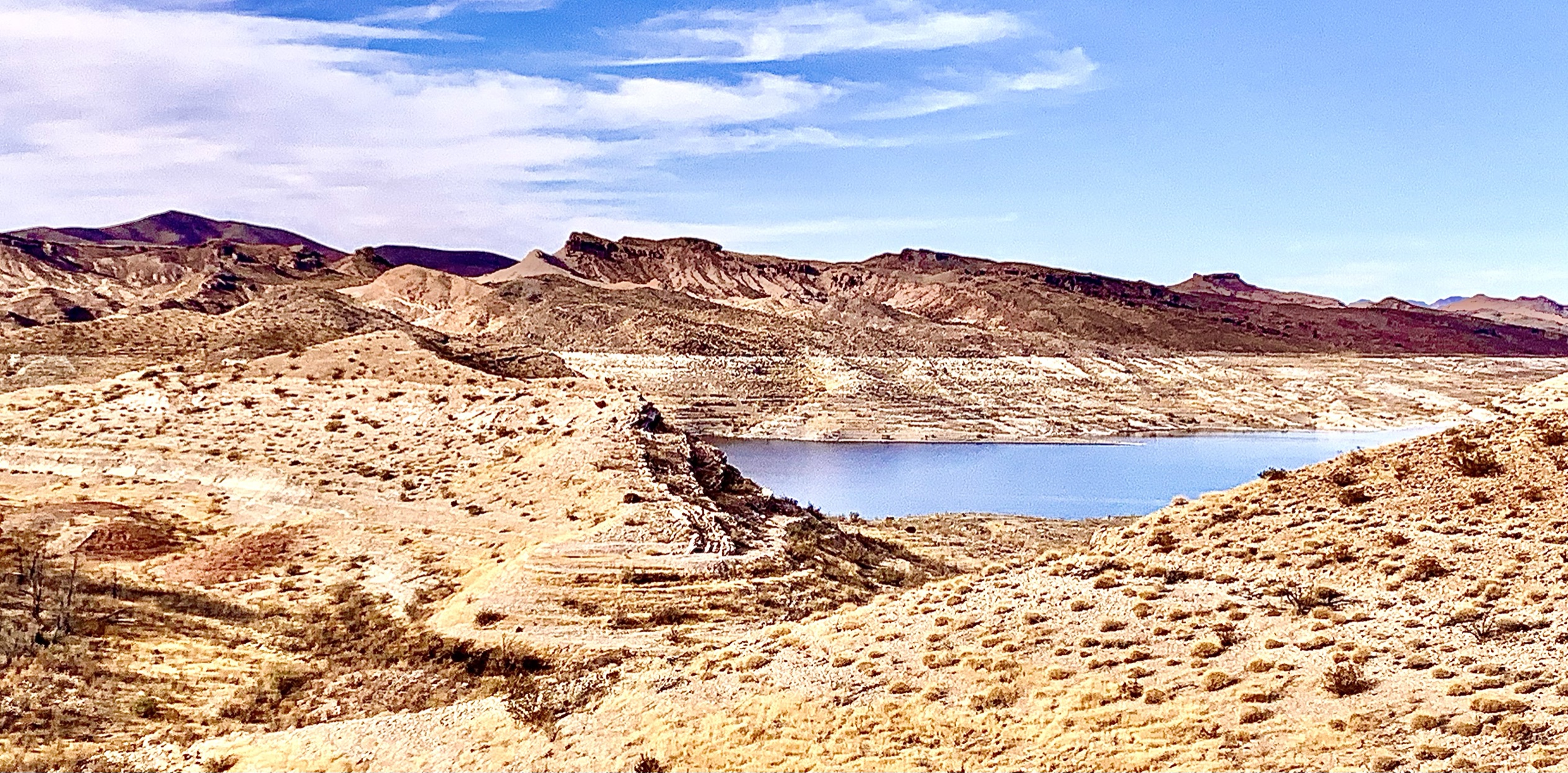
(temple bar pictures)Surprisingly, there are very few people at Temple Bar which is 97 miles from Katherine Landing.  The park ranger said since its off the main highway not many people head this way.  We really enjoyed the peace and tranquility of this spot (and lack of wind!).  There were nice views of the Lake and other than the camp host there was only one other camper at this 71 campground site.  There is Wi-Fi and great cell coverage and a nice walk down to the marina and beaches.  We liked this spot better than Katherine Landing.  I paddle boarded and did several runs.  Similar to Katherine Landing it is $20/$10 a night with picnic tables and firepits and some sites also had grills, water and RV dump station.  We stayed here two nights and we’ll be back. 

From Temple Bar we headed back to Tucson as we had an appointment at La Mesa RV to get some items fixed.  We had planned to take the old Route 66 near Kingman but we ran out of time.  Kingman is a great spot to get gas, groceries and get your Starbucks. On freecampsites.net you can get several free spots to stay on Route 66 and if you are a Harvest Host Member there are two spots on Route 66.  For us, we headed down the hwy 93 to the Cerbat Foothills Recreational Area about 76 miles from Temple Bar. Its convenient, right off the freeway so we only stayed one night.  It’s a true boondocking spot with nothing but just a gravel parking lot but there are lots of cool mountain biking and hiking/running trails.  The landscape was beautiful you have a mixture of one-night campers and a few long-term homeless campers.

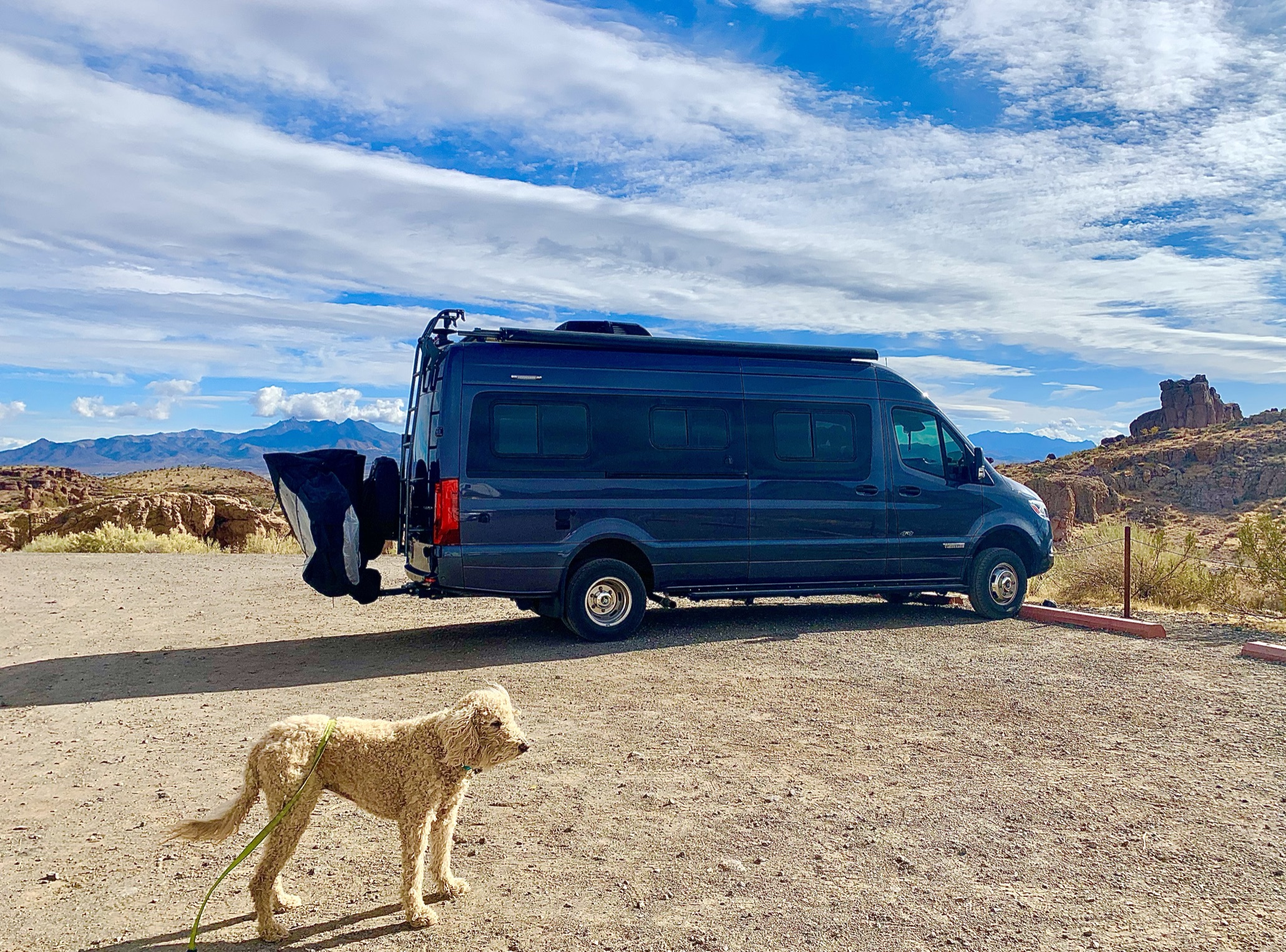
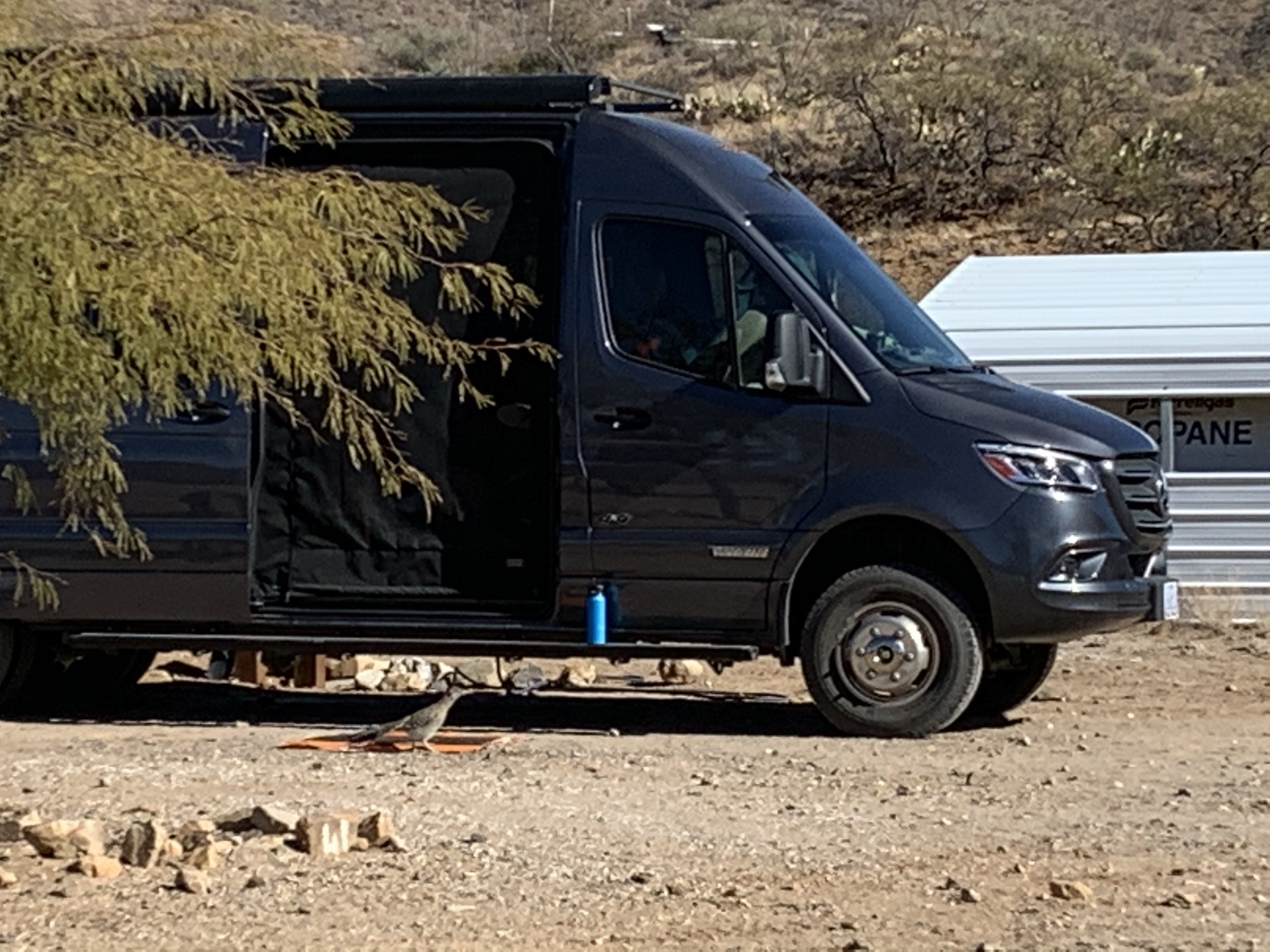
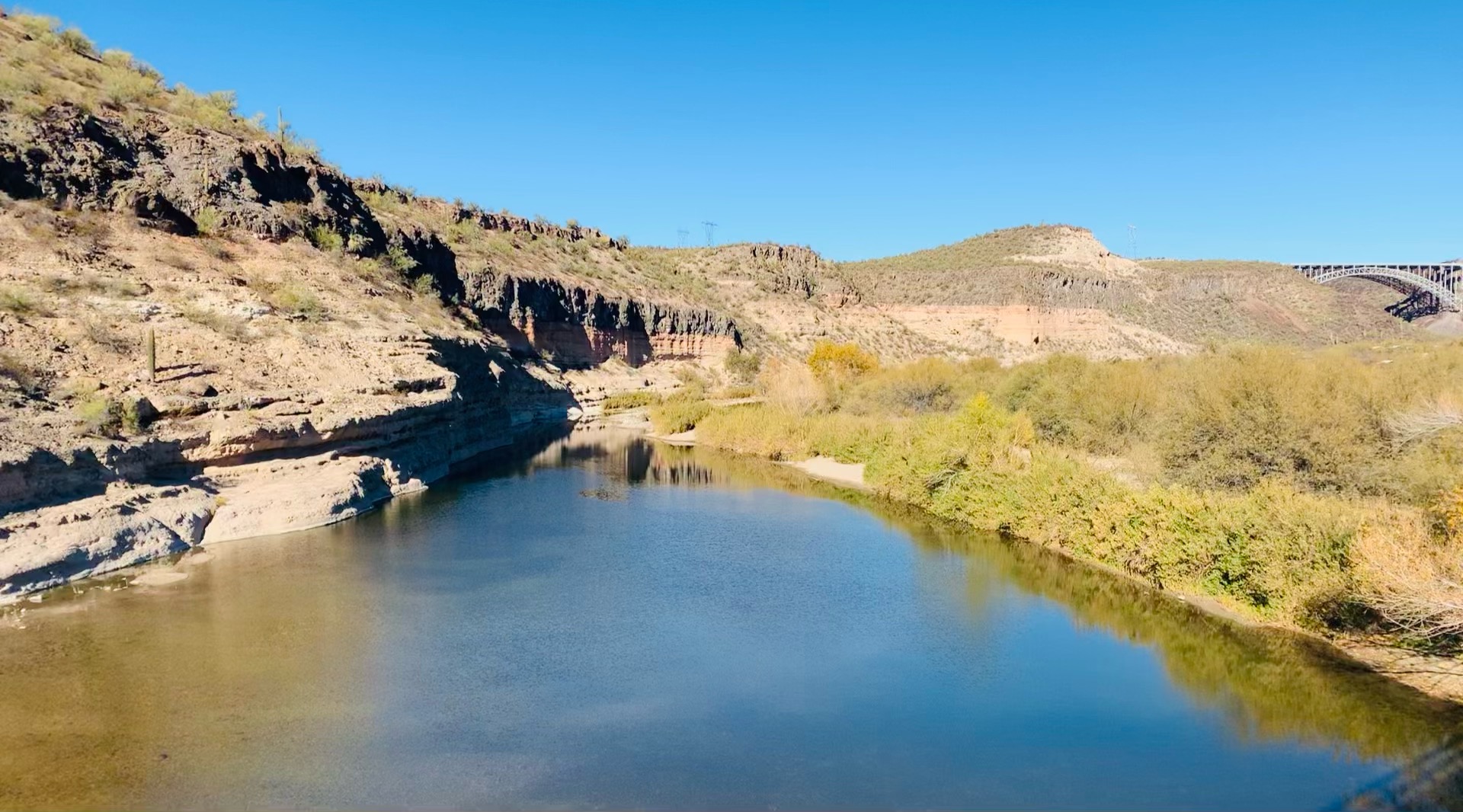
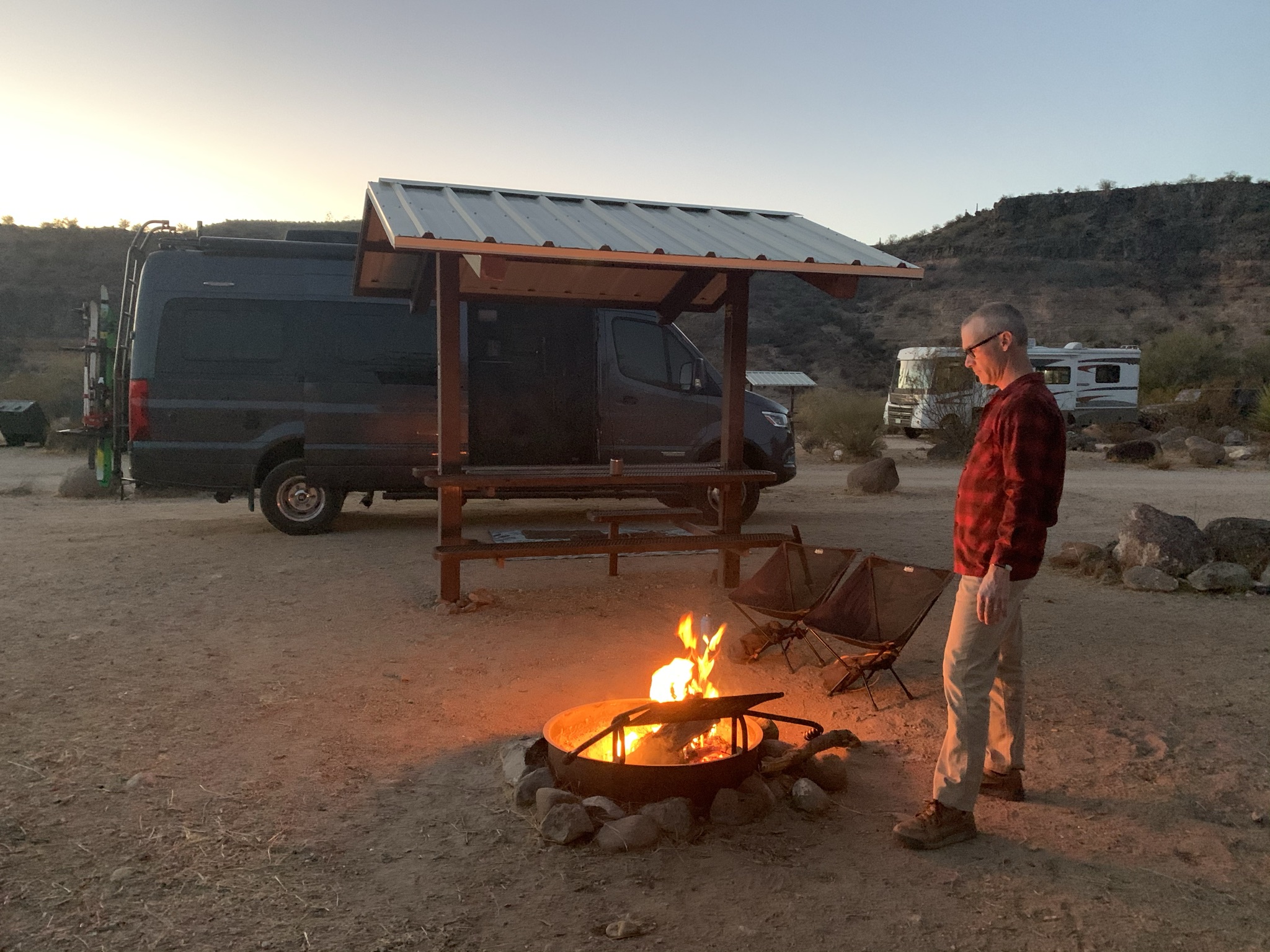
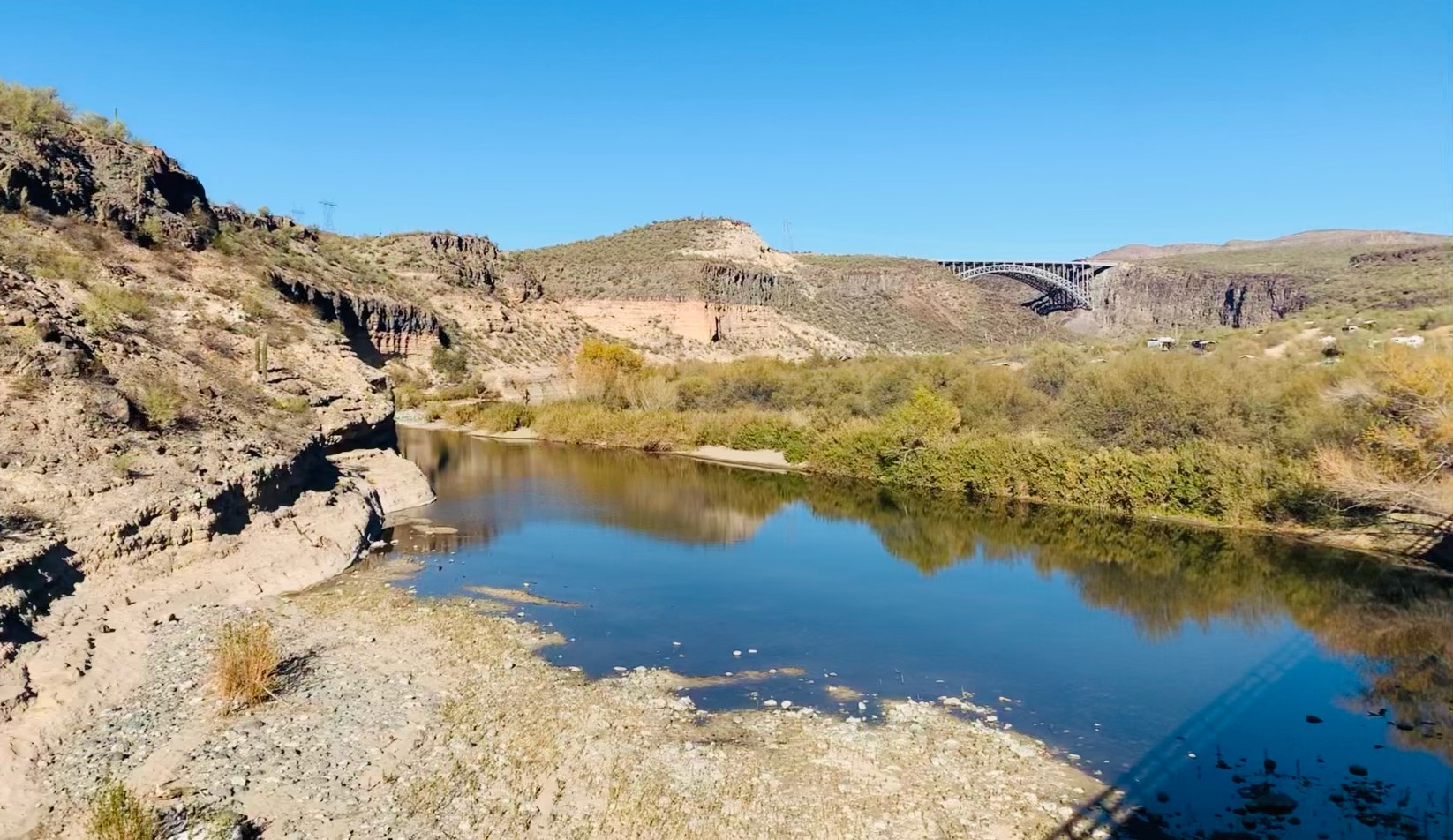
A nice quiet spot that is right off the freeway is Burro Creek Campground that is 75 miles South.  (Top 4 pictures below) For only $7 a night it is great to get water and have an RV dump.  Its right on the river and a few nice spots with views.  We stayed here only one night there was a little too much generators for peace and quiet.  I had a nice run in the area but there are a lot of cattle and the trails are over grown.  There is BLM booondocking spot above before you get to the campground that we would most likely stay next time.  We left super early so we could get through Phoenix before rush hour traffic.

(We needed to stock up on groceries and there is inexpensive Costco Gas in Chandler, so we drove 139 miles to the Cracker Barrel in Chandler for the night.  There are three RV spots and its pretty calm place.  Early the next morning we headed out to bypass any traffic and headed to Gilbert Ray Campground in the Tucson Mountain Park which is about 98 miles.  We really enjoy all the trails you can mountain bike and hike.  For Arizona $20 a night is the most inexpensive campground you will find outside the forest service and there is an RV dump, water, picnic tables and firepits.  Its quiet and there is a first come first serve loop.  We will be back! 

We hope you enjoy these spots as much as we did!  Enjoy!